Trinasolar’s dual-engine strategy: technology, scenarios and the search for long-term value

With TOPCon 3.0 and THBC, Trinasolar is not simply backing two cell routes. It is trying to match technologies to application scenarios, customer value to drive high-quality development across the PV industry.
For Trinasolar, the next stage of module competition will not be decided by a single technology label. It will be decided by whether a product can fit the right scenario, create measurable customer value, and remain reliable over a 25- to 30-year asset life.
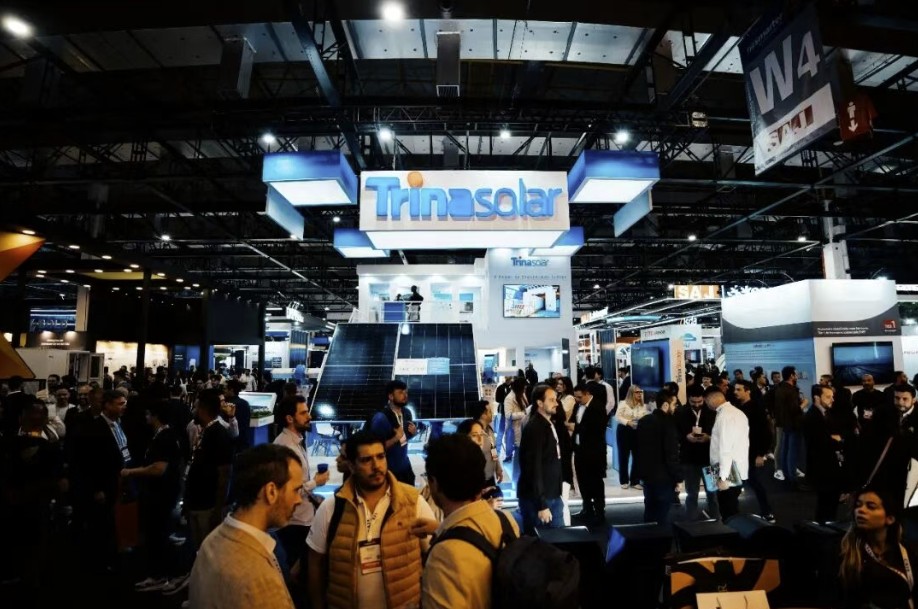
That was the key message from Ni Lili, president of Trinasolar’s PV Business Unit, in an interview during SNEC 2026 in Shanghai. Ni described the company’s “TOPCon 3.0 + THBC” strategy not as a simple dual bet on two technologies, but as a product logic built around one principle: define technology by scenario and drive products by value.
In Trina’s view, different PV applications have different value structures. Utility-scale and many ground-mounted projects depend heavily on bifacial generation, rear-side gain, low-irradiance performance and total energy yield. For these scenarios, Ni said TOPCon remains the most suitable platform. She noted that a large share of the market is still based on bifacial generation, where TOPCon products can deliver stronger overall performance.
THBC, by contrast, is designed for scenarios where front-side generation and aesthetics carry more weight. These include residential rooftops, distributed PV and other single-sided generation applications. In such markets, customers are not only looking for high power output; they also care about visual design, full-black appearance and architectural compatibility. Ni said THBC’s value lies in stronger front-side generation, higher power and the ability to meet premium aesthetic requirements.
This distinction is important because the PV industry has often discussed technology routes as if one platform must replace another. Trina is taking a different position. TOPCon and THBC are not framed as mutually exclusive. They are complementary products for different markets. TOPCon addresses the mainstream bifacial market, while THBC targets higher-value single-sided and distributed scenarios where front-side efficiency and design can justify a premium.
Ni said TOPCon 3.0 still has significant room for improvement and will remain one of the mainstream technologies over the next five years. She also emphasized its long-term extensibility. THBC itself, she said, can be understood as a fusion of TOPCon, HJT and BC technologies. TOPCon can also serve as a bottom cell for perovskite-silicon tandem technology. Around 2030, if perovskite tandem enters industrialization, Trina could move from a “dual-engine” model to a three-pillar technology roadmap built around TOPCon, THBC and perovskite tandem.
For now, however, the commercial focus is much more immediate: building products around real customer needs. Ni said THBC is especially relevant in premium distributed markets such as Europe and Australia. In markets such as Switzerland, she noted, customers can accept a price premium if the product delivers higher power, strong performance and better aesthetics. This reflects a wider trend in rooftop PV, where modules are increasingly assessed not only as energy equipment, but also as visible parts of buildings.
The same scenario-based logic applies to Trina’s broader product strategy. In North America, where extreme weather and hail risk are important considerations, Trina has developed products aimed at stronger resilience. In Australia, where labor cost is high and installation efficiency affects project economics, product design must consider how power, format and installation requirements combine to create value for investors and installers.
Ni said the company’s task is to understand what each customer and each scenario truly needs, then provide the right product and service package. Companies that want to earn reasonable margins will need differentiated product management, brand management and full life-cycle service capability.
That brings the discussion to brand value. In her view, branding is the credit foundation that allows a module manufacturer to be trusted by customers, lenders and project owners.
This is particularly important because PV modules are long-life financial assets. A customer buying a module is not simply buying hardware. They are buying expected generation, reliability, after-sales support and corporate continuity over decades. If a supplier disappears five years later, the risk does not disappear with it. The module remains on the roof or in the power plant, and someone still needs to support the asset.
Ni said overseas customers are very sensitive to this issue. For them, bankability, stability and long-term service are not abstract concepts. They can determine whether a project can be financed and built. Trina’s long operating history, brand accumulation and repeated recognition in bankability assessments are therefore part of its commercial value, not just its marketing message.
For global customers, the requirements are even broader. ESG, localization, community engagement and local service teams are becoming part of supplier evaluation. This is especially visible in storage, but it is increasingly relevant to PV as well. A foreign company that builds local teams, trains engineers and participates in local communities can be seen as a more credible long-term partner.
AI is another variable that Trina is beginning to address. Ni said the question is no longer whether companies should embrace AI; AI has already arrived. The more important question is how to combine AI with existing industrial capabilities without losing the company’s own strategic foundation.
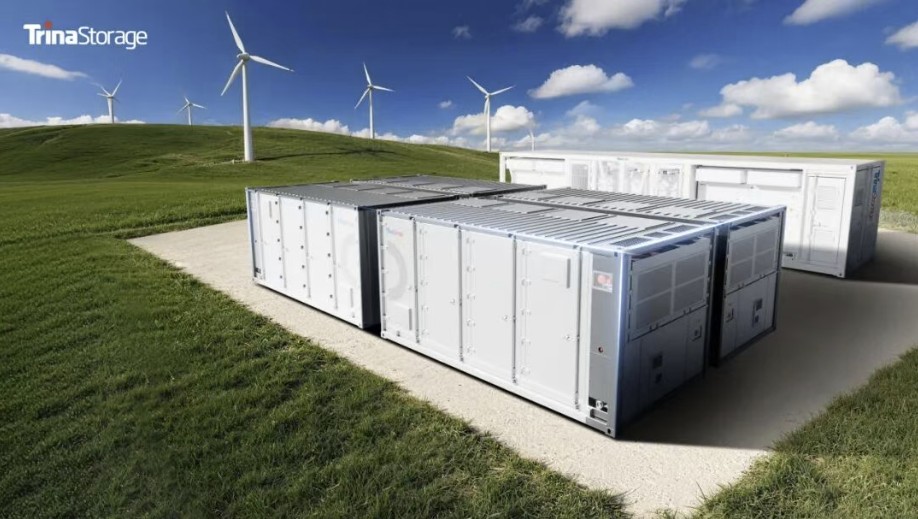
In Trina’s case, the most direct connection is through energy storage and AIDC-related scenarios. Ni said Trina is already exploring early-stage AIDC projects through internal teams. These projects raise questions about stable power supply, PCS capability, grid-forming performance and coordination between PV and storage. For the PV product business, this creates a new line of thinking: how should solar modules and storage systems work together when the customer is not only building a power plant, but also supporting high-reliability digital infrastructure?
Ni was careful not to present AI as a slogan. Her point was more structural. The next 30 years of Trina’s development will need to build on its existing PV and energy storage foundation while opening itself to new technologies and new scenarios. AI may create what she described as a form of knowledge democratization, but companies still need to retain their own capabilities, judgment and strategic identity.
The same philosophy applies to Trina’s role in the industry. Ni said leading companies should have a responsibility to support things that are genuinely good for long-term development, in her view, the PV sector needs to focus on real value creation.
The message behind Trina’s SNEC 2026 product strategy is therefore clear. Technology leadership still matters, but technology must be translated into scenario-specific value. TOPCon 3.0 and THBC are not just cell platforms. They are part of a broader attempt to move PV toward application fit, long-term reliability, brand credit and system-level value.