Canadian Solar raises efficiency record for mono cast cell

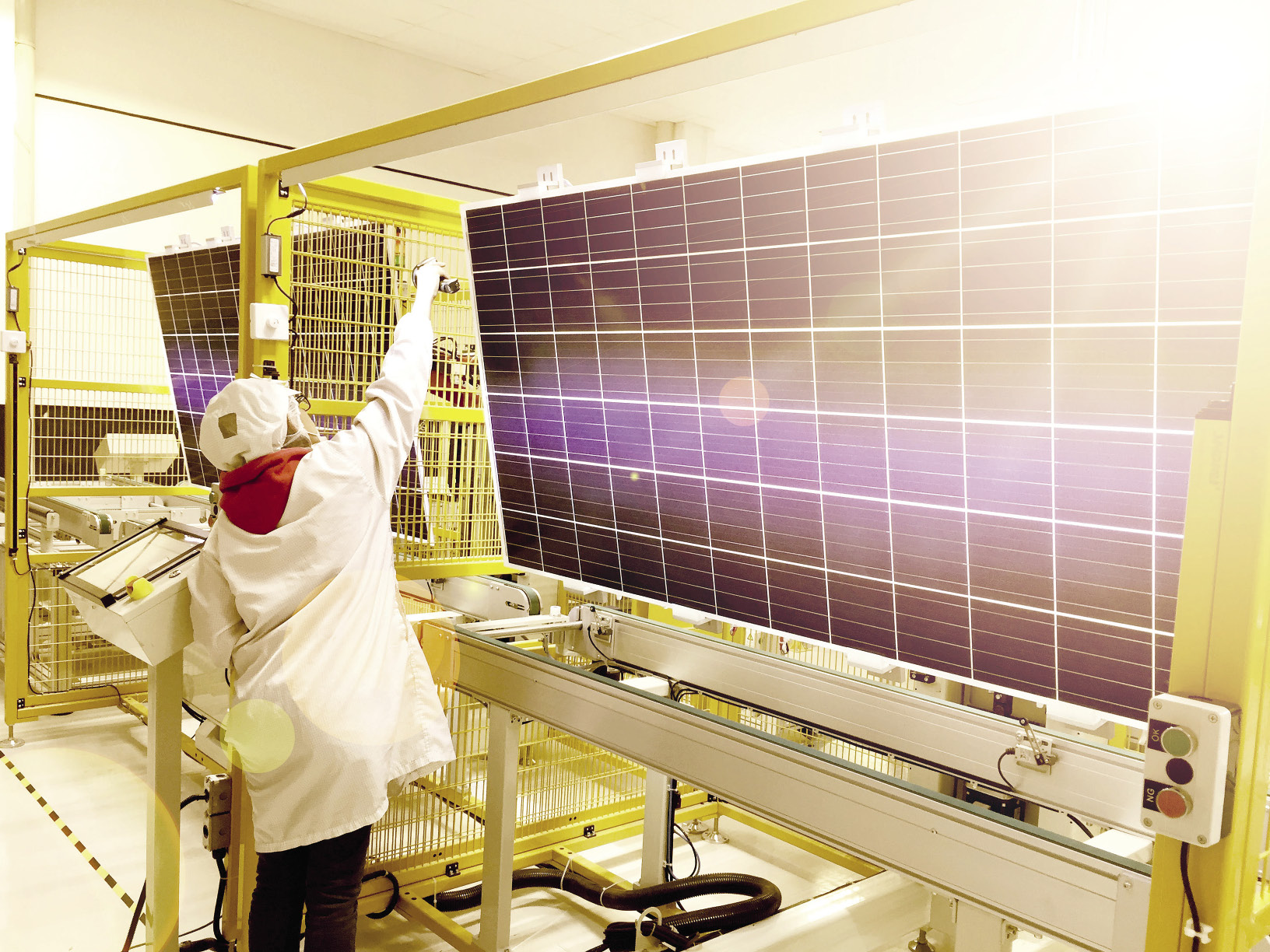
Solar panel maker Canadian Solar says it has achieved 22.8% efficiency for its p-type multicrystalline P5 solar cell. The company said the new record was confirmed by Germany’s Institute für Solarenergieforschung GmbH and betters the previous record of 22.28% set at the end of May by the manufacturer.
“I am very pleased to announce that we broke the world record yet again,” said Canadian Solar CEO Shawn Qu. “This is a milestone for our P5 technology development. It proves that our multicrystalline silicon technology can achieve efficiencies very close to mono while still enjoying the cost advantage of multi.”
The new record, the company added, was achieved with 157mm² P5 silicon wafers plus metal catalyzed chemical etching – the ‘black silicon’ process; selective emitter technology; a multi-layer, anti-reflection coating; advanced surface passivation; and optimized grid design and metallization.
Cast mono
Solar cells of the kind are produced with seeded cast silicon, also known as cast-mono or quasi-mono crystalline silicon. The cast mono process enables the production of ‘mono like’ wafer material using a modified multicrystalline furnace and avoids costly investment in ingot pulling machinery. Cast-mono wafers are less susceptible to recombination caused by boron-oxygen defects and have the advantage of lower light induced degradation.
Rival manufacturer GCL Systems Integration last spring unveiled modules based on cast mono tech with an 18.9% efficiency.
Cast mono manufacturing emerged at the beginning of the decade but lapsed due to a lack of production lines. However, with more efficient monocrystalline panels surpassing multi as the industry standard, multicrystalline producers have returned to cast mono technology to avoid the expense of retooling their production capacities.
This content is protected by copyright and may not be reused. If you want to cooperate with us and would like to reuse some of our content, please contact: [email protected].

Please login to comment

Wow what an amazing Job you guys did, I wish your company did work for South Africa I will wish u guys can make sure we get the Solar Panels as they are.
[…] Cast mono cellsalso known as Quasi monosilicon cells are made using a cast manufacturing process similar to polycrystalline cells. The less energy intensive casting process reduces the cost of manufacturing the ‘mono like’ cells compared to conventional mono cells made using the common Czochralski process. Cast-mono wafers are less susceptible boron-oxygen defects and have a low rate of light-induced degradation (LID) making them comparable in performance and reliability to monocrystalline cells. Cast mono cells have been around for many years but only recently adopted by several of the large panel manufacturers including Canadian Solar, Jinko Solar & GCL. […]