India’s Avaada unveils hybrid solar battery inverter

From pv magazine USA
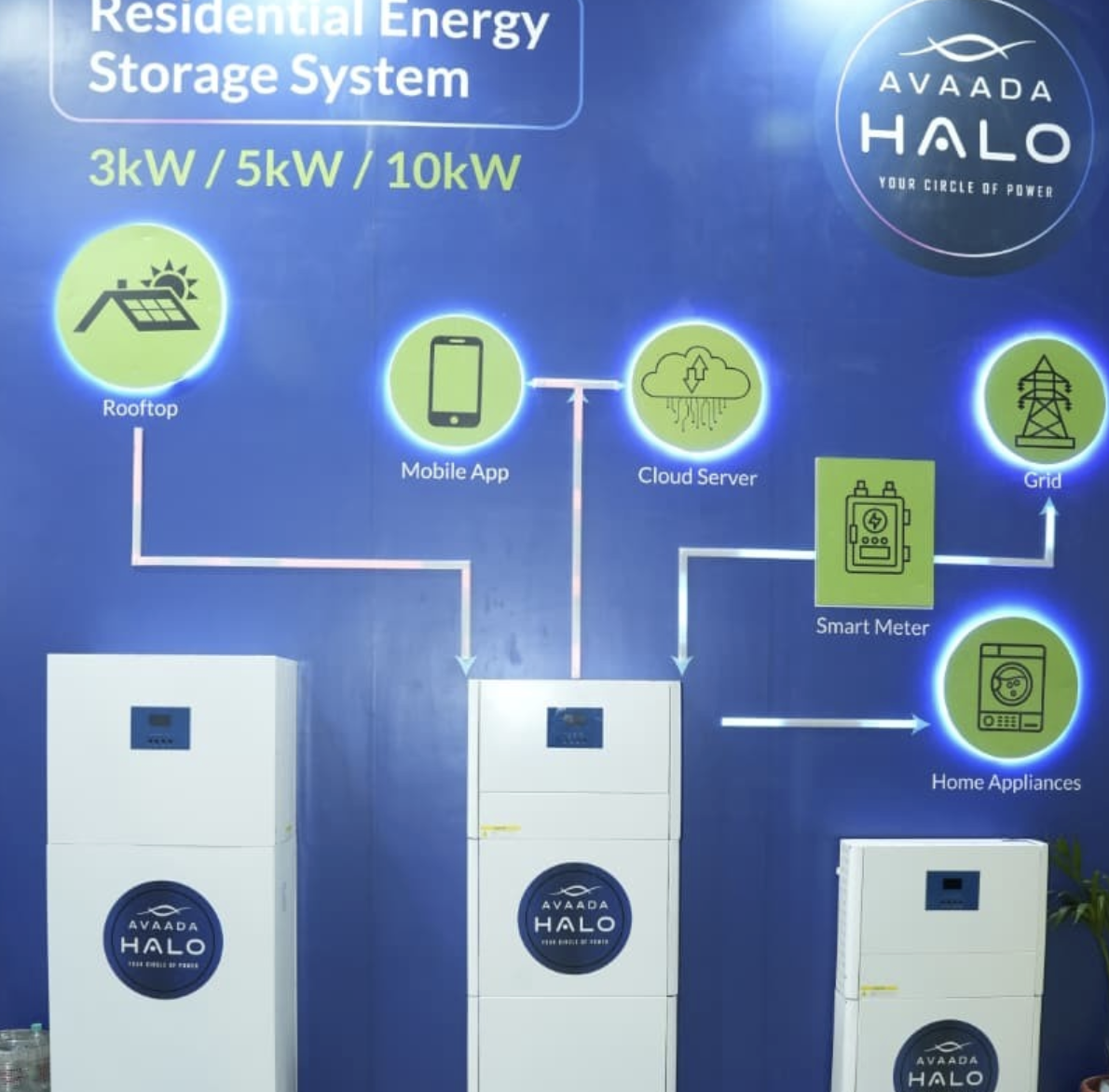
Avaada has launched its “Halo” hybrid battery inverter, designed, developed, and manufactured entirely in India. The system combines an inverter and lithium-ion battery pack into a single compact unit that is both scalable and stackable. It is available in 3-kilowatt, 5-kilowatt, and 10-kilowatt configurations, making it suitable for residential, commercial, and small industrial applications.
“This hybrid battery inverter is easy to install, easy to use, requires zero maintenance, and is designed for long-term durability,” a company spokesperson told pv magazine during the product demonstration at REI 2025.
The standard Halo model includes a 5-kilowatt inverter paired with a 10-kilowatt-hour lithium battery pack made up of two 5-kilowatt-hour modules. Customers can expand capacity to 20 kWh by stacking additional units to meet household or business energy demands.
The system supports solar charging, grid feed-in, and smart load management. Users can store solar energy during the day and supply power at night or during outages. They also have the option to feed excess electricity back to the grid, ensuring efficient use of renewable power.
Unlike other systems in the market, Avaada Halo integrates both the hybrid inverter and battery into a single housing. The lithium-ion battery is rated for up to 10 years of service life, compared with the typical three-year lifespan of lead-acid batteries.
Halo systems can run air conditioners and other heavy household appliances. The company said the compact design makes the unit suitable for visible installation in living spaces, unlike conventional systems that are typically concealed.
While the 3 kW and 5 kW models target residential customers, the 10-kilowatt version is aimed at clinics, gyms, small offices, schools, and other commercial users.
Avaada Halo also includes mobile app connectivity to track energy consumption, load, and remaining backup. The system stores performance data on a cloud server, enabling artificial intelligence–based monitoring and optimization.
Despite its integrated design and advanced features, Avaada said the total system cost remains comparable to conventional inverter and battery setups.
This content is protected by copyright and may not be reused. If you want to cooperate with us and would like to reuse some of our content, please contact: [email protected].

Please login to comment