Vanadium flow and lithium-ion combine in world’s largest grid-forming hybrid storage plant in China

From ESS News
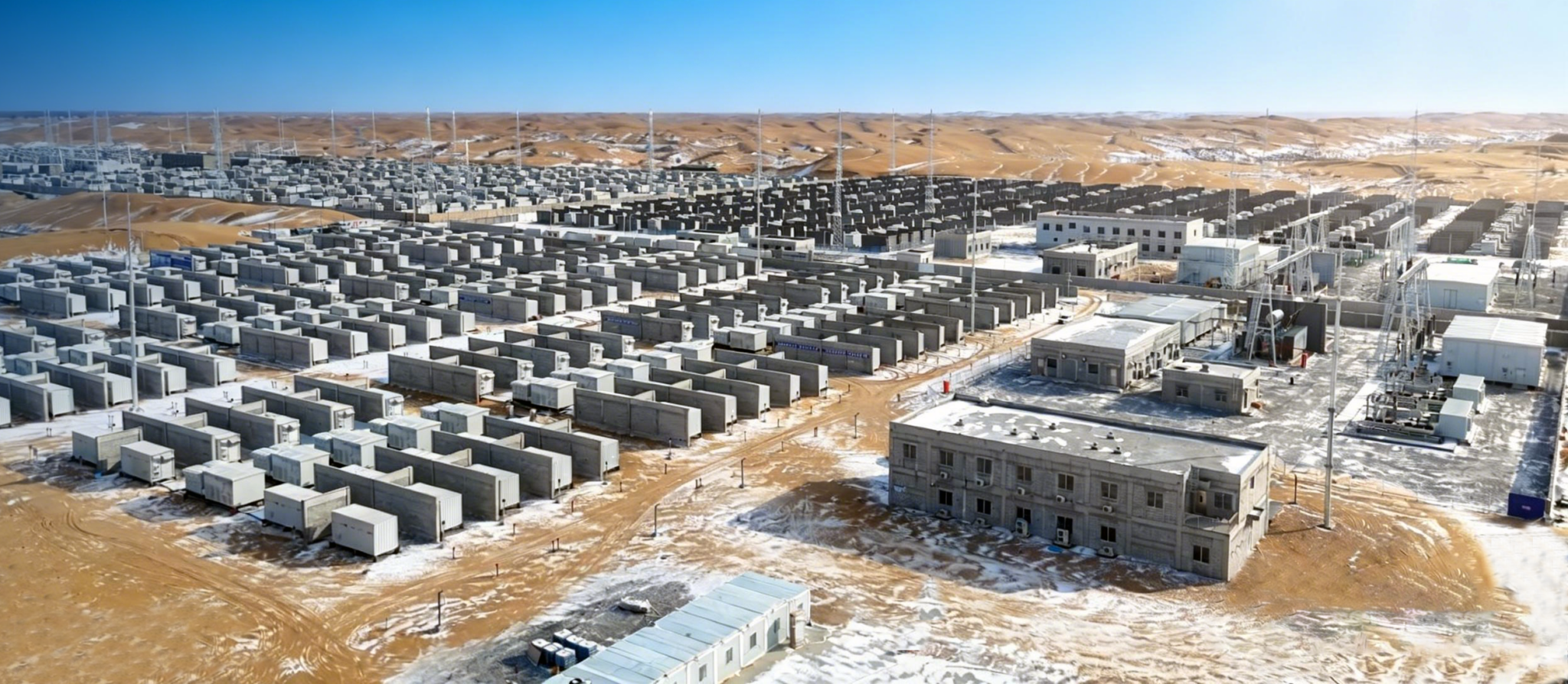
A 300 MW/1,200 MWh battery energy storage system (BESS) in Ordos, Inner Mongolia, has entered commercial operation after completing performance validation testing. The project uses a combination of lithium iron phosphate and vanadium flow batteries, aiming to pair fast-response batteries with longer-duration storage in a hybrid configuration.
It uses grid-forming power-conversion systems supplied by Sineng Electric, each at 1.25 MW. The system can provide power support, virtual inertia and damping support during grid disturbances, and black-start functions during outages. Sineng millisecond-level power support, virtual inertia and damping support, suppressing wide-frequency oscillations under both major and minor grid disturbances
The facility located in the Kubuqi Desert is part of a 3 GW/12.8 GWh energy storage buildout in the Inner Mongolia region known as the Gushanliang energy storage power station. Performance validation testing was said to be via a three-charge/three-discharge process.
To continue reading, please visit our ESS News website.
This content is protected by copyright and may not be reused. If you want to cooperate with us and would like to reuse some of our content, please contact: [email protected].

Please login to comment
Australian deposits of Vandium minerals are quite substantial, this technology, could it be useful for Australia’s benefit ?