Sungrow proposes multi-microgrid clusters for mining above 100 MW

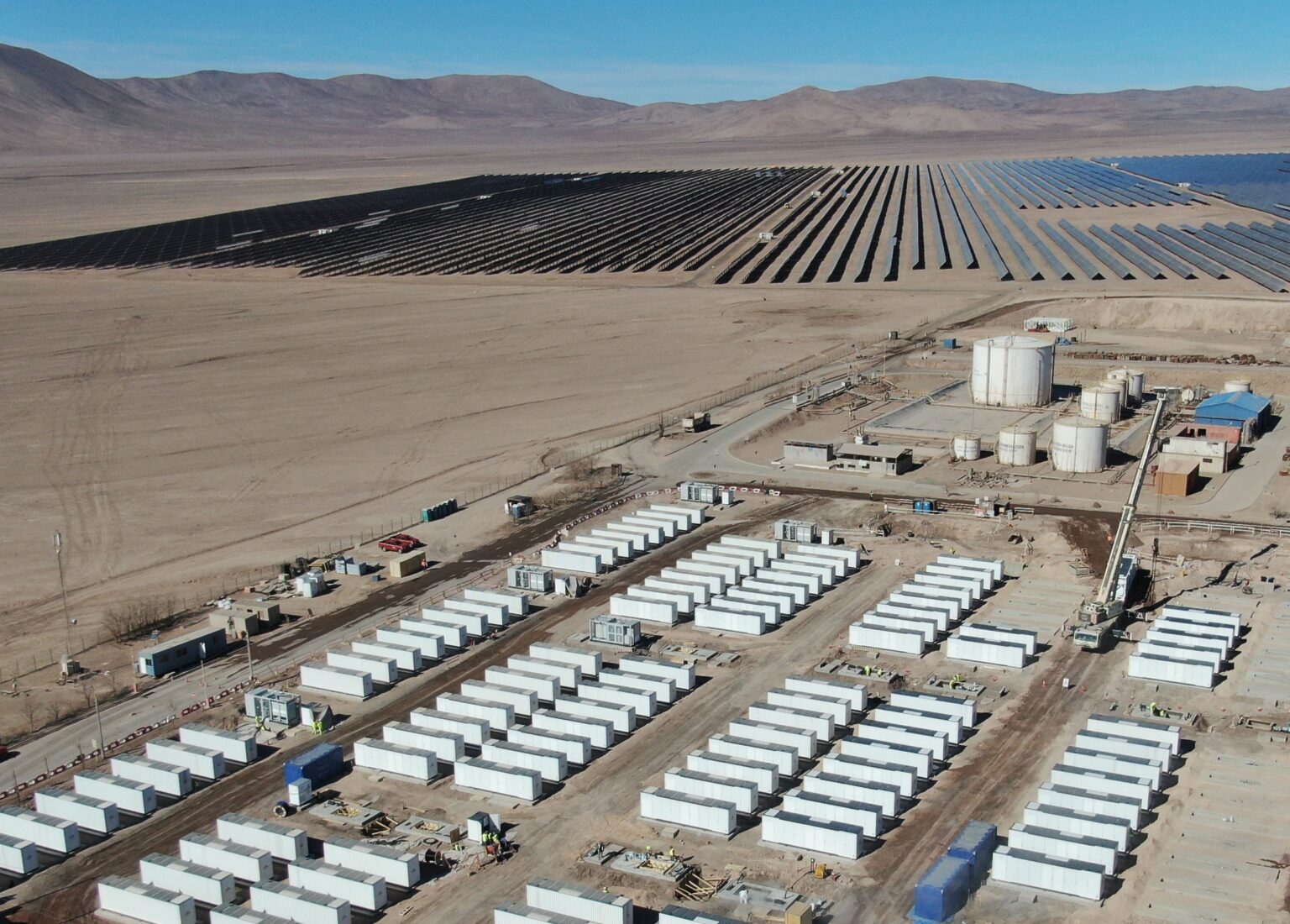
Chinese battery energy storage and inverter manufacturer Sungrow has released a mining microgrid power solutions white paper in partnership with TÜV Rheinland and the China Electrotechnical Society, covering application scenarios from 2.5 MW to more than 100 MW.
The scenario-specific options include tailored products and technologies designed to support medium-scale projects (2.5 MW to 20 MW), large-scale projects (20 MW to 100 MW), and multi-microgrid clusters above 100 MW.
Sungrow said the solutions are based on an integrated system architecture spanning solar, wind, storage, charging, and energy management systems, enabling coordinated asset operation and system-level control strategies.
Sungrow Grid Technology General Manager Rui Sun said mining operations face increasing demands for energy security and decarbonization, prompting a shift from fragmented systems to fully integrated microgrid solutions.
“These systems are capable of ensuring continuous performance under complex conditions,” Sun said.
Depending on site conditions and load profiles, the mining microgrid solutions can incorporate pre-integrated solar, storage, and backup power assets with standardized parameters and communication protocols to enable faster installation and simplified commissioning.
The systems employ predictive maintenance and IV-based diagnostics capable of detecting more than 20 module-level issues, with cell-level risks identified up to seven days in advance, supported by a global 24/7 service network, according to the company.
The solution also introduces a five-layer protection framework that classifies grid conditions from steady-state operation to grid collapse.
“The system enables rapid fault isolation in response to disturbances, ensuring continuous power supply through capabilities such as solar generation and load forecasting, fault ride-through, seamless grid-tied and off-grid switching, and black start,” the company said.
At the third Global Renewable Energy Summit 2026 in April, Sungrow also unveiled a new renewable energy system architecture called PowerMatrix, built on multi-port technology, native solar-storage integration, distributed control, reconfigurable energy paths, and source-level grid forming.
“It integrates PV, storage, grid, and loads into a unified, multi-node energy network, where energy can be dynamically routed, balanced, and optimized in real time,” the company said.
The company also announced the successful completion of a large-scale, full-condition grid-forming extreme test.
“The testing covered 14 scenarios over 138 hours and was independently witnessed and verified by TÜV Rheinland. The testing aligns with grid codes and requirements across major global markets, addressing growing challenges related to grid stability and high renewable penetration worldwide,” the company said.
An AI Data Centre Full-chain Power Supply Solution White Paper was also released at the summit, outlining key trends, challenges, and the evolution of power supply technologies for AI data centers.
It presents a grid-to-chip solution based on a “Green-Gray-White” three-space architecture, designed to support MW-scale racks and GW-scale clusters while enhancing safety, stability, and low-carbon performance.
The company is preparing to launch a new generation of high-efficiency solid-state transformers in 2026.
This content is protected by copyright and may not be reused. If you want to cooperate with us and would like to reuse some of our content, please contact: [email protected].

Please login to comment