Study finds ‘relatively good’ agreement in worldwide solar cell calibrations, but flags key differences in testing methods

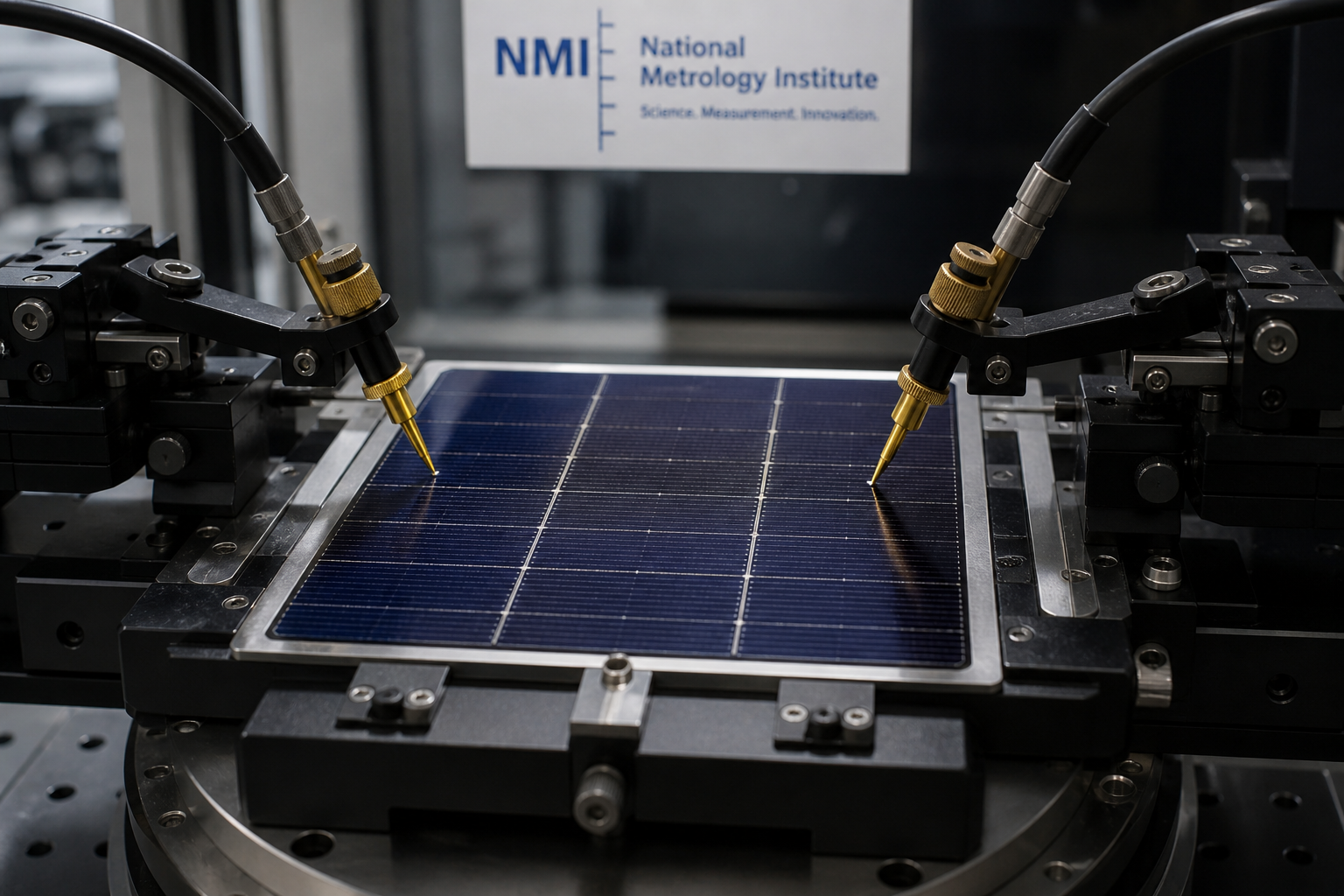
An international research team compared solar cell measurement methods across nine metrology institutes worldwide and found a “relatively good” level of agreement between them. However, some discrepancies were still observed in key parameters such as short-circuit current, voltage, and maximum power, highlighting differences in measurement procedures and experimental conditions.
The interlaboratory comparison involved nine participating institutions: Germany’s Physikalisch-Technische Bundesanstalt (PTB), designated as the reference laboratory; Finland’s Aalto University; Germany’s Fraunhofer Institute for Solar Energy Systems (Fraunhofer ISE), Switzerland’s University of Applied Sciences (SUPSI), Taiwan’s Industrial Technology Research Institute (ITRI), Germany’s Institute for Solar Energy Research Hamelin (ISFH), the European Commission Joint Research Centre (JRC), the Institute of Metrology of Bosnia and Herzegovina (IMBiH), and the Austrian Institute of Technology (AIT). No institutions from China participated in this comparison.
The scientists conducted their testing on solar cell designs complying with the World Photovoltaic Scale (WPVS), whic is an internationally established calibration system designed in 1995 to ensure traceable and consistent measurements of photovoltaic devices using standardized reference solar cells.
Four filtered WPVS-design reference silicon solar cells were used in the interlaboratory comparison, consisting of two low-pass (LP1, LP2) and two high-pass (HP1, HP2) filtered devices. Low-pass filtered cells transmit shorter wavelengths while blocking higher wavelengths, whereas high-pass filtered cells do the opposite by transmitting longer wavelengths and blocking shorter wavelengths, allowing tailored spectral responses for different photovoltaic measurements.
Each cell type included a PT-100 temperature sensor, a 2 cm ×2 cm active area, and Schott glass filters to precisely control which parts of the light spectrum reach the silicon cell. All measurements were performed under standard illumination conditions, with strict temperature and spectral control requirements. Reported values for each cell included expanded uncertainties, with contributions mainly from calibration, spectral mismatch correction, and temperature control.
Across all laboratories, uncertainty contributions consistently included calibration of reference devices, spectral mismatch correction, temperature control, optical alignment, and electronic measurement noise. Final expanded uncertainties for short-circuit current were found to vary but generally remained around 0.9–1.6%, reflecting differences in instrumentation and methodology. Spectral mismatch correction emerged as a dominant uncertainty source in nearly all setups due to differences between simulator spectra and reference conditions for illumination.
“The results were in quite good agreement,” the academics explained. “For short-circuit current measured at standard illumination conditions, 37 out of the 44 reported values showed agreement within their expanded uncertainties. The agreement of the short-circuit current values of participating laboratories was within -2.2% to 3.5%, with normalized error (En) ranging between -0.72 to 3.3 for low-pass filtered cells, and -2.1 to 2.8 for high-pass filtered cells. The measurements under natural sunlight carried out demonstrated the importance of measuring the spectral irradiance when using the sun as the source.”
The analysis also showed that high-pass filtered reference cell HP2 showed the largest discrepancies, mainly due to temperature-related shifts in the Schott RG780 filter and possible spectroradiometer instability. Maximum power (Pmax) results also showed larger deviations than open-circuit voltage, especially for high-pass filtered cells, with some values exceeding uncertainty limits. Additional variation arose from differences in temperature control, spectral mismatch correction, and data processing between laboratories.
“Based on the findings, efforts are being taken to reduce discrepancies even further,” the scientists concluded. “In measurements under natural sunlight, uncertainties may be higher than anticipated if irradiance spectra are not measured.”
Their findings are available in the study “Results of an interlaboratory comparison of adapted reference solar cells among nine metrological institutes,” which was recently published in Results in Engineering.
In February, an interlaboratory comparison between the CalLab PV Modules of Fraunhofer ISE and PTB found the two organizations deviate by less than 0.15% when measuring the performance of photovoltaic modules. The Fraunhofer team said this was one of the most important indications as to whether their analysis is on the right track.
Earlier in January 2025, China’s Fujian Metrology Institute (FMI) and the National Photovoltaic Industry Measurement and Testing Center (NPVM) announced the creation of a metrological traceability system for both silicon and perovskite solar cells. The calibration system consists of a monochromatic light system, a bias light system, a 3D-motion measurement platform with temperature control, and an electrical measurement system.
This content is protected by copyright and may not be reused. If you want to cooperate with us and would like to reuse some of our content, please contact: [email protected].

Please login to comment