Renewables-powered data centers feasible with sevenfold solar and wind overbuild, study finds

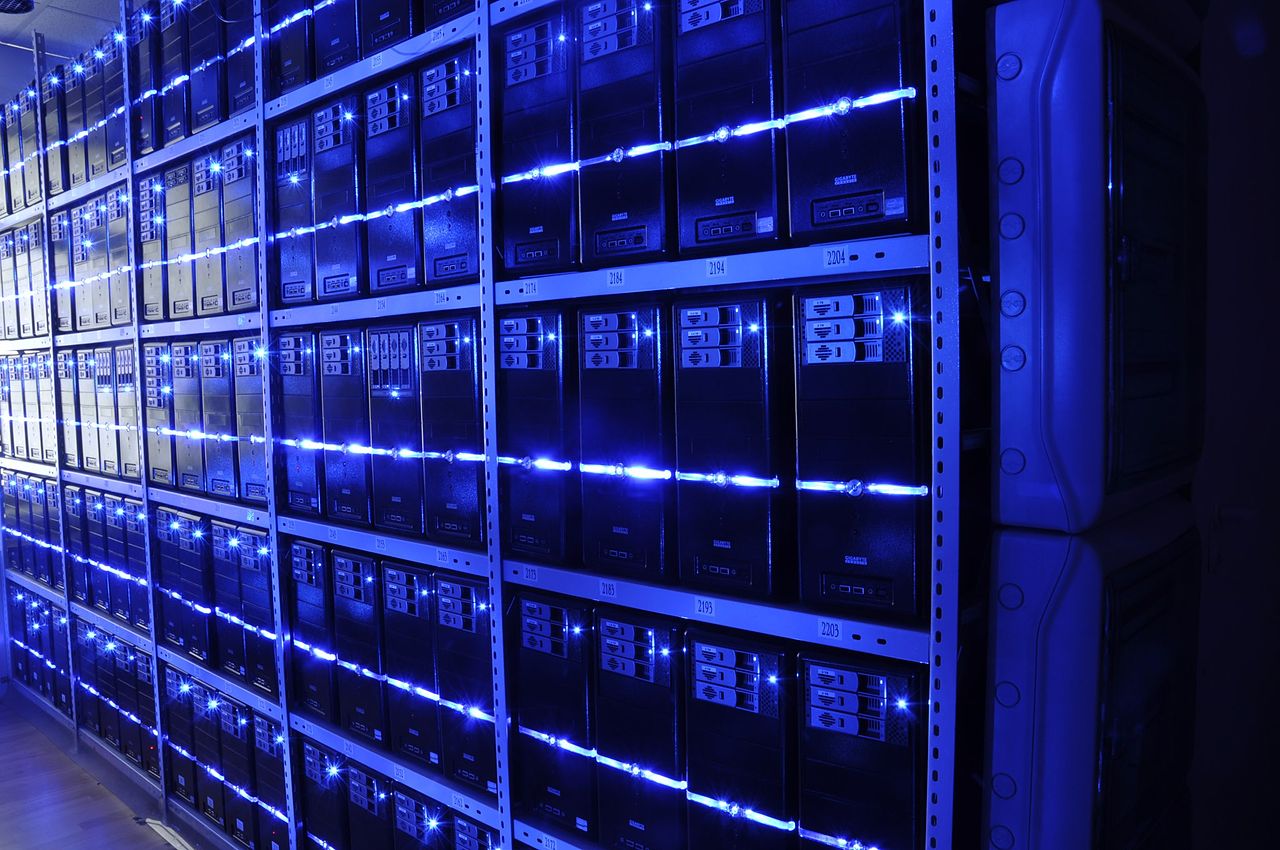
With appropriate backup power and demand side flexibility measures in place, it is both technically and economically possible for data centers to use intermittent renewables sources like wind and solar to provide continuous baseload power, according to a study by LUT University, Finland, exploring this possibility.
The study concluded that, because data centers have limited ability to adapt to fluctuations in solar generation, they must therefore have access to at least seven times their baseload operating requirements. However, such an oversized supply of solar, or wind, to ensure continuous power availability would also lead to curtailment of excess solar generation during peak production hours. In addition, even with overcapacity and battery storage, wind and solar alone cannot guarantee uninterrupted electricity supply for data centers.
Altti Meriläinen, Junior Researcher at LUT University, told pv magazine that location is a massive factor in determining whether it is cost-effective to power a data center with 100% solar and battery storage. “It depends on the location. According to a recent report by IRENA, solar PV and BESS based baseload supply can reach levelized cost of electricity (LCOE) of less than €100 ($115)/MWh in several locations around the globe,” the researcher said, referencing a recent report on the economics of firm solar and wind by the International Renewable Energy Agency (IRENA),” she stated.
The LUT University study focused on the continuous supply of 1 GW of renewable energy to two hypothetical data center scenarios in the Nordic environment – a full baseload power supply (8,760 h/a) and a scenario with full-load hours of at least 8,000 h/a, mirroring the operational characteristics of nuclear power plants.
The model the study used was an off-grid system comprising wind, solar, a battery energy storage system (BESS) and a backup power plant. Both configurations showed backup generation is crucial and the location of the renewable generation has a strong impact on the cost of supplied electricity. The LCOE at the most favorable location can be up to 24% lower than at the least favorable location, while the LCOE for the continuous full-load operation results approximately in 100 €/MWh and decreases below 80 €/MWh in the 8000 h/a scenario in the most favorable location.
The study noted that the data center chosen as the end use case represented a simplified load profile with a relatively constant power demand. The researchers did not model the detailed operational behavior of data centers, such as cooling requirements or dynamic load variations. The objective was purely to see whether Nordic environments can host renewable-powered data centers.
“We are currently preparing a project called Net Zero Energy Communities together with data center investors and operators where the analysis will be expanded and detailed by analyzing real-life cases,” said Meriläinen on future developments arising from the study.
LUT University’s Professor Samuli Honkapuro, added that the study has been discussed in major Finnish media. “We are communicating the key message to policy makers. For instance, we have discussed with a member of the Finnish parliament, who is running a legislative initiative about grid connection requirements of the data centers,” the academic told pv magazine.
Flexibility
The researchers’ work also highlighted that the operating expenditure of the backup power plant can be reduced when data centers embrace demand-side flexibility. However, engaging in demand response programs could also lead to higher curtailment of renewable generation, the study said.
In Finland, where nuclear is a big part of the energy mix, the study’s approach can offer advantages over nuclear power for data center developers, with the main bonus being shorter construction times.
“Solar energy production is highly concentrated in the summer months, emphasizing the importance of storage and balancing capacity. Although the Nordic climate imposes strong seasonal constraints on renewable generation, the results demonstrate that a renewable-based baseload system can achieve cost levels comparable with nuclear power. This finding strengthens the case for renewables as a viable baseload option even under the challenging conditions of high-latitude regions,” the paper concluded.
The study ‘Techno-economic feasibility of a renewable baseload power supply for data centers’ will appear in the journal Energy in August 2026.
This content is protected by copyright and may not be reused. If you want to cooperate with us and would like to reuse some of our content, please contact: [email protected].

Please login to comment