Australian farmers call for on-farm electricification and clean tech support
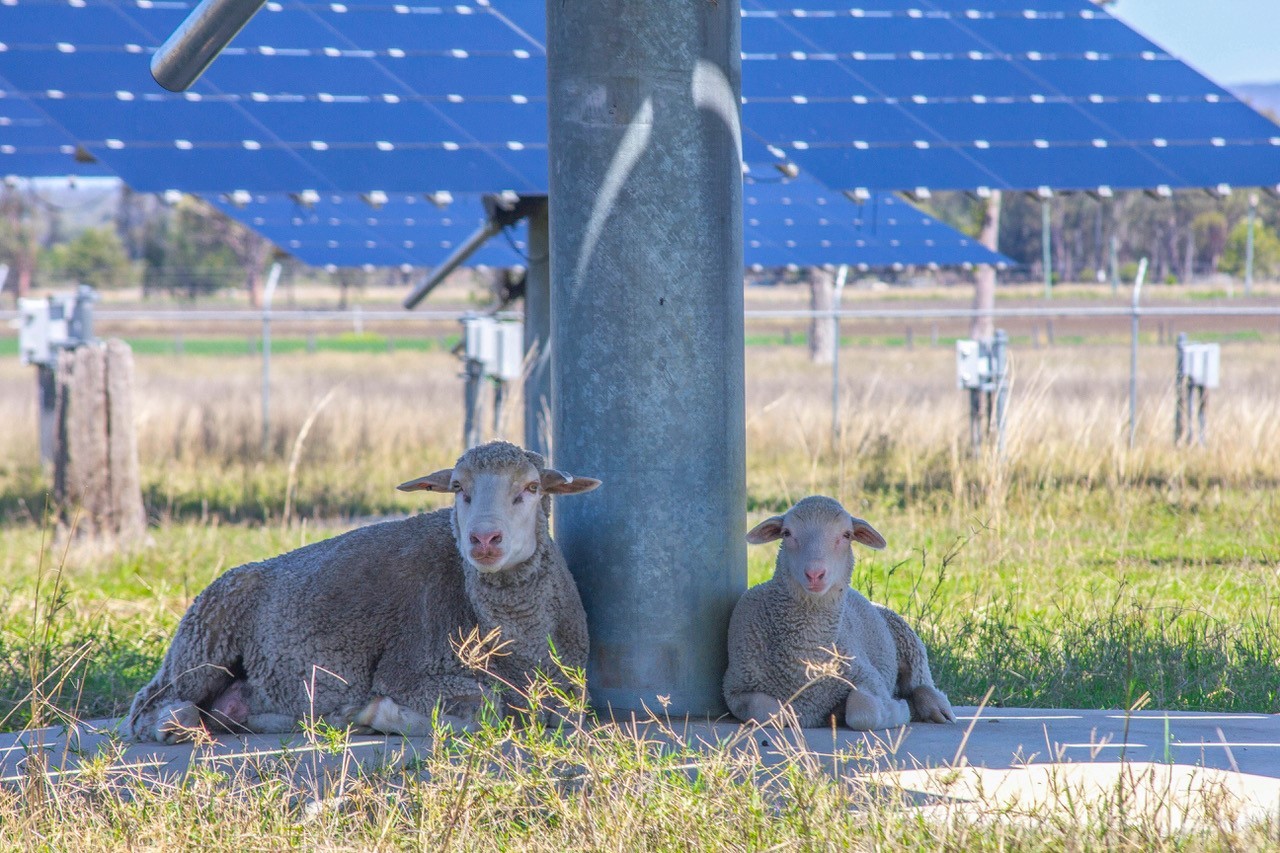
The Farmers for Climate Action (FCA) advocacy organisation, with almost 9,000 active members and a support network of approximately 80,000, has released a new report titled Energy Sovereignty for Regional Australia calling it a roadmap for improving energy security for the agricultural sector by switching to locally produced, lower cost energy, and sustainable biofuels.
Current fuel price hikes and fuel supply insecurity are driving the call for accelerating electrification of farm equipment and processes, which the report says is one of the biggest opportunities in a generation for farmers to reduce costs.

The report says Australian farmers are already electrifying irrigation, water pumps and processing machinery, which results in cutting diesel use.
FCA identifies that a shift beyond diesel in heavy industry is already underway, with Linfox, Janus Trucks and New Energy Transport already running heavy electric trucks on major trucking routes.
The report seeks sensible tax policy reform, including capping the Fuel Tax Credit Scheme (FTCS) at $50 million per claimant to drive electrification technology, but say farmers and associated industries must be protected.
The roadmap details how biofuels can be used as a temporary backup for older tractors, while switching over to electric systems for stationary gear like pumps and cool rooms and, in future, heavy equipment to permanently lower farm running costs.
FCA Chief Executive Officer Verity Morgan-Schmidt said the fuel supply disruption has highlighted just how vulnerable the agricultural sector is.
“Why would we rely on imported diesel we can’t control when, with sensible shifts, we can help build the systems to get us to electric machines running on cheap, clean energy powered by the Aussie sun?” Morgan-Schmidt said.
Western Australian mixed farmer Simon Wallwork said generating clean energy on-farm and moving toward electric machinery is a major opportunity to cut costs.
“By embracing these new tools, we can capture the benefits of the energy shift while making our farms much more resilient and productive,” Wallwork said.
South Australian rangelands beef cattle producer Gillian Fennell said from the early remote area power supply (RAPS) units to modern solar pumps – farmers have been early adopters of renewables.
“Government needs to focus on removing the barriers to enable more farming businesses to upgrade their equipment and invest in new technology,” Fennell said.
The roadmap report author Professor Ray Wills described diesel dependence is a vulnerability.
“Energy sovereignty is the opportunity. The job of policy now is to turn that opportunity into practical change – reducing exposure, lowering risk, and giving regional Australians more durable control over the energy systems their businesses and communities depend on.”
Case Study – Energy needed for a 6,000 ha farm seeding operation
The report includes case studies of on farm costs associated with using diesel compared to other forms of energy.
“A broadacre seeding program of around 6,000 hectares over 35 days might currently use about 30,000 litres of diesel, equal to roughly 320 MWh of fuel energy. If the same work were done with an efficient electric tractor, the electricity required could fall to around 110 MWh because electric drivetrains convert much more of their energy into useful work,” the report says.
“That is about 3.1 MWh a day over the seeding period. In indicative terms, that daily electricity demand could be supplied by around 600–900 kW of solar PV, using 1–1.5 hectares of panels, together with about 2.5 MWh of battery storage.”
“This is not a blueprint for every farm. It is an illustration of how a large recurring fuel bill can, over time, be replaced by productive on farm energy infrastructure that also supports pumps, sheds, workshops or trucks, beyond seeding.”

The report adds that it is easier to electrify stationary and short‑range jobs first than the biggest mobile machines.
“Many of the largest early opportunities in regional Australia are in fixed and semi‑fixed systems already well suited to electrification: irrigation and water pumping, cold storage and refrigeration, sheds and workshops, processing equipment, on‑farm utilities, and charging of light and medium vehicles.”
“As these uses electrify, they reduce diesel demand while building the skills, service capacity and confidence needed for more complex changes.”
“Over time, this can be followed by the progressive electrification of more mobile plant as products mature and become increasing reliable and affordable. Light vehicles, materials‑handling equipment and smaller machinery are moving first, with heavier machinery and longer‑haul freight expected to become mainstream in leading markets around the early 2030s, with spill‑overs into Australian markets as products and service networks develop. “
“Policy should be designed so that wherever electrification is practical it becomes easier, cheaper and more attractive to adopt, while harder applications are supported through transitional solutions rather than used as a reason to delay the broader shift,” the report says.

This content is protected by copyright and may not be reused. If you want to cooperate with us and would like to reuse some of our content, please contact: [email protected].

Please login to comment