SNEC 2026 ESS readout: Storage moves from add-on to grid asset

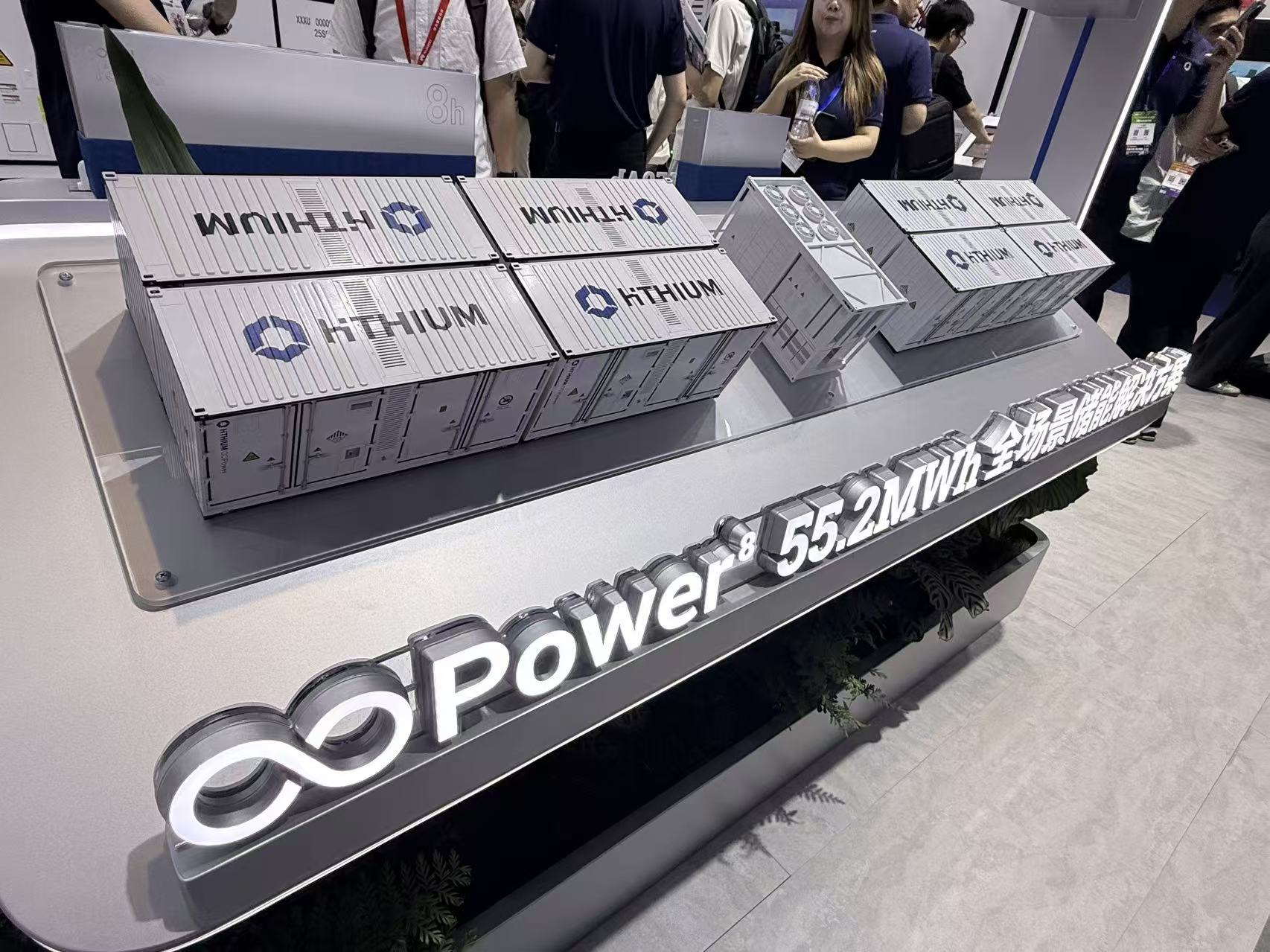
At SNEC 2026 in Shanghai, energy storage was no longer positioned as a supporting segment of solar. It emerged as a central theme in its own right.
This was evident in exhibition halls, where battery cells, DC blocks, PCS platforms, EMS systems and integrated storage solutions attracted significant attention. It was also reflected in the industry language. Companies increasingly described storage not as a mandatory add-on to PV projects, but in terms of duration, grid-forming capability, data center applications, system architecture and lifecycle value.
The shift points to a broader transition: energy storage is moving from project accessory to core power-system infrastructure. Five trends stood out.
Long-duration storage moves toward defined product strategy
Long-duration energy storage (LDES) has been discussed for several years as a future requirement. At SNEC 2026, it increasingly appeared as a defined product category.
Hithium presented one of the clearest signals with its ∞Power 6.9 MWh eight-hour storage system, based on a 1,300 Ah cell developed for long-duration applications. The company also showcased a 650 Ah cell and a 10+ MWh system concept.
The key development is not only higher capacity, but a shift toward native eight-hour system design. Extending duration by simply adding batteries differs significantly from designing a system optimized for long discharge profiles. Longer duration affects cell chemistry requirements, thermal management, BMS design, container layout, degradation control and project economics.
Hithium product director Ye Zi described long-duration storage as infrastructure for power-system security, driven by higher renewable penetration and increasing “duck curve” effects. This frames LDES as a grid requirement rather than a product competition.
Four-hour systems will remain important, particularly where market structures reward daily cycling. However, for renewable-heavy grids, AI data centers, island microgrids and regions facing curtailment or negative pricing, six- to eight-hour systems are increasingly being considered in baseline project design.
Sodium-ion approaches early-scale commercialization
Sodium-ion technology also gained visibility, though it remains at an early commercialization stage. Lithium iron phosphate (LFP) continues to dominate stationary storage due to established supply chains, cost stability and bankability.
However, sodium-ion is emerging as a complementary chemistry rather than a replacement. CATL’s three-year, 60 GWh sodium-ion supply agreement with HyperStrong was widely referenced as an indication of early scale-up beyond pilot deployments.
The rationale is based on material availability and cost stability. Sodium is abundant and less exposed to lithium price volatility. In stationary applications, weight and energy density constraints are less critical than cost, safety and cycle life.
At SNEC, sodium-ion was increasingly discussed as a parallel technology pathway rather than a niche alternative. Potential applications include cold climates, long-cycle use cases, high-safety installations and markets prioritizing supply-chain diversification.
The most realistic outlook is a dual-chemistry market: LFP remains the mainstream technology, while sodium-ion competes in segments where its characteristics offer advantages. If GWh-scale manufacturing and bankability are achieved, sodium-ion could become a meaningful option in the next storage investment cycle.
Grid-forming becomes a baseline requirement
Grid-forming capability was one of the most prominent technical themes at the exhibition. Previously considered a niche function, it is now increasingly positioned as a standard requirement for advanced storage and inverter systems.
The driver is the growing share of inverter-based renewable generation. Power systems now require frequency regulation, voltage support, fault ride-through, oscillation damping, black-start capability and stable operation under weak-grid conditions. Grid-following systems depend on a strong external reference, which becomes less reliable as renewable penetration increases.
Huawei Digital Power introduced a smart string grid-forming PCS, positioning it as a combined power conversion and grid-stability platform. The system integrates battery management with grid-support functions.
Sungrow’s PowerMatrix followed a similar direction, integrating PV inversion, storage conversion, energy routing and grid-forming control into a unified architecture. The approach reflects a shift toward energy nodes rather than separate PV, storage and grid components.
Industry representatives, including Sungrow’s Cai Zhuang, noted that grid-forming is evolving from a PCS-level feature to a system-wide capability spanning wind, PV and storage assets. This suggests grid-forming is moving toward baseline requirements for utility-scale projects rather than premium functionality.
AI data centers emerge as a structural demand driver
The link between artificial intelligence data centers and energy storage was a recurring topic at SNEC, driven by the rapid expansion of compute infrastructure and its power demand profile.
AI data centers require high reliability and are sensitive to interruptions. At the same time, their load patterns can create stress for local grids. In this context, energy storage is increasingly positioned as a buffer between variable renewable generation, constrained grid capacity and continuous computing demand.
Several manufacturers highlighted applications in AI data center environments. Hithium positioned its eight-hour LDES system for both renewable hubs and data center backup and load management. Canadian Solar’s SolBank 4.0 platform targets two-, four- and eight-hour applications, including large-scale storage and AI computing facilities.
The emerging concept is broader than backup power. It includes peak load management, renewable utilization optimization, grid interconnection support and resilience services. Over time, data center energy systems may integrate storage, UPS, on-site generation and grid-interactive controls into a single architecture.
This segment is attractive for storage suppliers due to its scale and reliability requirements, but it also raises the bar for safety, response time, thermal integration and system control.
Full-stack integration becomes a competitive threshold
A clear structural trend at SNEC was deeper vertical integration across the storage value chain. The market is increasingly shifting away from standalone component supply toward full-system delivery.
Canadian Solar emphasized its SolBank 4.0 platform as part of a vertically integrated chain covering cells, packs, PCS, EMS, system integration, EPC and O&M. LONGi highlighted a similar strategy through its LONGi ONE approach, combining PV and storage into integrated solutions rather than multi-vendor configurations.
Across the industry, battery manufacturers are expanding into systems and services, PV companies are entering storage, and inverter companies are moving into energy management and grid-forming architectures.
This reflects growing project complexity. Storage systems now require compliance certification, bankability guarantees, software integration, thermal design, commissioning support and long-term performance assurance. Component-level supply alone is increasingly insufficient.
The result is likely to accelerate consolidation. Smaller players may remain in niche markets, but large-scale deployment is expected to favor vertically integrated companies with access to cells, power electronics, software platforms, financing capability and global service networks.
Outlook
SNEC 2026 highlighted an energy storage sector entering a more system-critical phase of development. While cost, capacity and cell improvements remain relevant, they are no longer the only defining factors.
The competitive focus is shifting toward system performance and integration: longer-duration operation, grid stability, compatibility with complex loads such as AI data centers, intelligent dispatch capability and end-to-end accountability across hardware and software layers.
Energy storage is increasingly positioned not as a supporting technology for solar deployment, but as a core infrastructure layer determining how much renewable energy can be effectively integrated into power systems.
This content is protected by copyright and may not be reused. If you want to cooperate with us and would like to reuse some of our content, please contact: [email protected].

Please login to comment