TÜV NORD study finds back-contact advantage over TOPCon is limited to mild shading conditions

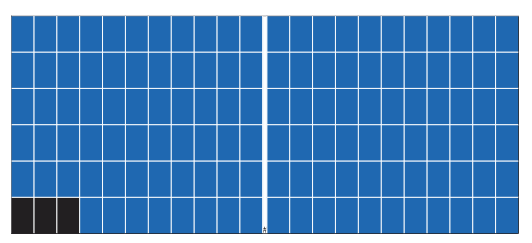
Researchers from Germany-based technical inspection association TÜV NORD have conducted a series of simulations to compare the performance of back-contact (BC) solar modules with that of TOPCon counterparts under partial shading conditions and have found that BC outperforms TOPCon when shading occurs across different substrings within a single string.
“When shading affects different substrings within a single string, BC modules exhibit a performance advantage under mild shading conditions, corresponding author Cohen Chen told pv magazine. “However, as shading becomes more severe, this advantage diminishes, and the output power loss of the BC module approaches that of the TOPCon module.”
The scientists said their analysis considered realistic shading scenarios and complex patterns, including point, patch, linear, and symmetrical shading caused by environmental factors. Such conditions can lead to voltage and current losses, generate multi-peak P–V characteristics, and increase the complexity of maximum power point tracking (MPPT). The study also evaluated discrete shading patterns associated with common field conditions, such as bird droppings, fallen leaves, and shadows from vertical objects.
For the performance comparison, the researchers used a double-diode model, which they said can accurately simulate PV module behavior under low irradiance and partial shading by accounting for diode currents, photocurrent, electrical resistances, and reverse breakdown effects. They explained that partial shading reduces photocurrent and can drive shaded cells into reverse bias, making breakdown characteristics a key factor in bypass diode activation. If BC cells exhibit soft, low-voltage, and non-destructive breakdown behavior, which delays bypass diode activation and helps reduce shading losses, TOPCon cells typically trigger bypass diode activation earlier due to their higher breakdown voltage.
For their testing, the academics used BC and TOPCon modules with identical dimensions and electrical configurations. Both module types used 66-cell layouts with 132 half-cut cells, divided into three substrings with bypass diodes. Experiments were conducted at a CNAS-accredited TÜV NORD laboratory using a pulsed solar simulator under standard test conditions.
Partial shading tests were performed using six representative scenarios to evaluate module performance differences. These included single-cell shading, continuous shading along the long and short sides, and realistic discrete patterns. Point shading (M1), patch shading (M2), and linear shading (M3) were designed to represent dust or bird droppings, fallen leaves, and shadows from vertical objects, respectively. The experiments aimed to characterize bypass diode activation and power loss behavior under various shading conditions.
The analysis showed that BC modules have superior shading tolerance compared with TOPCon modules due to their low-voltage, soft breakdown characteristics. A single fully shaded BC cell causes only 12.9% power loss, compared with 33.9% for TOPCon, which activates bypass diodes earlier.
The researchers concluded that BC modules exhibit a clear performance advantage over TOPCon modules under mild cross-substring shading conditions with three or fewer shaded cells within a single string. However, when the number of shaded cells reaches four or more, this advantage disappears, and both technologies exhibit similar behavior, with power losses of approximately 50%.
“Identifying this performance threshold clearly defines the practical operating limits of BC modules in shading-prone environments, providing a quantitative basis for module selection and PV array layout optimization,” Chen concluded.
The results of the tests were presented in “A comparative study on the performance of BC and TOPCon modules under partial shading conditions,” published in Solar Energy.
In August 2025, researchers from Trina Solar and China’s Nanchang University conducted a similar study and reached broadly comparable conclusions. “BC modules outperform TOPCon when fewer than three cells are shaded, while their power output becomes identical beyond this threshold,” the researchers said at the time. They attributed this behavior to the BC cell’s breakdown voltage of 5 V and the approximately 15 V total reverse bias required to activate the bypass diode.
This content is protected by copyright and may not be reused. If you want to cooperate with us and would like to reuse some of our content, please contact: [email protected].

Please login to comment