Growth of U.S. pure-play solar cell makers critical for downstream module buyers and investors

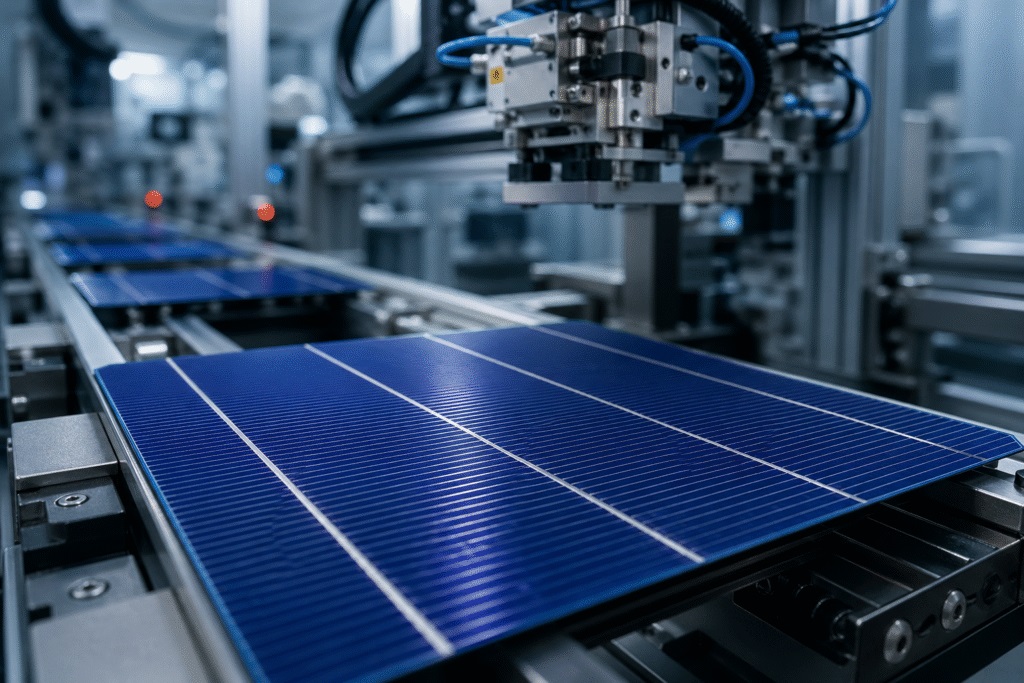
Announcements and potential investments into creating a full-integrated solar PV manufacturing eco-system have been in abundance since the Inflation Reduction Act was announced in 2022.
While the tendency has been to look at the entire value-chain and raw materials supply, the focus in the near term is firmly on solar cell production.
This article explains why the U.S. downstream community – comprising module procurement, investment and third-party auditing services – needs to focus its attention during 2026 to 2028 on solar cell production, as opposed to speculating on polysilicon, ingot and wafer production domestically.
Solar cell production has long been considered essential to forming a sustainable silicon-based PV manufacturing ecosystem, but its importance in the United States today appears to be way more than simply a midstream capacity build-out exercise.
These are the clear outcomes based on hundreds of discussions undertaken during the past couple of months with the full range of stakeholders driving U.S. solar production metrics in the coming years, with the conclusions from this research phase now feeding directly into the final agenda for the forthcoming Solar Manufacturing USA 2026 conference in Austin, Texas on 22-23 September 2026 – the first event in the United States to track manufacturing investments through to productivity.

Why the plans from pure-play cell makers are so critical to understand?
It is time for the U.S. solar industry to move beyond solar cell capacity-counting games and get to grips with production metrics, however challenging this crash-course in gigawatt-scale reality may be.
Technology-choice, process flows, efficiency levels, yield, product quality, operating costs, production equipment sourcing, IP ownership and raw materials purchasing – each of these is critical to evaluate across all the cell factories currently in production or planned for operations in the coming years.
But perhaps a more important factor feeding into the overall wafer/cell/module supply-chain analysis comes from the strategies of the companies owning and operating the cell factories in the United States.
Looking across the various companies in the United States that are currently producing solar cells, ramping up facilities, or set to go into production in 2027 and 2028, this cell-maker landscape can be segmented into three different categories, discussed below now in separate sections.
Backward-integrated cell and module activists
Many of the companies that started U.S. solar manufacturing activities with modules – and managed to navigate through the changing policy landscape of the past few years – are now looking at expanding backwards to in-house cell production availability.
Ultimately, this is being driven mainly through securing cell supply channels, rather than moving into cell production to ‘own’ the process and create differentiated cell manufacturing activities.
With a captive in-house order book, the goal for these types of companies tends to be driven by de-risking cell investments, with the source of financing typically retained within the consolidated operations, rather than having a more autonomous holding subsidiary that has its own P&L or strategic roadmap.
By default, companies moving from module-only to integrated cell-and-module tend to follow a capex/technology model similar to original module assembly investments – namely through turn-key lines and single supplier/contractor engagements.
Pure-play cell specialists
Currently, there are three companies in the U.S. that can be grouped into the pure-play cell specialist category; Suniva, ES Foundry and TALON PV. Suniva and ES Foundry are already in mass production: TALON PV is gearing up for production in 2027.
The importance of these three companies for U.S. PV manufacturing cannot be emphasized enough. Pure-play cell producers by default are required to specify and scrutinize production line configurations in a different way to other more vertically integrated entities.
From increased engagement with tool suppliers and raw materials supply channels, pure-play cell companies naturally prioritize cell production from an operational profitability standpoint: different to integrated cell/module makers that can run cell lines at a loss to gain from potential module revenue upside returns.
Therefore, Suniva, ES Foundry and TALON PV are among the most important solar manufacturers today in the United States, in terms of downstream investors and buyers looking at module purchasing options over the next few years. Again, another reason why investing in cell manufacturing now is potentially of greater benefit than simply relying on module companies to do the in-house cell sourcing themselves.
What about the outliers – Corning and Tesla?
There are always outliers when it comes to PV manufacturing. In terms of the companies likely to have an impact on cell production over the next five years in the United States, Corning and Tesla are probably the two that fall into this final category.
While Corning has not announced cell plans, it is unlikely that a company could have a solar manufacturing strategy that was based on polysilicon, ingots, wafers and modules – and specifically not make solar cells. Therefore, any reasonable model for solar cell manufacturing in the United States should assume cell capacity additions by Corning over the next 2-3 years.
Tesla similarly is an outlier, but for a different reason. Tesla’s entire PV manufacturing build-out in the United States (likely across the ingot-to-module stages) is for the company’s own energy requirements. Therefore, how the company addresses the cell stage is largely the choice of Tesla and whether the end game is to be a market leader in PV technology to the outside world or simply generate electrons from photons efficiently for internal consumption.
Hold the polysilicon and wafer news – U.S. solar cell return-on-capital comes first
Without a viable and sustainable cell manufacturing segment, domestic wafer and polysilicon availability in the United States is tomorrow’s problem.
Therefore, the inaugural Solar Manufacturing USA 2026 event has been finely tweaked from a content standpoint in the two months since going live with the event plans. More than 70% of the content on-stage over the two days will be silicon solar-cell specific; domestic U.S. producers, investments, capex, production equipment and materials supply.
On Day One of the event (on Tuesday 22 September), key executives from all three of the above-mentioned pure-play solar cell producers (Suniva, TALON PV and ES Foundry) will deliver 20-minute presentations under a special event theme – the U.S. Solar Cell Leadership Series.
To register to attend the event on 22-23 September in Austin, Texas, follow the ticketing page at the event website here.
This content is protected by copyright and may not be reused. If you want to cooperate with us and would like to reuse some of our content, please contact: [email protected].

Please login to comment