Ines, Mondragon launch new industrial tool for integrating photovoltaics into custom-made products

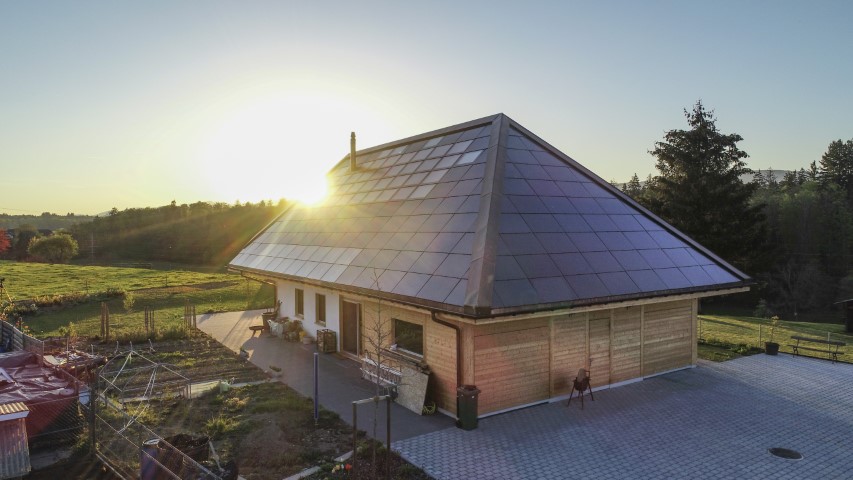
France’s National Solar Energy Institute (INES) – a division of the French Alternative Energies and Atomic Energy Commission (CEA) – and Spanish PV production equipment provider Mondragon have unveiled a new industrial tool designed to integrate photovoltaic technology into non-standardized products, including components for electric mobility and building-integrated photovoltaics (BIPV).
The partners’ new approach focuses on manufacturing the “core” of a photovoltaic module as a standalone prefabricated component that can later be incorporated into a wide range of products through different industrial processes.
To enable this, the two organizations developed a “pre-laminator” capable of assembling solar cells into an intermediate product – the photovoltaic core of a future module – before it is integrated by another manufacturer into a final application. The resulting component can then be incorporated using conventional flat lamination processes or alternative techniques such as 3D lamination, molding, or overmolding.
The pre-lamination process encapsulates the solar cell assembly in thermoplastic or thermoset polymers. Additional materials can also be introduced during this stage to provide specific functionalities, including improved storage, simplified logistics, or enhanced recyclability.
According to CEA, the process is designed for high-speed manufacturing and can produce a standard photovoltaic panel in less than one minute. The system also includes a digital control interface that precisely manages temperature, pressure, and processing speed to prevent visual defects such as bubbles and cracks. Photoluminescence testing is used to verify the quality and conformity of the pre-laminated components.
The use of thermoplastic polymers provides further advantages, as the materials can be reworked while maintaining their physical properties over time. This could help manufacturers develop more flexible PV products while ensuring compliance with existing module performance requirements.
The development is part of the European Seamless-PV project, launched in 2023 and coordinated by Spanish research institute Tecnalia in collaboration with French Institute for Energy Transition (ITE) operated under the INES.
The project covers the design and construction of the manufacturing equipment by Mondragon Assembly, as well as process development, material selection, and production of 60 m² of photovoltaic panels for building-facade integration. These panels will be installed on the experimental FACT building at the INES site in Le Bourget-du-Lac, France.
“For CEA, this represents a comprehensive project covering the transition to a higher technology readiness level (TRL) over four years, which is remarkably fast,” the French research organization said in a recent publication.
This content is protected by copyright and may not be reused. If you want to cooperate with us and would like to reuse some of our content, please contact: [email protected].

Please login to comment