The Hydrogen Stream: Tanaka energizes 500 kW fuel cell facility in Japan

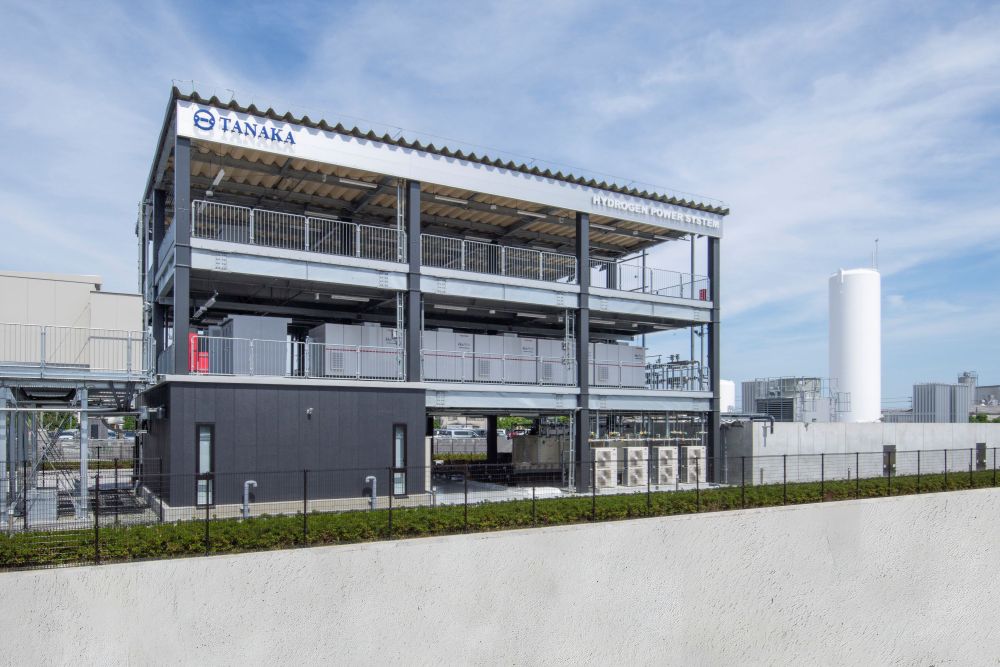
Tanaka announced it switched on Japan’s largest pure hydrogen fuel cell power generation facility at the company’s Shonan Plant in Hiratsuka, Kanagawa Prefecture. The precious metal provider said the facility is equipped with Toshiba’s H2Rex pure hydrogen fuel cell system, comprising five interconnected 100 kW units with a combined rated output of 500 kW. According to the company, the system can supply approximately 34% of the electricity consumed by the nearby Shonan Plant when operating at full capacity. The fuel cell system has an overall efficiency of 95% based on the lower heating value (LHV) and a design durability of approximately 80,000 operating hours. It features a salt-resistant specification for use in coastal environments, including port areas, and supports independent operation during power outages. The system is also equipped with an energy management system (EMS) that provides load-following response speeds five times faster than conventional systems, according to the company. The facility delivers three-phase, three-wire AC power at 210/220 V. Each fuel cell unit measures 2.8 m in width, 2.0 m in depth, and 1.9 m in height. “Until now, Tanaka has contributed to the advancement of hydrogen technologies by developing precious metal-based materials. With the commencement of operations of this facility, we are now beginning to operate as a user of hydrogen energy ourselves. This will enable us to identify operational challenges under real-world operating conditions and share our findings,” the company said in a statement.
John Cockerill Hydrogen said it has manufactured and assembled France’s first 5 MW electrolyzer stack. The company described the system as the largest single-stack pressurized electrolyzer currently available on the market. The company plans to start production this summer of eight additional electrolyzers with a combined capacity of 40 MW for a project in the Netherlands. The move follows the delivery of 25 MW of electrolyzer capacity for a hydrogen facility in Belgium.
D3 Energy said an independent certification has validated a helium and hydrogen system identified during exploration activities in Australia’s Arckaringa Basin. The company reported hydrogen concentrations of up to 11.5% across the prospects. The certified estimates include three resource scenarios: the minimum volume, with at least a 90% probability of being met or exceeded; the statistically probable volume; and the maximum volume, with a 10% probability of being met or exceeded. D3 Energy said unrisked prospective resources stand at 21 billion cubic feet (bcf) in the 1U scenario, 88 bcf in the 2U scenario, and 331 bcf in the 3U scenario. The exploration permit is adjacent to the Olympic Dam deposit, one of the world’s largest uranium resources.
PowerCell and ECL have announced a strategic partnership to deploy industrial-scale hydrogen fuel cell systems across ECL’s artificial intelligence data center platform in California. The agreement includes a firm purchase order for PowerCell PS190 fuel cell systems and a separate non-binding memorandum of understanding covering approximately 300 MW of additional hydrogen fuel cell capacity as ECL expands its FlexGrid data center footprint. PowerCell said the partnership is supported by its industrial collaboration with Bosch, which acts as its manufacturing partner and largest shareholder.
Air Liquide has announced an investment of more than $160 million to build, own, and operate a production facility in Arizona that will supply ultra-high-purity gases to an advanced semiconductor manufacturer. The facility is scheduled to begin operations in 2028 and will produce low-carbon hydrogen using carbon capture technology. Air Liquide said it will operate the hydrogen production and carbon capture units directly on-site at the customer’s semiconductor fab.
OMV has secured a €450 million ($515 million) loan from the European Investment Bank (EIB) to support the construction of its green hydrogen production facility at its Schwechat refinery in Lower Austria. The 140 MW electrolyzer project in Bruck an der Leitha is currently under construction and is expected to begin operations by the end of 2027. The total investment value is €600 million. According to OMV, the facility will produce up to 23,000 tonnes of green hydrogen per year.
A research team led by scientists from the UCLA Samueli School of Engineering and South Korea’s Ewha Womans University has developed a chemical process to convert mixed plastic waste into high-purity hydrogen at temperatures “far below” those used in conventional gasification. The study introduces alkaline thermal treatment (ATT), in which sodium hydroxide reacts with organic materials under heat to drive hydrogen production. The researchers said the process can treat polyethylene terephthalate (PET), polyethylene (PE), and polypropylene (PP) waste in a single reactor, producing hydrogen with purity levels above 90% without requiring prior sorting.
This content is protected by copyright and may not be reused. If you want to cooperate with us and would like to reuse some of our content, please contact: [email protected].

Please login to comment