Italian energy communities reach 303 MW of operational capacity

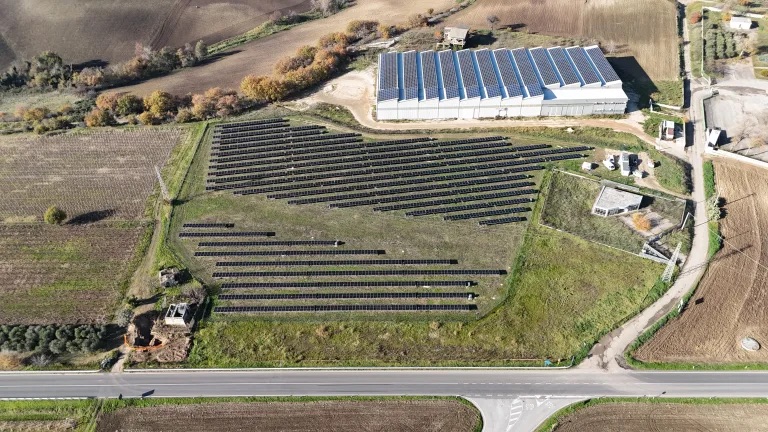
As of June 30, Italy had 3,630 active renewable energy communities (RECs), with a combined capacity of 302.9 MW, according to data published by the Italian energy agency Gestore dei servizi energetici (GSE).
The smallest capacity category – systems up to 10 kW – accounts for nearly half of all REC configurations, with 1,673 installations. By contrast, only 35 RECs have a capacity above 1 MW. The total number of members, calculated based on connected points of delivery (PODs), stands at 37,821.
The GSE also released updated figures on the impact of the National Recovery and Resilience Plan (PNRR) funding measure for RECs, based on the five grant award notices published to date, the latest of which was issued in early July.
Between April 8, 2024, and November 30, 2025, a total of 48,750 applications were submitted. Of these, 29,820 were approved, corresponding to €768.3 million ($895 million) in awarded grants and 1.74 GW of capacity. Withdrawn and rejected applications totaled 2,887, including 1,977 withdrawals and 910 exclusions.
The GSE reported that 15,456 applications submitted between November 24 and November 30, 2025, remain without funding. These applications represent €572.8 million in requested grants and approximately 1.33 GW of capacity.
According to the GSE, upcoming grant award notices will cover the remaining eligible applications, as well as those that become eligible following the reallocation of funds released through withdrawals, cancellations, or the availability of additional resources.
A positive assessment of technical eligibility does not automatically guarantee access to funding. After the technical review is completed, applications undergo additional checks, including investment committee assessments, anti-mafia screening, and verification that no double funding or conflicts of interest are involved.
As a result, the GSE noted that the chronological order of application submission does not necessarily determine the order in which projects are admitted for funding.
Grant awards, including those supported by any additional resources, must be finalized by August 31, 2026, in accordance with PNRR deadlines. Meanwhile, the deadline for completing the funded projects, originally set for June 30, 2026, has been extended to December 31, 2027.
At the regional level, Lombardy recorded the highest number of applications under the PNRR REC funding scheme, with 7,434 submissions. It was followed by Sicily, with 6,598 applications. The Aosta Valley registered the fewest applications, with 208, a figure largely explained by its smaller population and geographic size compared with Italy’s other regions.
The GSE also highlighted that many withdrawals were linked to applicants realizing they did not meet the required eligibility criteria. The main reasons for exclusion included applications submitted by entities that could not legally participate as REC members or partners; applications filed by entities other than the project investor; the absence of an accepted grid connection quote; missing construction permits; the presence of non-cumulative incentives; plants located in municipalities with populations above 50,000; and projects that had started construction before the application date.
Other exclusions were related to exceeding the 1 MW capacity threshold due to the presence of additional plants owned by the same entity or by a related party, a practice known as artificial fragmentation.
Italy’s €5.7 billion funding scheme for RECs is divided into two funding streams.
The first stream, with a total budget allocation of €3.5 billion, is a 20-year tariff on the quantity of electricity consumed by self-consumers and renewable energy communities financed through a levy on the electricity bill of all consumers. A renewable energy community in this context is defined as, “legal entities empowering citizens, small businesses and local authorities to produce, manage and consume their electricity.”
The second stream, with a total funding allocation of €2.2 billion, is an investment grant paying for under half (40%) of a project’s total costs.
This content is protected by copyright and may not be reused. If you want to cooperate with us and would like to reuse some of our content, please contact: [email protected].

Please login to comment