Scientists develop perovskite-organic tandem solar cell with enhanced reverse-bias stability

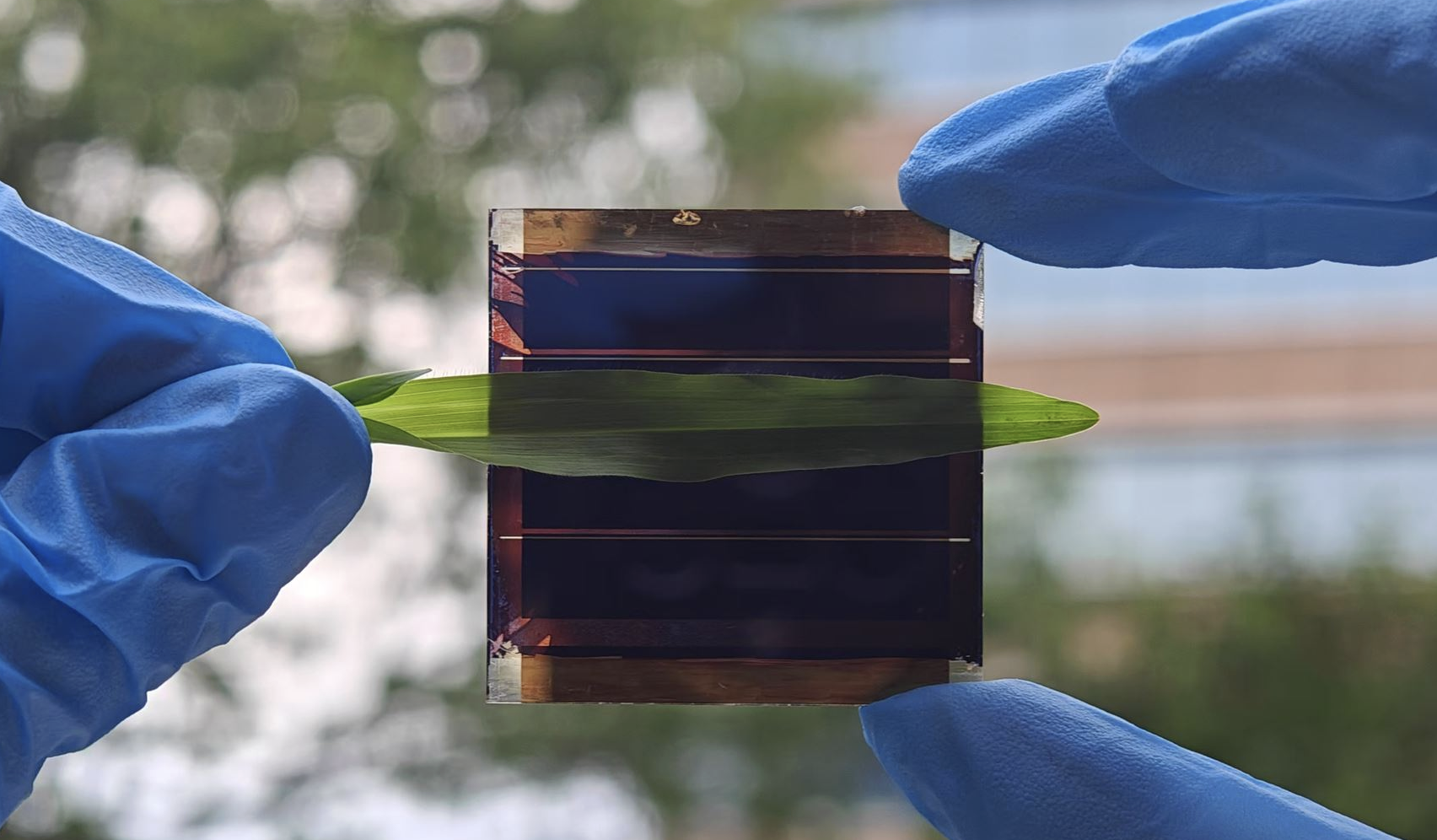
Researchers from the Hong Kong Polytechnic University (PolyU) have developed a perovskite–organic tandem solar cell designed to withstand damage caused by negative voltage, or reverse-bias stress.
The advancement addresses a key reliability challenge for thin-film photovoltaic technologies, which can experience reverse-bias conditions when partial shading from trees, buildings, or other obstacles creates electrical mismatches between cells. Such stress can reduce power output and accelerate device degradation.
Reverse-bias stress occurs when parts of a solar cell operate under an abnormal electrical condition, forcing them to dissipate energy rather than generate electricity. The effect is particularly relevant for thin-film technologies, including perovskite, organic, copper indium gallium selenide (CIGS), and cadmium telluride (CdTe) solar cells, where defects and material non-uniformities can create vulnerable regions.
Under reverse-bias conditions, energy dissipation can generate localized heating, activate defects, and accelerate degradation of absorber and interface layers. In perovskite and other emerging thin-film devices, the stress can also trigger ion migration, increase leakage pathways, and cause irreversible performance losses.
The scientists developed the organic bottom solar cell of the tandem device by suppressing isolated acceptor clusters within the donor-acceptor intermix region. This allowed for defects known as deep trap states, which immobilize the charges responsible for power generation, to be minimized.
The resulting cell features an irreversible breakdown voltage exceeding -35 V, meaning that if the voltage does not exceed this threshold, the cell will not be permanently damaged.
The researchers also shielded the perovskite layer of the top cell with an organic semiconductor (OSC) layer that suppresses reverse tunnelling, a process in which charge carriers cross the device layers in the undesired direction under reverse-bias stress. Limiting this leakage pathway reduces energy dissipation and helps protect the perovskite absorber from heating, defect activation, and performance losses.
The tandem solar cell demonstrated stable and strong performance, according to the scientists. It retained more than 90% of its initial power-generation efficiency under reverse bias testing of -40 V. The team says this result surpasses all existing thin-film solar technologies and marks a key step toward the practical application of thin-film solar technology.
Testing also showed the cell retained 90% of initial efficiency after continuous operation at -20 V for 12 hours, and as much of 97% of initial efficiency after continuous operation at -4.5 V for 2,000 hours “outperforming all existing thin-film solar technologies.”
“The exceptional reverse-bias stability under shadowing conditions has been vividly demonstrated in scalable perovskite-organic tandem solar cell minimodules,” commented Li Gang, Associate Director of the PolyU Research Institute for Smart Energy. “Our research makes breakthrough contributions to the understanding of both device operation and durability in organic and perovskite solar technologies.”
The solar cell is presented in the research paper Perovskite–organic tandem solar cells with superior reverse-bias stability, available in the journal Nature Materials.
This content is protected by copyright and may not be reused. If you want to cooperate with us and would like to reuse some of our content, please contact: [email protected].

Please login to comment