French startup repurposes EV batteries for solar energy storage

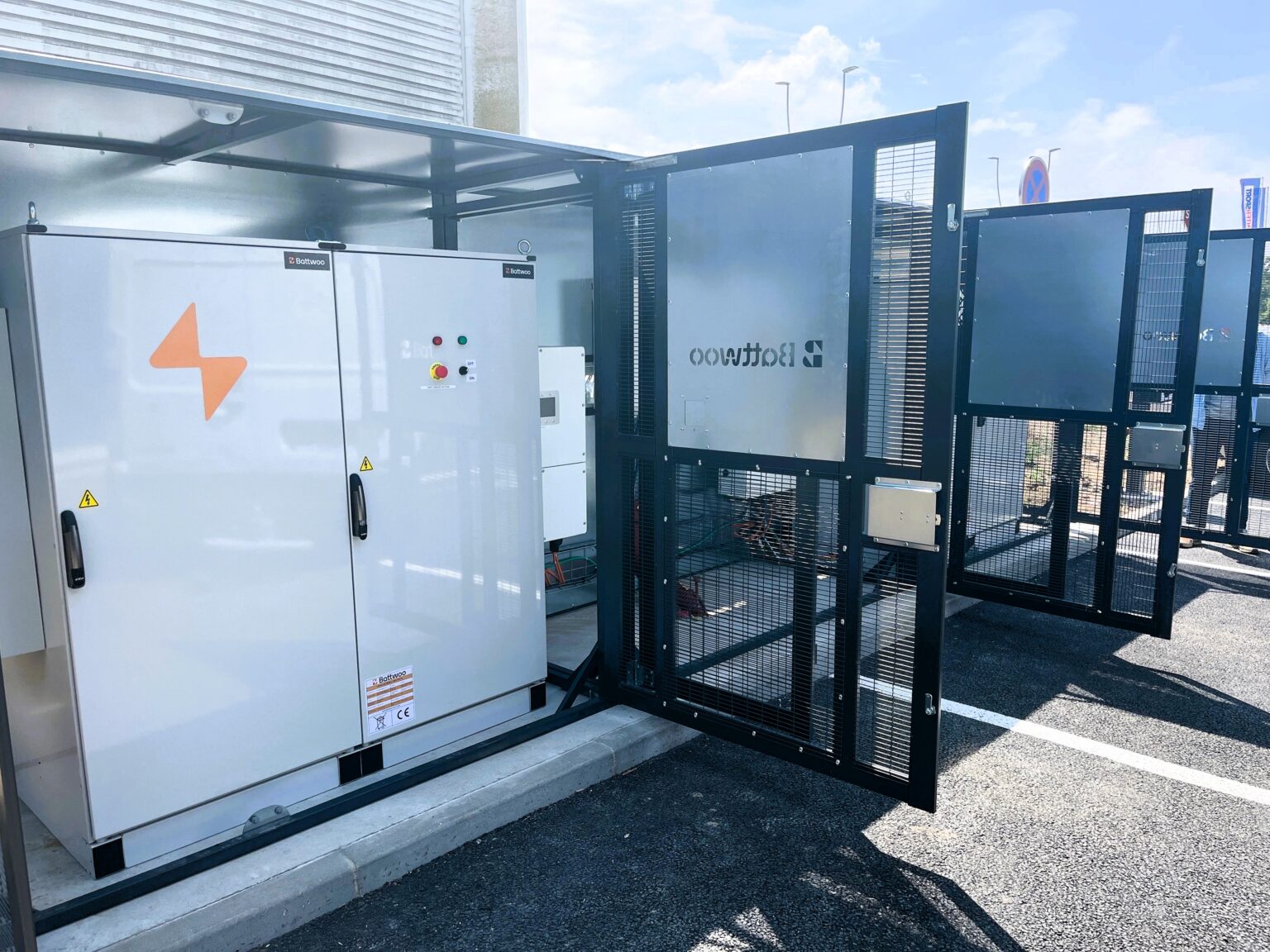
French startup Battwoo is developing stationary battery energy storage systems (BESS) using repurposed electric vehicle batteries. The company aims to extend battery lifetimes from 15 to 30 years by giving EV batteries a second life that would otherwise be sent for recycling, while providing an alternative to new batteries.
“Every year, thousands of electric vehicle batteries reach the end of their first life while still retaining 70% to 80% of their capacity,” Melchior Martinache, commercial director at Battwoo, told pv magazine France. “At the same time, the growth of photovoltaics raises a major challenge: how can we make the best use of solar electricity when it is not consumed immediately?”
The process involves sourcing batches of batteries from specialized partners and assessing their condition. Following an initial round of diagnostics and testing, conducted both in-house and by an accredited laboratory, batteries retaining more than 80% of their capacity are refurbished into stationary storage systems at a workshop in Madrid.
“This industrial capability allows Battwoo to ensure full battery traceability, oversee every stage of the requalification process, and maintain high standards of safety, quality and performance,” said Melchior Martinache, commercial director at Battwoo.
The batteries are sized according to the requirements of each project. “Is the customer looking to maximize self-consumption, shave peak demand to reduce costs, participate in grid flexibility mechanisms or engage in spot-market arbitrage? These parameters determine the required power output and number of daily cycles – and consequently the battery’s lifespan and return on investment,” Martinache said, adding that the batteries can handle up to four cycles per day.
Battwoo’s first installations are enabling the company to test its model on an industrial scale. In France’s Hauts-de-France region, for example, a padel club selected the company’s storage system for a 250 kW photovoltaic installation.
The 350 kWh storage system comprises 56 battery modules, equivalent to the capacity of five electric vehicles. It enables the club to store surplus solar power and discharge it in the evening to supply its illuminated courts.
Another project, in the agri-food sector, involves the Les Fruits de Saint-Aubin cooperative. The apple producer uses a 350 kWh stationary battery system coupled with an existing photovoltaic installation. The system helps optimize the electricity supply to the site’s cold-storage facilities and its continuously operating pre-sorting line, while increasing solar self-consumption.
Three other projects are currently under negotiation. “For now, we are still in a scale-up phase to ensure the reliability and safety of the solution. We have focused on projects below 500 kWh, but we will gradually be able to move up to 1 MWh and then to 2 MW or 3 MWh,” Martinache said.
Cost is one of Battwoo’s main selling points. According to the company, a refurbished 500 kWh battery system currently costs around 30% less than an equivalent system using new batteries. The price difference could make stationary storage more accessible to some photovoltaic system operators and industrial sites.
Battwoo also points to the potential environmental benefits of battery reuse. By extending battery service life by several decades, the company estimates that its approach can reduce the associated carbon footprint to one-quarter of that of a newly manufactured battery. Battwoo says the combination of lower costs and reduced environmental impact could appeal to companies seeking to increase solar self-consumption while incorporating sustainability considerations into their investment decisions.
This content is protected by copyright and may not be reused. If you want to cooperate with us and would like to reuse some of our content, please contact: [email protected].

Please login to comment