Italy raises Macse energy storage auction premium cap from €22,000 to €27,000/MWh

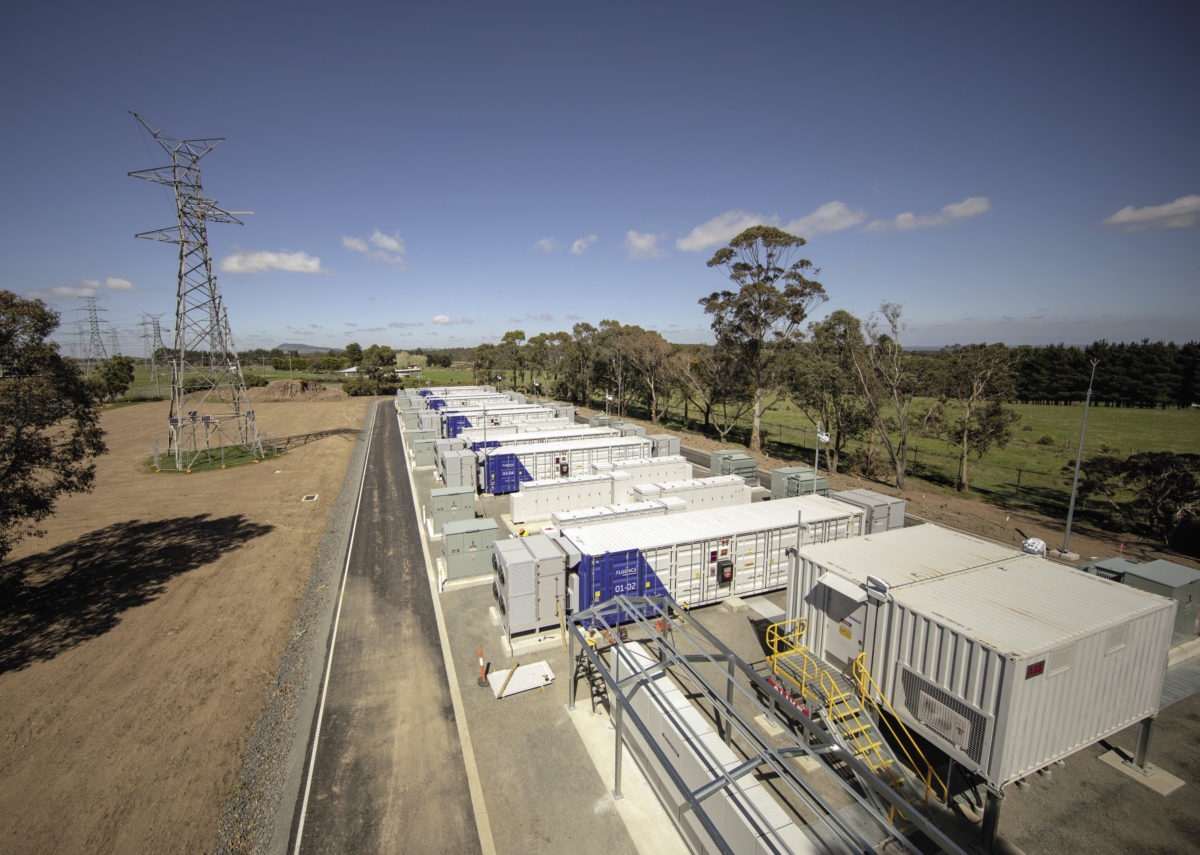
pv magazine Italy discussed the decision made for the next Macse auction in Italy with independent researcher Mario Iovino, about the latest resolution 332/2026 made by the country’s energy regulator – Arera – on September 24, 2026, an 11-page document sets the maximum premium for the auction with a 2029 delivery year.
pv magazine Italy: A MACSE bid sets the price of a swap: 15 years of fixed premium in exchange for the commercial revenues a battery gives up on its committed capacity. What is the role of the maximum cap, and why does it matter?
The cap, or “reserve premium” under the rules, is the upper limit of the bidding range. In a pay-as-bid auction, no bid can exceed it, and each successful system receives the premium it bid for 15 years. Under resolution 332/2026, it is €27,000 ($30,703) per qualified MWh per year. It matters for two reasons. The first is how Arera calculates it: it is the cost of new entry, or CONE, comprising the annualized cost of a benchmark investment plus fixed operating costs, rounded to the nearest thousand. The second is that the contract’s other amounts are scaled against it: guarantees, the withdrawal schedule, the cap on variable payments and the maximum charge for unavailability are percentages of the cap. The resolution therefore tells everyone how much they must tie up in guarantees and how much it costs to exit.
What the cap does not tell you is your floor. In a pay-as-bid auction, that is the number that determines where your bid starts: the cap tells you where the range ends; the floor tells you where it begins.
Arera’s resolution has now arrived. What is new? Was there anything you did not expect?
The resolution sets the cap at €27,000 per qualified MWh per year, compared with €22,000 in the July consultation, and explains the difference. It comes mainly from the benchmark investment cost, which rises from €125,000 to €150,500/MWh. The EPC cost estimate has been set halfway between the consultation figure and that used for the first auction, while the battery cost estimate has been revised upward to reflect lithium carbonate prices and the announced elimination of Chinese export tax exemptions. WACC rises from 8.0% to 8.2%, based on data as of August 31, and fixed operating costs follow the investment cost. Indexing the premium to lithium prices has been ruled out because the premium must be published 60 days before the auction. Compared with the first auction, the cap is 27% lower.
I made no prediction about the figure. I calculated CONE using the consultation parameters, and it fell exactly on the threshold between two thousand-euro figures, where the rounding rule alone made a €1,000 difference. The methodological change is that the resolution states the rule in its text, rounding up to the next thousand, and publishes INV, the benchmark cost including oversizing and construction charges, to the nearest €10: €189,790/MWh. Running the calculation using the published WACC produces a CONE that rounds to €27,000 under either rule.
In short, the cap has risen since July because the benchmark costs have risen. The margin between the cap and the cost of an actual plant therefore depends on how much costs have really moved for that plant, with that battery and that EPC contractor. The figure can now be reconstructed and checked, which was not fully possible in July. Bidders can rerun the calculation using their own costs and see how they compare with the benchmark.
What does this mean for guarantees, maximum revenue and investment costs?
Take a reference asset: 75 MW and a nominal 600 MWh, with an eight-hour duration. The qualification factors leave it with 552 MWh, 8% below its nameplate capacity. The premium is paid on qualified MWh, while costs are incurred on nominal MWh. At the cap, the contract therefore provides €24,840 per nominal MWh per year: that is the maximum fixed revenue the contract can give this plant.
Guarantees scale with the cap. The pre-auction guarantee of 10%, payable in cash by October 20, amounts to €2,700 per qualified MWh. The peak requirement, comprising the post-auction guarantee plus the fund, is €12,150 per qualified MWh, or €6.71 million for this asset. As for investment cost, using the resolution’s fixed costs and WACC, the cap supports €151,000/MWh for a system whose nominal capacity qualifies in full, and €136,000/MWh for the eight-hour asset. An 8% reduction in qualified capacity cuts the supportable investment cost by 9.6%, because fixed operating costs still have to be paid in full.
Essentially, the cap covers the benchmark cost for a system whose nominal capacity qualifies in full. To fit within the cap on the premium alone, an eight-hour asset must cost about one-tenth less than ARERA’s benchmark, or make up the difference from the merchant revenue it retains. The cash guarantee due in October is real cash that must be planned for before the auction, and the withdrawal schedule tells you how much it costs to change your mind afterward.
How does this change the considerations for BESS developers and/or owners? Does it change the decision to go fully merchant or pursue a hybrid of MACSE and merchant revenue, for example?
The contract is already a hybrid, and its terms define the merchant component. It commits the qualified MWh and leaves the owner with the unqualified MWh, 20% of the balancing margin below the strike price, and the merchant window before delivery. For the committed capacity, meanwhile, Terna sets the schedule for every quarter-hour. The choice does not arise for a plant already in operation, because MACSE procures new capacity. It is a choice for developers.
The quantity to be qualified was chosen on September 10; on November 24, the price remains to be set. For that price, the number that matters is the floor: the higher of the premium that pays back the plant and the premium that compensates for the merchant revenue given up. On the same basis, in euros per nominal MWh per year using the convention in Part 2 (one cycle a day in the day-ahead market, with eight expensive hours against eight cheap hours, accounting for efficiency), the contract at the cap provides €24,840. Merchant revenues measured in the South and Sicily were 49% to 55% lower over the full years 2024 and 2025, and 31% to 36% lower in 2026 after correcting for seasonality. Merchant revenue, however, has a distribution “with tails”: in the southern zones, days with zero-priced hours rose from six in 2024 to 28 in the first eight months of 2026. They occur in runs, and the owner does not choose those days for the committed capacity.
The remaining choice is how far below the cap to bid. The figure needed is the distribution of merchant revenues in your own zone; an average spread is no substitute. For a permitted project being sold, the supportable investment cost at the cap, per nominal MWh, tells you the maximum cost at which the contract pays back the project. For a buyer, that is the first figure to recalculate using their own costs.
You implemented a dynamic state-of-charge program to calculate a feasible schedule. Why? How is it useful, and what conclusions does it produce?
The usual measure, or proxy, of merchant revenue for an eight-hour battery takes the eight cheapest and eight most expensive hours of each day after the fact and pairs them, without asking whether the state of charge allows it. A battery cannot discharge energy it has not yet charged. I solved that scheduling problem exactly, using dynamic programming for the state of charge and perfect foresight, and checked it against a mixed-integer program. It serves two purposes.
The first is to establish how much the proxy is worth. A feasible schedule with one cycle a day comes in 5.8% below it in the South and 6.8% below it in Sicily. Allowing the state of charge to carry over midnight, while still permitting at most one cycle a day, puts it 3% to 7% above. The second purpose is to understand the contract itself: Terna allocates that schedule for the committed capacity, and in the South a day with zero-priced hours is followed by another such day in 41% of cases, compared with an unconditional probability of 5%. The same discipline applies to the rest of the notes: every figure is reconciled against a register of claims, and the calculations were repeated in a second, independent implementation.
In practice, anyone building a merchant case from a backtest can trust the ranking of the hours, because the feasible schedule puts the proxy within a few percentage points. The things that undermine it are elsewhere: applying efficiency on the wrong side, annualizing one spring as though it were a whole year, forecast error, and the schedule that Terna sets for the committed capacity. The exact scheduling program removes the first doubt and leaves time for the other four.
Any other thoughts on MACSE and the latest developments?
Three things, beyond the figure itself. The first is in the resolution: the study from which the cap is derived will become an annual exercise, subject to consultation, with a fixed lead time before each auction. The focus shifts from the figure to the method, and the parameters will be debated every year. Anyone who comes to that discussion having reconstructed the arithmetic will be better placed to take part.
The second is that the market has begun to price what a battery sells. As of this week, futures exist in Europe on the spread between the most expensive and cheapest hours of the day, alongside indices launched in the summer. This is a real step: something each party previously estimated for itself now has a market price alongside the model, and the gap between the two will itself be informative. It is a hedge for the spread, but not for the battery: it leaves out efficiency on the charging side, state of charge, degradation and everything outside the most extreme hours. And for MACSE it leaves out the essential point: Terna allocates the schedule for committed capacity, and the contract lasts 15 years, while the market quotes only a few.
The third is a trend the sector learned elsewhere before it reached Italy. Hardware has become standardized, service markets become saturated as battery fleets grow, quarter-hourly granularity multiplies the intervals that must be forecast, and new capacity compresses the spreads that attracted it. In Italy, this auction brings into the southern zones precisely the capacity that will compress the merchant case being measured today. The repeatable advantage shifts to forecasting, optimization and execution, and, before any of those, to how the contract is priced: the floor of a MACSE bid is the plant’s first trading decision. Anyone pricing it with an index scaled for efficiency is pricing a different contract. If someone reads the calculation or the distribution differently from how I have published them, I would be interested to know where.
This content is protected by copyright and may not be reused. If you want to cooperate with us and would like to reuse some of our content, please contact: [email protected].

Please login to comment