Perovskite solar cell based on Prussian blue achieves 26.9% efficiency

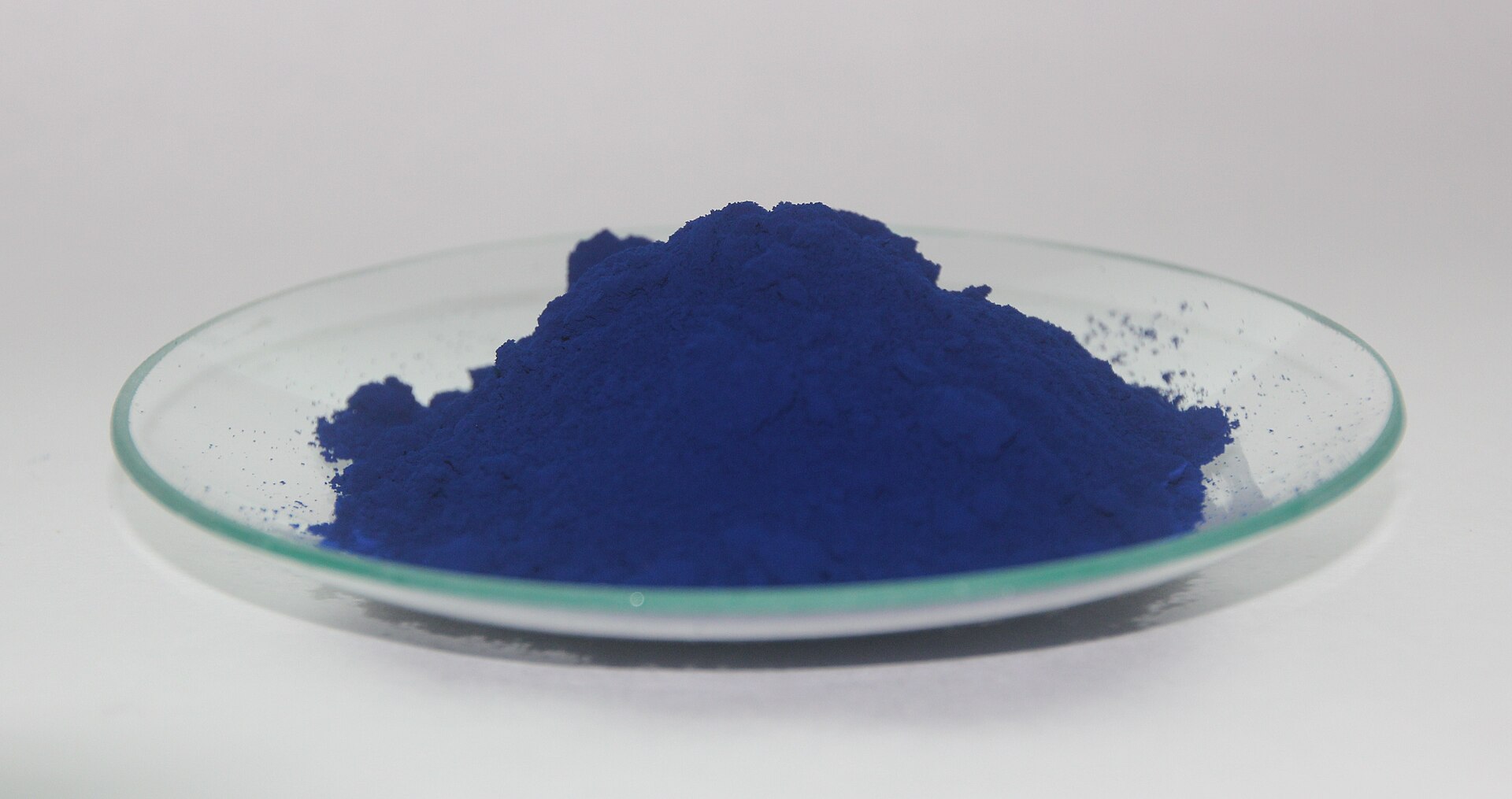
Prussian Blue (PB) is an iron-based compound known for its strong visible-light absorption and electrochemical properties, which have attracted interest in photovoltaic research. Researchers have previously investigated its use as a photosensitizer in dye-sensitized solar cells, demonstrating its ability to absorb sunlight and generate photocurrent, albeit with limited photovoltaic performance.
Now, a group of researchers from the Chinese Academy of Sciences (CAS) has investigated whether PB could also be used in perovskite solar cells to improve device performance and stability.
The scientists used PB nanoparticles to stabilize formamidinium lead iodide (FAPbI3) perovskite films, addressing structural instability, defect formation and ion migration, which can compromise solar cell performance and long-term durability.
“The main advance of our study is the use of a structurally compatible Prussian blue framework that remains functional during both film formation and device operation,” corresponding author Chong Liu told pv magazine. “It guides perovskite crystallization, mediates the conversion of abnormal lead and iodine species, and restricts A-site cation redistribution. Together, these effects help preserve electronic homogeneity under bias and support efficient, stable large-area modules.”
The researchers used PB nanoparticles as structural templates to control FAPbI3 crystallization and promote more uniform crystal growth. The nanoparticles also suppressed unwanted intermediate phases and favored the formation of the photoactive α-phase, the crystal structure required for efficient light absorption and electricity generation. According to the researchers, the approach improved crystal alignment, reduced lattice strain and limited nonradiative recombination losses.
The team also found that PB nanoparticles could reduce perovskite degradation by limiting defect formation and ion migration within the material. The nanoparticles helped convert metallic lead and neutral iodine defects back into their original ionic states, while their rigid crystal structure trapped mobile ions, particularly cesium, restricting their movement under an electric field. This significantly reduced defect density, improved charge transport and limited energy losses from nonradiative recombination.
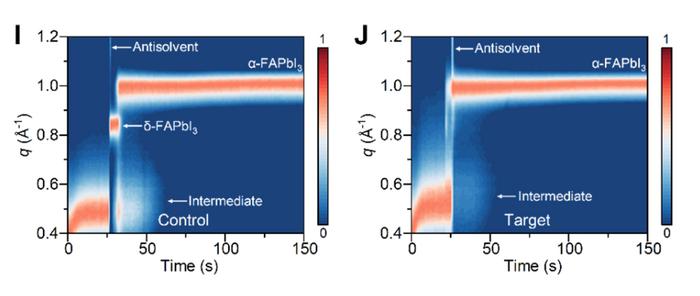
The nanoparticles also increased the activation energy for ion migration from 0.89 eV to 1.25 eV, making ion movement more difficult. According to the researchers, these effects helped protect the perovskite films against electrical, thermal and light-induced degradation, potentially improving the long-term stability of solar cells.
The team tested the PB nanoparticles in both conventional (n-i-p) and inverted (p-i-n) perovskite solar cells, recording efficiency improvements in both architectures. In conventional devices, power conversion efficiency increased from 24.2% to 26.1%, while inverted cells reached 26.9%, up from 26.0% for untreated devices. The latter result was independently certified at 26.2%.
The researchers attributed these improvements to more efficient charge separation and extraction, reduced nonradiative recombination and suppressed ion migration. They also tested the approach in larger devices, with 6 cm × 6 cm conventional minimodules achieving 23.4% efficiency, compared with 20.1% for reference devices. A 30 cm × 30 cm inverted submodule, with an aperture area of 756 cm², achieved a certified efficiency of 22.9% and a stabilized efficiency of 22.8%.
Stability tests also yielded promising results. Conventional minimodules retained more than 90% of their initial efficiency after 2,500 hours at 85 C and 85% relative humidity, and more than 80% after 2,200 hours of continuous operation at 65 C and 50% relative humidity.
Accelerated aging tests on larger inverted submodules also indicated a projected T80 lifetime of around seven years at 35 C under continuous illumination. T80 refers to the time required for a solar cell or module to lose 20% of its initial efficiency under specified operating conditions. The researchers noted that the projected lifetime was extrapolated from accelerated aging tests rather than demonstrated through actual long-term operation.
During a five-month outdoor test in Zhuhai, China, a PB-treated submodule showed no “discernible” decline in performance relative to a commercial silicon reference device, further supporting the material’s potential to improve the long-term reliability of perovskite photovoltaics.
“Our findings highlight the potential of open-framework materials to improve solar cell efficiency, enable large-scale production and enhance the long-term reliability of perovskite photovoltaics,” Liu concluded.
The new solar cell approach was presented in the study “Prussian blue regulates ion dynamics in perovskite solar cells,” recently published in Science.
This content is protected by copyright and may not be reused. If you want to cooperate with us and would like to reuse some of our content, please contact: [email protected].

Please login to comment