World’s largest distributed energy management system to be deployed in Western Australia
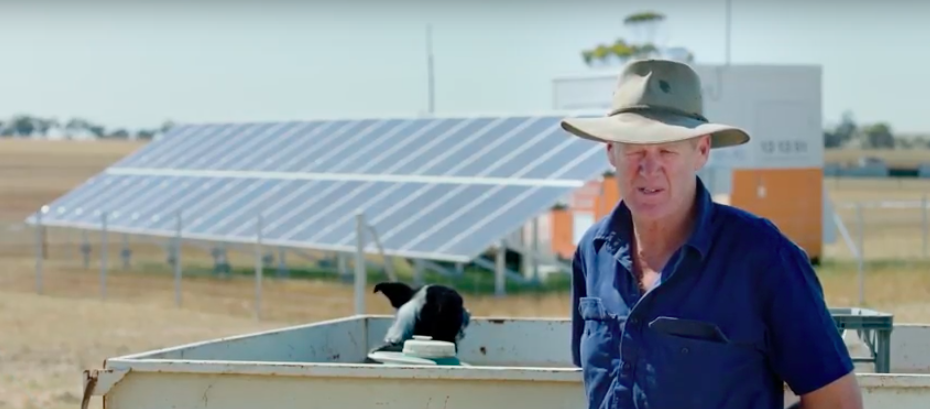
We’ve heard a lot about the grid of the future; how distributed rooftop solar, batteries and home energy management systems will all coordinate, allowing for intelligent control of these resources and enabling higher levels of renewable energy, more efficient use of energy and more reliable power.
But outside of a few pilot programs and niche applications, there haven’t been a lot of places where these solutions have been deployed at scale. Until now.
Last week Horizon Power, the public utility supply remote and regional Western Australian towns, communities and industries contracted with California-based PXiSE Energy for the deployment of the company’s Active Control Technology (ACT) platform, a software solution which allows for both a highly granular view of grid operations as well as real-time control of rooftop solar, batteries and other distributed energy resources.
This will be at an unheard-of scale for a distributed energy resource management solution (DERMs), with PXiSE’s ACT managing as many as 50,000 distributed energy resources spread across Horizon’s 2.3 million square kilometer service area. While ACT has been deployed in pilot projects and is run on a winery microgrid in Northern California, neither this software or any other distributed energy management system has yet been implemented on a grid that covers a third of a continent.
Patrick Lee, who serves as president of PXiSE and VP at parent company Sempra Energy, notes that PXiSE’s ability to provide real-time control differentiates it from other DERMs. “DERMs technology that people talk about is mostly focused on forecasting and maybe scheduling how these devices should be dispatched,” Lee explained to pv magazine.
“They really lack more of a real-time adjustment, and the ability to integrate the fine control of these distributed energy resources in real time, adjusting to system condition changes or events that happen. That’s what PIXse brings.”
As such, Lee notes that ACT allows for “juggling” of resources, so that supply and demand can be matched in real time. Lee says that these resources can also be used to supply ancillary services such as reactive power for voltage stabilization, and even frequency control.
Of course, PXiSE will not have control over all behind-the-meter resources. Some owners of rooftop PV, batteries and other resources may elect not to allow ACT to view or control their systems, these the program will have to work around, including estimating output.
Lee notes that this is the same with any collection of distributed energy. “Some are managed, some are market signal dispatched, and the last is something there you actually have direct control to do the final balancing,” states Lee. “We offer a more complete way of looking at these classes of DER, no matter how much you set them up in a system.”
In addition to this control functionality, ACT will also offers an incredibly granular level of insight into the operation of Horizon Power’s network. The software uses syncrophasor data, including on the distribution grid. “(Syncrophasors) kind of give you equivalent point-by-point instructions on the grid,” states Lee. “What we did in PIXse is to adopt that technology in distribution as well as a low-voltage network.”
This content is protected by copyright and may not be reused. If you want to cooperate with us and would like to reuse some of our content, please contact: [email protected].

Please login to comment

[…] to PV Magazine, “while ACT has been deployed in pilot projects and is run on a winery microgrid in Northern […]
[…] “The Victorian government rebate has really turbocharged sales in Victoria,” said Green Energy Markets’ Tristan Edis at the Smart Energy Conference (SEC) this month. “It’s also spectacular in that we’re seeing ongoing robust sales in other states as well, with perhaps the exception of Western Australia.” […]

“Some are managed, some are market signal dispatched, and the last is something there you actually have direct control to do the final balancing.” This sensible view is crucial to dealing with Big Brother fears. It is not necessary or appropriate for utilities to control say household freezers or V2G directly: a conditional DR contract does the job, with the utility (Aunt Agatha) holding an arms-length conversation with the home controller (Jeeves). But as Lee says, the grid must have access to some balancing resources (grid batteries say) it can switch on and off unconditionally.
[…] to PV Magazine, “while ACT has been deployed in pilot projects and is run on a winery microgrid in Northern […]