Australian Centre for Advanced Photovoltaics gets $66.5 million boost
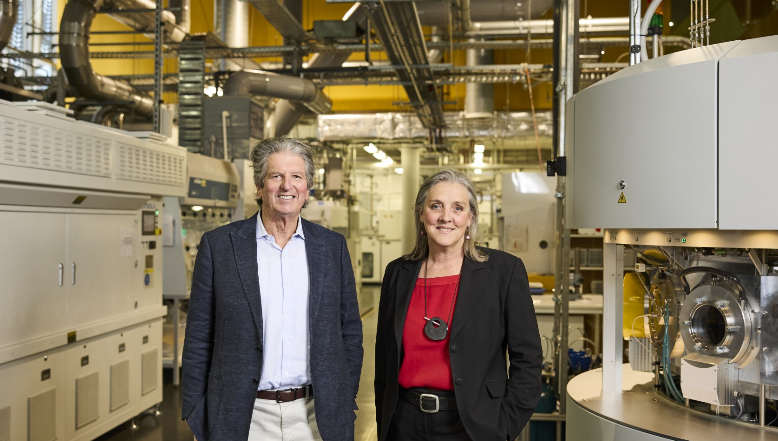
The Australian Centre for Advanced Photovoltaics (ACAP) has secured AUS 94.5 million ($66.5 million) in funding from the Australian Renewable Energy Agency (ARENA) to accelerate breakthroughs in high efficiency solar cells and modules.
Advances attributable to ACAP include solar technology efficiency improvements, durability, cost of solar and the development of next-generation tandem solar cells.
ACAP Executive Director Professor Renate Egan said Australia is uniquely placed, globally, in its research leadership and its connection to industry.
“This significant investment provides a long-term research horizon and positions Australia to build on its success in developing the technologies and talent needed to deliver on next-generation solar technologies that will power a low-carbon future Australia.”
ARENA Chief Executive Officer Darren Miller said Australia has some of the best solar researchers in the world and ACAP has been instrumental in turning that expertise into globally recognised breakthroughs.
“If Australia is to achieve ultra low-cost solar, we need to keep pushing the limits of cell efficiency. ACAP’s work is doing exactly that, helping deliver high-performance solar cell and module technologies that will reduce costs at scale.
Ultra low cost solar through national research collaboration report
More than 250 researchers across Australia are working together to advance the long-term vision of ultra low-cost solar, under the ACAP umbrella.
The 19 June 2026 launch of ACAPs 2025 annual report outlines those efforts.
“The future is solar-powered. Through sustained investment in research, collaboration and innovation, ACAP’s researchers are helping to ensure that future arrives sooner, costs less and delivers greater benefits for Australia and the world,” Regan said.
ACAP is a consortium of research institutions led by the University of New South Wales (UNSW), and includes the Australian National University (ANU), the Commonwealth Scientific and Industrial Research Organisation (CSIRO Energy and CSIRO Manufacturing), the University of Melbourne, Monash University, the University of Queensland (UoQ), and the University of Sydney.
This content is protected by copyright and may not be reused. If you want to cooperate with us and would like to reuse some of our content, please contact: [email protected].

Please login to comment