New reflective solar panel geometry promises 20% higher energy yield

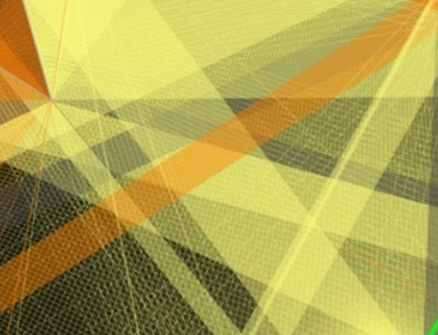
Canada-based startup Reflect10 has developed a photovoltaic module design that it claims can increase energy production by 20% compared to a conventional solar module.
The panel integrates a light-reflection architecture directly into its structure.
“There is a wealth of scientific literature on reflectors added to conventional flat panels,” Reflect10 founder Louis Massicotte told pv magazine. “Academic studies published in 2023 and 2025, for example, reported gains of 11% to 57% using adjustable mirrors positioned alongside vertical bifacial modules. However, those systems require moving parts, motors and additional land area.”
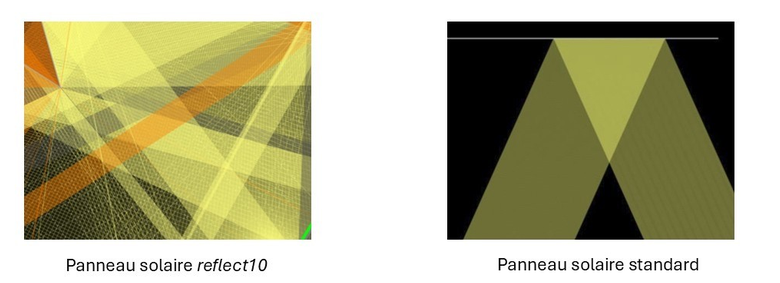
Rather than relying on external mirrors, Reflect10 said its design incorporates reflective geometry within the module architecture. According to the company, sunlight is reflected multiple times inside the structure before being absorbed by the photovoltaic cells, increasing photon capture without modifying the cells themselves. Reflect10 has not disclosed additional technical details about the design.
The company said the architecture delivers a 20% increase in average daily energy production. It also claims the design can increase power output by a factor of 2.66 during the early morning and late afternoon, when solar irradiance is lower, and improve energy yield under diffuse-light conditions, such as cloudy or smoggy weather, by 19%.
“These results represent a significant and immediate step forward at a time when the industry has faced a fundamental physical ceiling for decades: the Shockley-Queisser limit, which sets the theoretical maximum conversion efficiency of single-junction silicon at less than 30% under real-world conditions and 33.7% under laboratory conditions,” said Massicotte.
Reflect10 said the reported performance figures are based on optical simulations and proof-of-concept field tests conducted in Quebec and Morocco over a nine-month period between late summer 2025 and May 2026.
The company plans to officially present the technology at a press conference in Paris on July 7. It has filed three Patent Cooperation Treaty (PCT) applications, one of which, it said, received a favorable written opinion covering all 18 claims following the international search process.
Reflect10 also said simulations carried out by Canada’s National Optics Institute (INO/Luqia) were reviewed by the Île-de-France Photovoltaic Institute (IPVF), which issued a scientific opinion supporting the numerical results presented by the company.
“By increasing production at the beginning and end of the day, the technology could help better match periods of peak electricity demand while reducing the concentration of generation around the midday solar peak,” wrote Pere Roca i Cabarrocas, research director at IPVF, in the scientific opinion reviewed by pv magazine France.
According to the document, the technology operates within the framework of geometric optics, governed by Snell’s law. The opinion also states that the reported performance gains, achieved through an architectural modification of the module rather than changes to the solar cells, represent a notable departure from the industry’s typical pace of improvement. It adds that the approach appears scalable across different module sizes and installation configurations.
Reflect10 said it does not intend to manufacture solar modules. Instead, the company launched a sealed-bid licensing process on June 30, offering 50 non-exclusive licenses for its intellectual property to module manufacturers, sovereign wealth funds and investment funds. No minimum bid has been disclosed.
“This technology increases photon capture through mirror-chamber reflections, resulting in significant production gains without expanding solar farms, simply by replacing the panels,” said Massicotte, who believes the design is particularly well suited to repowering existing solar plants. The company also plans to develop building-integrated photovoltaic (BIPV) versions for rooftops, façades and photovoltaic fencing applications.
This content is protected by copyright and may not be reused. If you want to cooperate with us and would like to reuse some of our content, please contact: [email protected].

Please login to comment