Qcells secures TÜV Rheinland certification for perovskite-silicon tandem solar tech

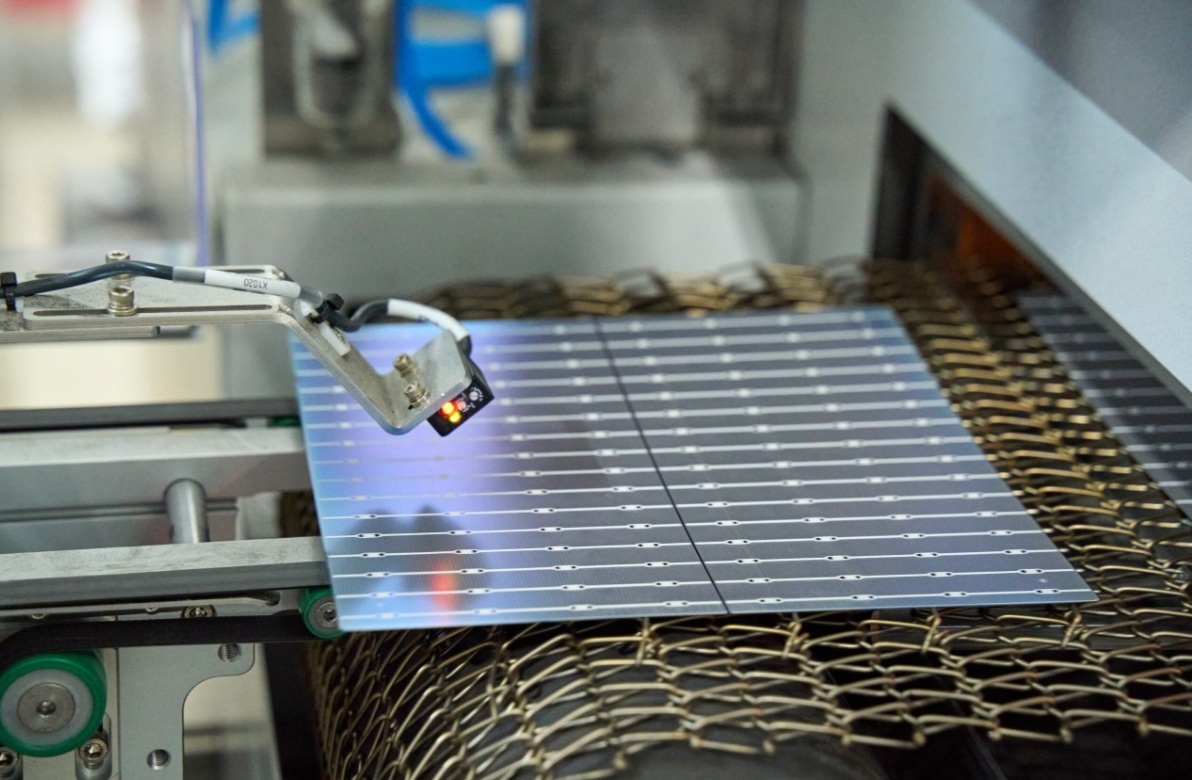
South Korea-based PV manufacturer Qcells has announced that its perovskite-silicon tandem solar technology has received certification from TÜV Rheinland, confirming compliance with reliability and safety standards established by the International Electrotechnical Commission (IEC) and UL Standards & Engagement (UL).
“Solar today is the most affordable and fastest-to-deploy energy resource on the planet. Qcells is working hard to build on this strong foundation and make it work even better. Achieving these milestones means we are getting closer to delivering a solar product that more immediately addresses the issues we care about most – from cost to carbon,” Fabian Fertig, Head of Tandem R&D for Qcells Germany, told pv magazine.
Qcells said it is the first company to obtain certification demonstrating compliance with both IEC 61215 and UL 61215 requirements for perovskite-silicon tandem technology. “These certifications are required to demonstrate that a solar panel is reliable and bankable. This achievement means these products can withstand significant stress without exceeding the power degradation limits defined by the standards,” the company said in a statement.
The certified cells and modules were manufactured on Qcells’ tandem R&D pilot line in Bitterfeld-Wolfen, Germany, using full-area M10 substrates and unspecified production processes designed for large-scale manufacturing.
Qcells’ 2-terminal tandem solar cell technology combines a perovskite top device with its proprietary Q.antum silicon bottom cell architecture. In December 2024, a company’s solar cell built with this configuration reached a power conversion efficiency of 28.6%. The CalLab at the Fraunhofer Institute for Solar Energy Systems (ISE) has independently verified the record result.
In May 2025, the company also revealed that solar modules fabricated with its tandem technology modules passed multiple IEC-standard stress tests, including UV preconditioning at 15 kWh/m², 200 thermal cycles, 10 humidity-freeze cycles, and 1,000 hours of damp heat. TÜV Rheinland has independently verified the results.
Qcells announced plans to develop the tandem PV technology in 2020 by establishing the above-mentiond R&D production line in Thalheim.
This content is protected by copyright and may not be reused. If you want to cooperate with us and would like to reuse some of our content, please contact: [email protected].

Please login to comment