Peruvian researchers develop foldable solar panels for naval, mining applications

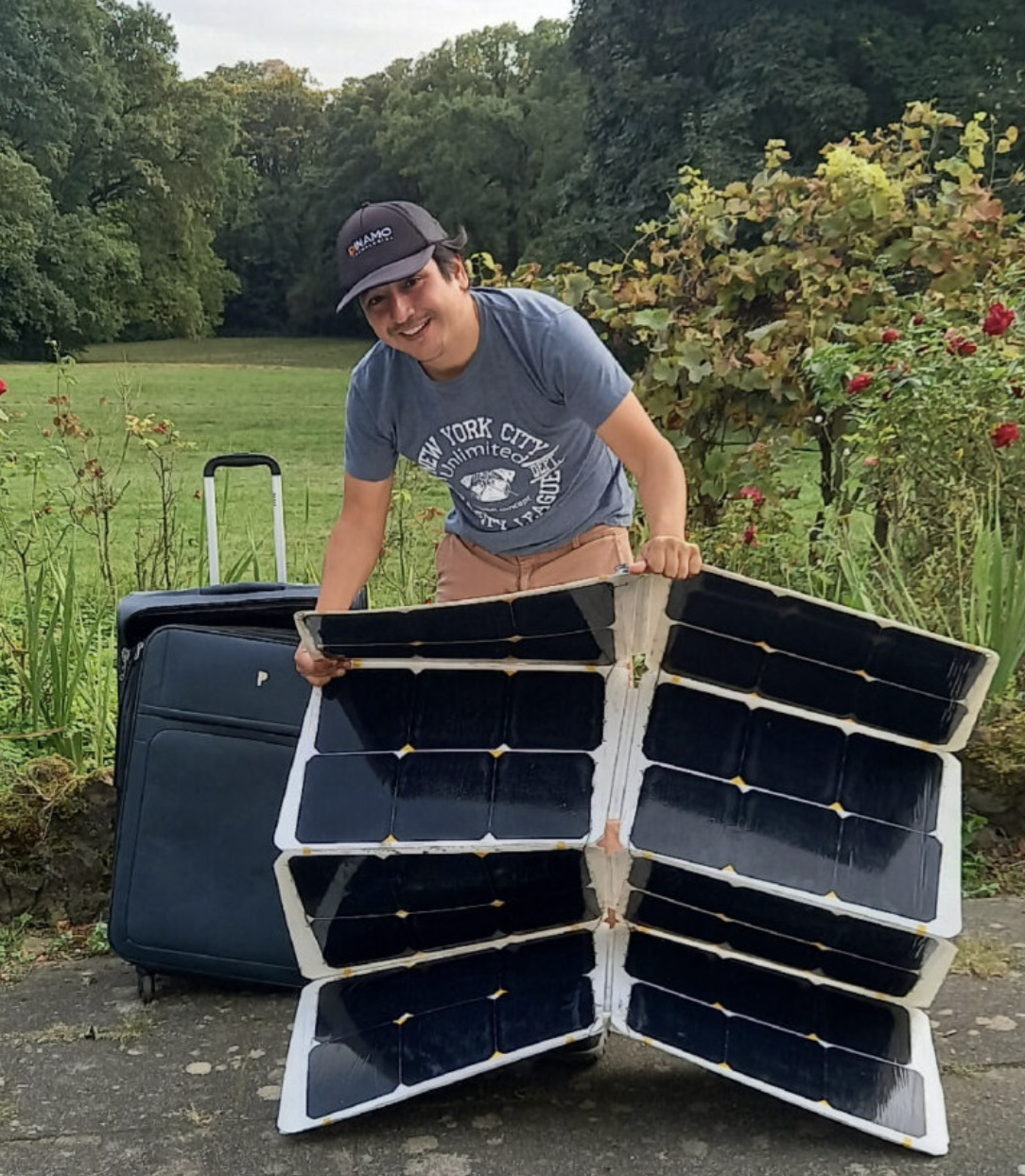
A team of researchers from the Pontifical Catholic University of Peru (PUCP), in collaboration with Peruvian company Dinamo Tecnologías, are developing foldable solar panels intended for use in the naval and mining industries.
PUCP explains the solution uses a structure inspired by the Miura-Ori origami pattern, a Japanese paper-folding technique, a design which allows the photovoltaic surface to be unfolded with a single movement and folded back when not in use. This design aims to facilitate the installation of solar systems in small, mobile, or hard-to-reach spaces, where conventional modules are limited by their size and rigidity.
The project is led by PUCP’s Daniel Lavayén, principal investigator, along with mechanical engineers Enrique Pujada and Davy Olivera, professors from the university’s engineering department and founders of Dinamo Tecnologías.
A technical document from the project states the team designed a full-scale prototype of 388 Wp, composed of 60 solar cells, with dimensions of 1.8 m by 1.1 m. The initial research plan considered manufacturing between three and five models, with power outputs between 340 Wp to 450 Wp and configurations of 60 to 80 cells.
The first application is geared towards small boats that spend part of the day still but need to keep their electrical systems operational. The team explained some boats operate for about eight hours and then remain on standby for about 16 hours, during which time they use fuel generators to supply the crew and onboard equipment.
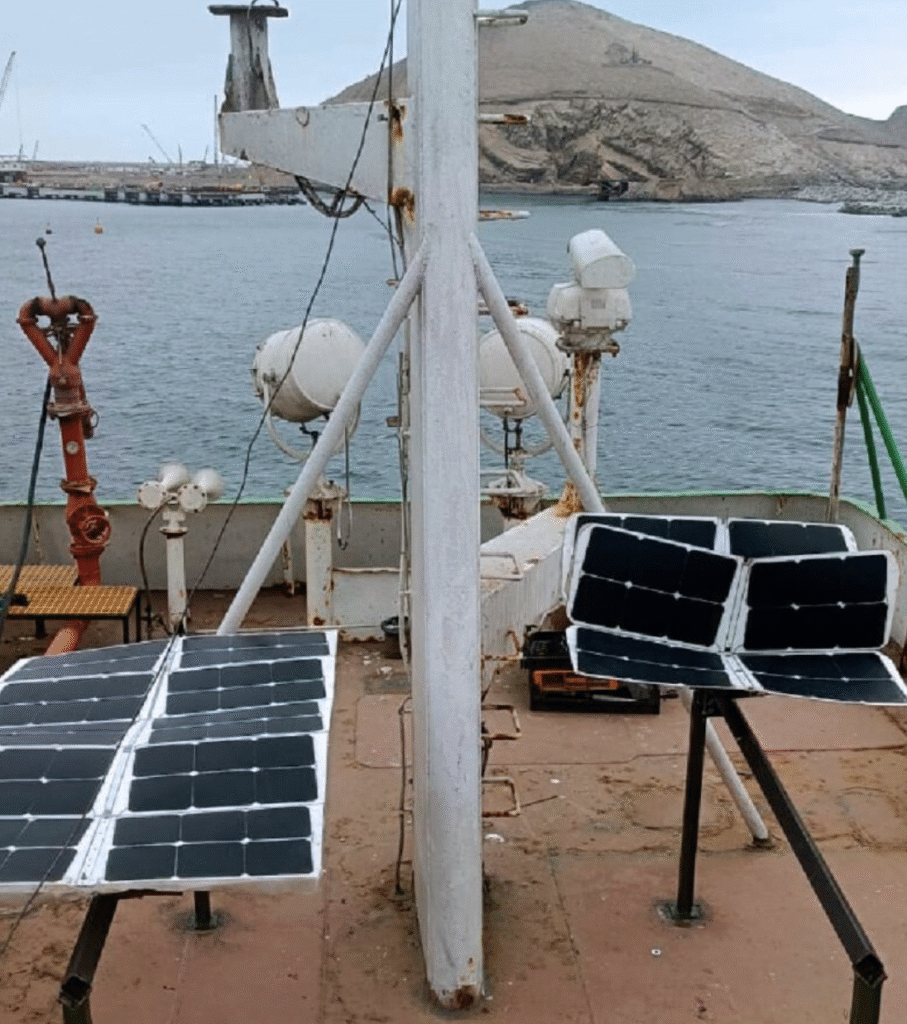
The foldable photovoltaic system does not seek to completely replace those generators, instead reducing their operating hours, as well as fuel consumption, noise and maintenance needs. “One of the ideas was to reduce the number of hours the generators ran, not to replace them 100% with photovoltaic systems,” Pujada explained.
Available space is one of the main constraints for installing solar panels on small boats. Even semi-flexible panels have a fixed surface area, which can make them difficult to transport in conventional vehicles or to store when not in use.
One of the prototypes developed by the team weighs approximately 6 kg and can be stored in a suitcase. The structure maintains a sufficient surface area to capture solar energy, but occupies a smaller volume while being transported.
The researchers are currently working on different configurations. Some of the configurations will prioritize flexibility, resistance to the movement and impacts inherent in naval operations. Others will employ more rigid structures and are geared toward potential industrial applications.
This content is protected by copyright and may not be reused. If you want to cooperate with us and would like to reuse some of our content, please contact: [email protected].

Please login to comment