Ulanqab selects developers for 4.4 GWh grid-forming storage buildout

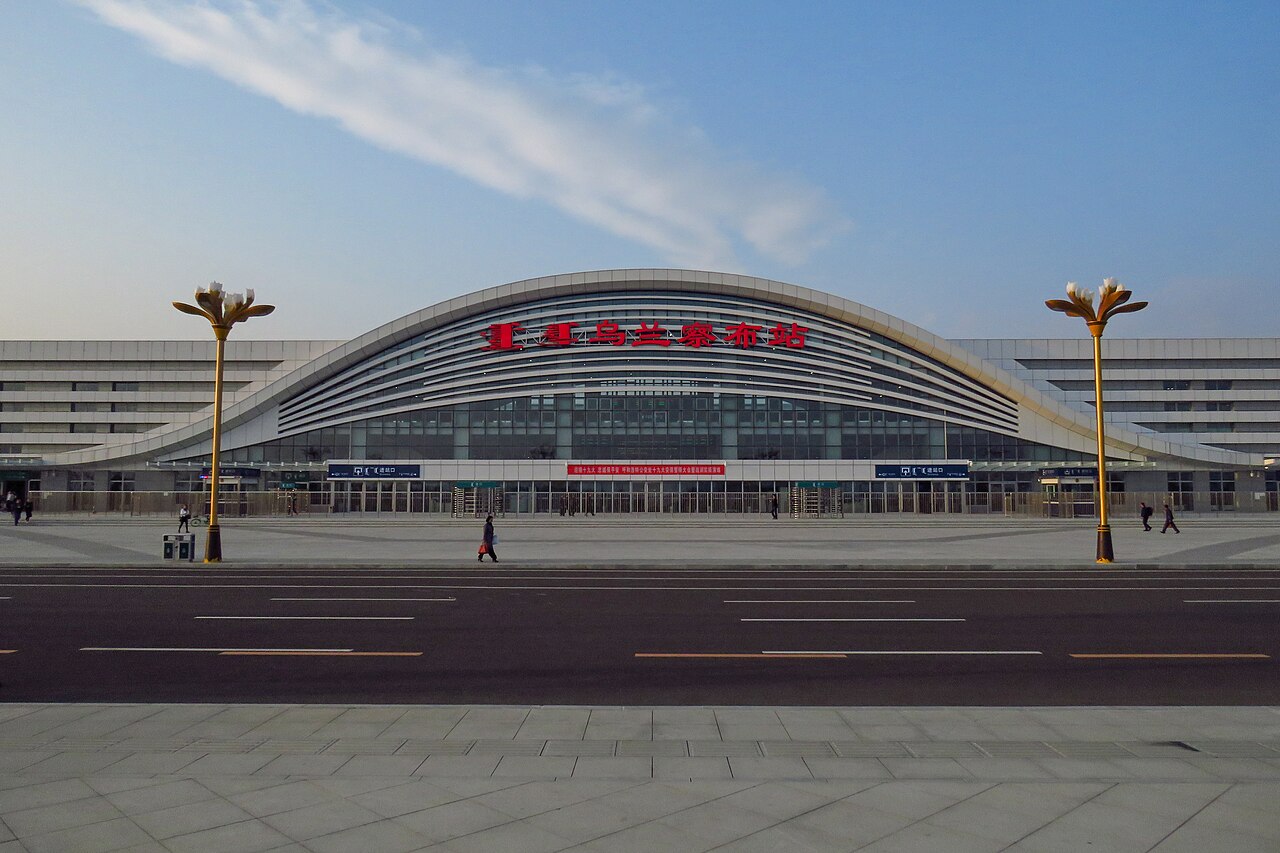
Ulanqab, in China’s Inner Mongolia autonomous region, has selected five companies to develop 1.1 GW/4.4 GWh of independent new energy storage projects, according to an announcement released by the Ulanqab Municipal Development and Reform Commission in July.
The projects will be built in Chahar Right Rear Banner and Siziwang Banner, two county-level areas under Ulanqab’s administration. They are structured as five four-hour independent storage stations, with individual project sizes of either 200 MW/800 MWh or 300 MW/1,200 MWh.
Two 200 MW/800 MWh projects will connect to the Sudun 500 kV substation, while another two projects of the same size will connect to the Hongliang 500 kV substation. The largest single project, at 300 MW/1,200 MWh, will connect to the Ruisheng 500 kV substation.
The selected implementation entities include Datang (Siziwang Banner) Wind Power Co., Ltd., which will develop the 300 MW/1,200 MWh Ruisheng project. China Resources Runke New Energy (Chahar Right Rear Banner) Co., Ltd. was selected for one of the Sudun-connected 200 MW/800 MWh projects.
The remaining three projects were assigned to Ulanqab Herui New Energy Co., Ltd., Inner Mongolia Yuantongda New Energy Investment Co., Ltd., and Shanghai Chaowei Chineng Energy Co., Ltd. Ulanqab Herui and Inner Mongolia Yuantongda will each develop a 200 MW/800 MWh project connected to the Hongliang substation, while Shanghai Chaowei Chineng will develop the second Sudun-connected project.
The municipal selection rules require all projects to use grid-forming energy storage technology. They also state a preference for long-duration and alternative storage technologies such as compressed air energy storage, vanadium redox flow batteries and sodium-ion batteries, rather than relying only on conventional lithium iron phosphate systems.
The projects must be commissioned at full capacity by the end of 2027. The rules also state that the selected projects should be built in one phase and should not be split into smaller projects or developed in stages.
The requirement for grid-forming capability reflects a broader shift in China’s storage procurement. As wind and solar penetration rises in northern and western China, storage projects are increasingly expected to provide voltage support, frequency stability and system-strength functions, not just energy shifting.
Ulanqab is one of Inner Mongolia’s major wind and solar development zones and is also positioning itself as a power and data infrastructure hub. The new independent storage projects are intended to support renewable energy integration, reduce curtailment risk and improve peak-shaving capacity for the regional grid.
The 4.4 GWh allocation is part of Inner Mongolia’s ambition to scale independent new energy storage. The region has been releasing large batches of storage projects under provincial implementation rules, using competitive selection to assign project developers and connect new storage capacity to key 500 kV substations.
This content is protected by copyright and may not be reused. If you want to cooperate with us and would like to reuse some of our content, please contact: [email protected].

Please login to comment