After 30 years in hot-arid climate, Arco solar modules still deliver about half their original power

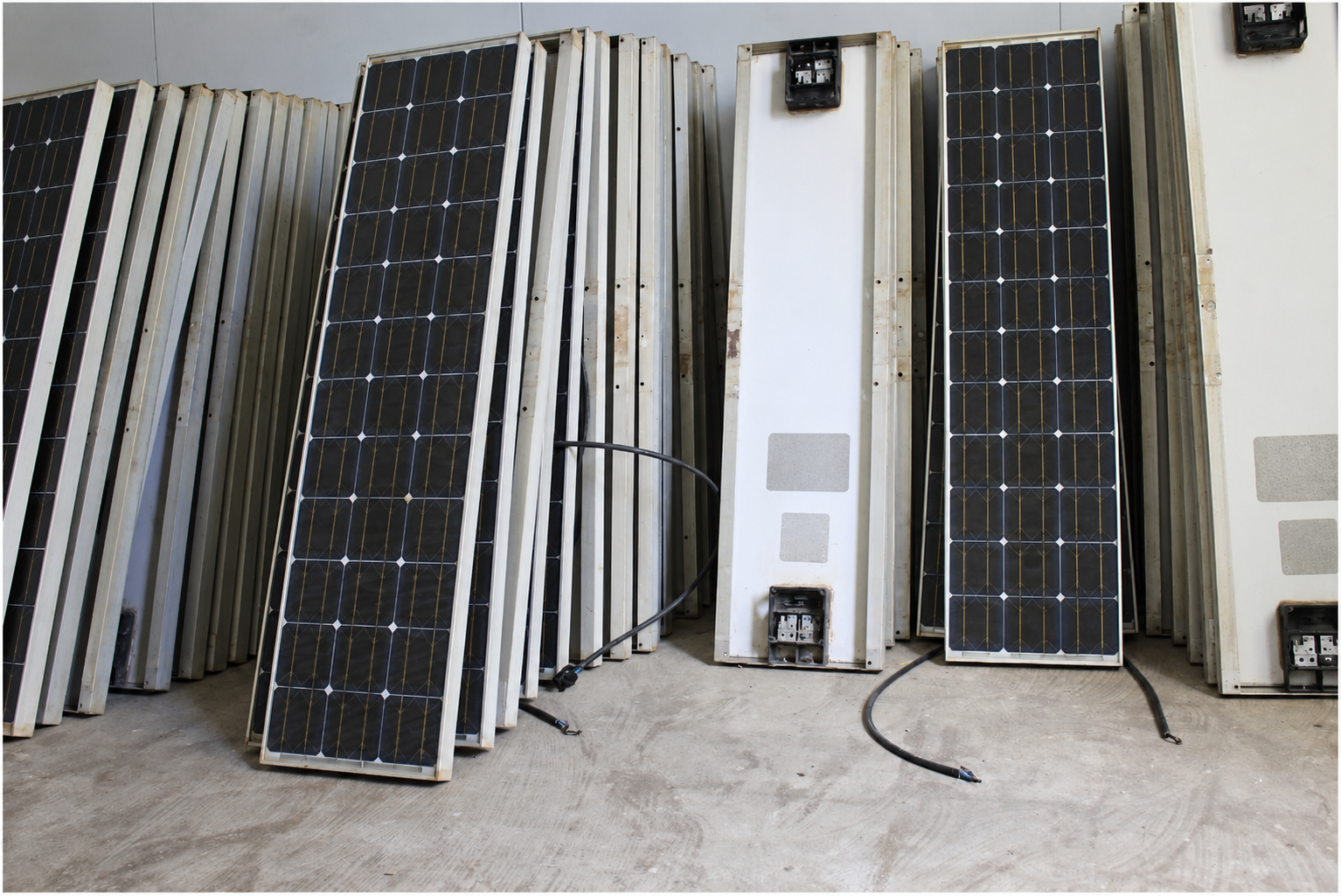
Researchers from Algeria’s Centre de Développement des Energies Renouvelables (CDER) have conducted a post-aging assessment of 30-year-old solar modules from US-based PV manufacturer Arco Solar that have been operating under hot-arid climate conditions and have found that they could still provide around 53% of the original power.
Arco Solar was an early pioneer of commercial photovoltaics. As pv magazine reported in its coverage of Europe’s oldest grid-connected PV system, the US company was among the world’s largest module manufacturers in 1980, despite having an annual production capacity of only around 1 MW – an indication of the industry’s modest scale at the time. Its products were used in landmark projects such as Switzerland’s 10 kW TISO array, where 288 Arco modules operated for decades.
Arco Solar later came under Siemens’ control, and its manufacturing operations eventually became part of SolarWorld. More recent pv magazine coverage of 30-year-old Arco and Siemens modules installed across Switzerland revealed unusually low degradation in several systems. Research on the TISO array, meanwhile, showed that differences in encapsulant formulations led to widely varying results, underlining the importance of materials and environmental conditions for long-term module performance.
“Although our experimental study was conducted under the hot-arid desert climate of Algeria, its main conclusions are not limited to desert environments,” lead author and CDER researcher Hichem Hafdaoui told pv magazine. “The observed degradation mechanisms, the integrated diagnostic approach, and the implications for reliability assessment, electrical safety, lifetime evaluation, and maintenance are relevant to crystalline-silicon PV modules operating under other challenging climatic conditions. However, the measured degradation rate and the severity of individual failure modes remain climate- and site-dependent.”
Hafdaoui said the 64 modules assessed in the study were manufactured by Arco Solar in the early 1980s, with each module containing 36 monocrystalline silicon solar cells.
He explained that the panels were initially installed in the mid-1980s in Adrar, southwestern Algeria, as part of a stand-alone PV system with battery storage. They operated for 20 years in the region’s hot, dry desert climate.
In the mid-2000s, the modules were removed and relocated to CDER in Algiers, northern Algeria. The coastal site has a Mediterranean climate and lies at an altitude of approximately 400 meters. At the research center, the modules operated for about five years in a hybrid solar-wind system with battery storage. After the system was dismantled, they remained outdoors for another five years under open-circuit-voltage conditions.
“We subsequently analyzed all 64 modules to identify their failure modes and degradation mechanisms,” Hafdaoui said. “We calculated an annual degradation rate of between 1% and 2% over the 30-year period. Although this exceeds the rates typically covered by modern module performance warranties, the results should be viewed in the context of prolonged exposure to harsh desert conditions, including high temperatures, intense solar radiation, and windblown sand. Despite these stresses, the modules remained operational after three decades.”
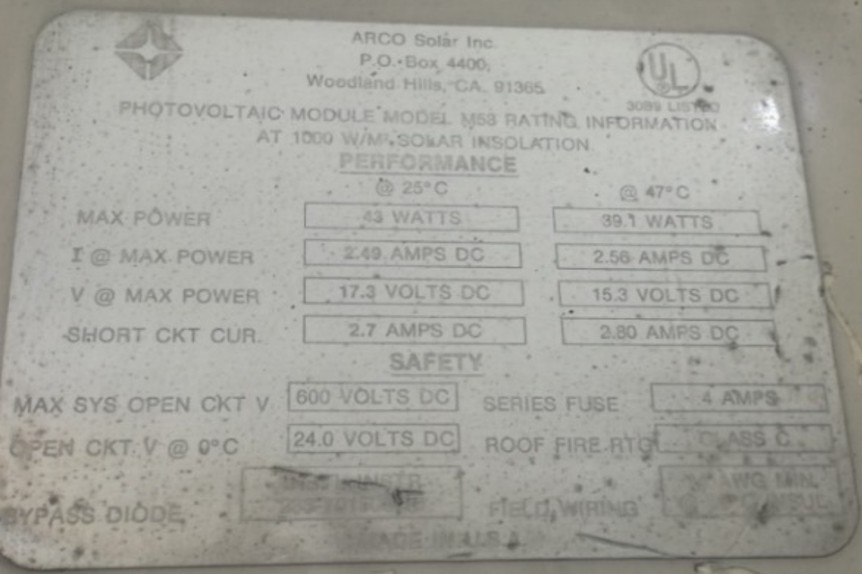
The analysis combined visual inspections, electrical characterization, insulation and wet-leakage testing, and infrared thermography. Each module had an original nameplate rating of 43 W under standard test conditions. Following IEC 61215 guidelines, the researchers recorded and classified visible defects by severity. All 64 modules showed busbar discoloration and cell browning, while some also exhibited cracked cells or detached junction boxes.
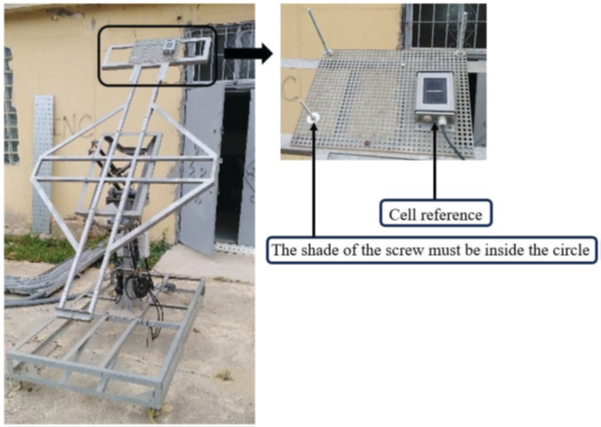
The researchers recorded I–V and P–V curves to determine maximum power, current, voltage, and fill factor. They calculated degradation rates by comparing the measured maximum power with the original nameplate value. All tested modules passed the dry insulation-resistance test, but only 63% passed the wet-leakage test, pointing to potential safety issues under moisture exposure. Infrared thermography also detected hot spots or other thermal anomalies in around 46% of the modules.
The tests showed considerable variation in module performance after three decades of service. Maximum power output ranged from 15.91 W to 29.75 W, compared with the original nameplate rating of 43 W. The weakest-performing module therefore retained about 37% of its initial rated power, while the best retained roughly 69%.
Across the 64-module sample, average maximum power stood at 22.77 W, corresponding to average power retention of approximately 53% and an average loss of around 47%. Total degradation among individual modules ranged from about 31% to 63%, equivalent to an estimated annual degradation rate of roughly 1% to 2%.
The wide spread in measured output indicates that the modules did not age uniformly, with differences in physical defects, material deterioration, and electrical losses likely contributing to their varying performance.
“We consider an annual maximum-power degradation rate of up to 1% acceptable, while rates above 1% are excessive,” said Hafdaoui. “The observed power losses may be directly linked to module faults, with corrosion and discoloration identified as the main degradation modes. Exposure to harsh environmental conditions accelerates the degradation of module materials, ultimately compromising overall performance.”
The results of the module assessment were presented in “Testing and degradation assessment of mono-crystalline silicon PV modules after 30 years of operation in a desert climate,” published in Next Energy.
“The experimental findings provide valuable evidence of PV module behavior at an advanced aging stage and contribute to a better understanding of long-term degradation under harsh climatic conditions,” the academics said. “The results can support more realistic lifetime assessments, reliability modeling, and maintenance planning for PV systems operating in desert and other challenging environments.”
This content is protected by copyright and may not be reused. If you want to cooperate with us and would like to reuse some of our content, please contact: [email protected].

Please login to comment