Greece can install 8.6 GW of batteries by 2030

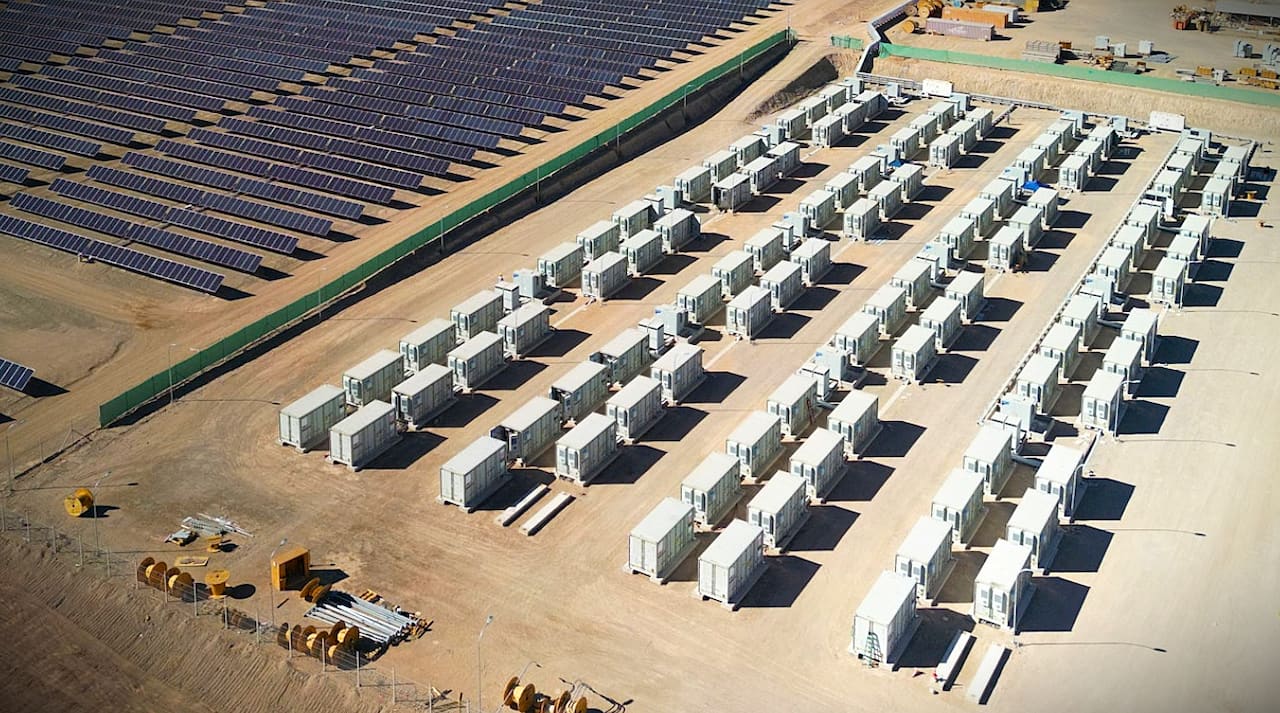
One of the main questions addressed at the Solarplaza Seminar BESS Greece conference, held last week in Athens, was how much battery storage Greece will install by 2030. The answer depended on who was asked, with forecasts ranging from conservative to considerably more optimistic.
Louiza Moutafi, senior research associate at Aurora Energy Research, a global consultancy with an office in Athens, said Greece will install around 4 GW to 5 GW of BESS by 2030. The first systems to become operational will include the 900 MW of standalone, front-of-the-meter systems selected through auctions in previous years. Of this capacity, 711 MW comprises two-hour batteries and the remaining 189 MW four-hour systems. Their construction and operation are supported by state subsidies.
Moutafi told the Solarplaza conference that around 400 MW of the auctioned capacity has already been connected to the grid and that the entire 900 MW will be operational by the end of 2026.
Aurora Energy Research estimates that additional storage capacity will comprise standalone batteries operating on a merchant basis, without subsidies, and batteries co-located with power generation, most notably solar PV. The first of these systems, totaling around 100 MW, could become operational this year, Moutafi said. However, the majority – around 3 GW to 4 GW – is expected to be installed between 2027 and 2030. By 2050, Aurora Energy Research projects a further 47.6% increase in this capacity.
Both Moutafi and Stelios Psomas, policy officer at the Hellenic Association of Photovoltaic Companies (Helapco), who also presented at the Solarplaza event, identified the same main segments shaping Greece’s BESS market.
Psomas added that around 100 MW of small-scale batteries connected to self-consumption PV systems, including systems operating under net metering, are already operational.
For standalone batteries operating on a merchant basis without subsidies, Moutafi and Psomas highlighted the government’s ongoing 4.7 GW program. It comprises 3.8 GW of BESS seeking connections to the transmission system and 900 MW to the distribution network, for which the government has invited licensing applications.
The co-located segment of the Greek storage market comprises several categories. One covers batteries installed alongside existing or new solar projects operated by small, medium-sized and large businesses. These systems are intended to increase self-consumption and reduce electricity costs. Greece’s Ministry of Environment and Energy recently published a list of 209 projects that will receive funding under this category.
Psomas also outlined three other segments of the co-located market. The so-called 11A category comprises projects in which batteries can charge only from PV. Under the 11B category, batteries can charge from both PV and the grid but cannot discharge during hours when power curtailment may be required. The 11C category covers batteries serving clusters of PV plants. Discharge restrictions similar to those applying to 11B projects also apply to 11C projects, but only to the battery and not to the PV component.
IRRs
Aurora Energy Research ranks Greece among Europe’s 10 most attractive battery storage markets and among the top three in Southeast Europe, alongside Bulgaria and Romania.
Moutafi said a two-hour standalone battery entering commercial operation in 2027 on a merchant basis and completing 1.5 charge-discharge cycles per day could achieve an internal rate of return (IRR) of between 9% and just under 12%. By comparison, co-located PV-plus-storage projects could achieve IRRs exceeding 11%, regardless of configuration, commissioning year, battery duration or cycling strategy.
Asked by pv magazine whether such returns could prompt a wave of co-located projects to become operational in the near term, Moutafi said the Greek government has prioritized standalone BESS and that she therefore expects deployment of co-located systems to accelerate from 2028.
She noted, for example, that the government announced the charging rules for the 11A, 11B and 11C categories only a few months ago. Such information is crucial for developers seeking to design project business models.
Moutafi said several factors enable co-located PV-plus-storage projects to achieve higher IRRs than standalone BESS. These include savings on capital and operating expenditure, the ability to charge batteries directly from PV generation and opportunities for load shifting. Co-located projects can also participate in other electricity markets, including the balancing market.
Aurora Energy Research estimates that a two-hour standalone merchant battery entering operation in 2027 and completing 1.5 charge-discharge cycles per day would derive 70% of its lifetime revenue from energy arbitrage and the remaining 30% from capacity payments for ancillary services.
Greece’s balancing market is relatively small, however, and Moutafi expects price cannibalization to emerge relatively quickly in its shallower segments, particularly markets for balancing capacity reservation services.
Optimism
Helapco’s Psomas presented a considerably more optimistic outlook for Greece’s BESS market, arguing that the country could install 8.6 GW of battery storage by 2030.
He cited two main reasons for the forecast. The first is the growing need for PV investors to deploy storage to mitigate renewable energy curtailment and exposure to negative wholesale electricity prices.
Psomas said renewable energy curtailment remains high this year, although it has been lower than expected. The number of hours with negative electricity prices, by contrast, has risen sharply. Greece recorded only 11 hours of negative prices in 2024, rising to 115 hours in 2025 and 382 hours by Sept. 15, 2026.
The second reason is what Psomas described as an “acceleration scenario.” Once the first BESS projects – whether standalone merchant batteries or co-located systems – are installed, businesses and financiers gain experience that can facilitate further investment.
“Batteries at present are the real disruptive technology,” Psomas said, adding that he expects the sector to grow faster than many anticipate.
As of August 2026, Greece had issued licenses for 55.3 GW/166.2 GWh of standalone BESS, 11.8 GW/28.1 GWh of co-located BESS in the 11B category and 16.7 GW/163.7 GWh of pumped hydro energy storage (PHES), according to Psomas.
This content is protected by copyright and may not be reused. If you want to cooperate with us and would like to reuse some of our content, please contact: [email protected].

Please login to comment
Nobody has a foolproof crystal ball into the future, but the experience of the solar industry in particular of the last 20 years in terms of predictions for future global installs and cost reductions is that nearly all estimates were conservative.
The IEA’s solar predictions were extremely conservative and the closest really was Greenpeace, who even underestimated how far solar would reduce in price and increase in installs.
Of course, at the time, Greenpeace were attacked from what was considered by most commentators as an overly optimistic and deluded prediction.
So when people talk about future deployment of batteries on an industrial scale or a residential scale, they need to understand that with batteries reducing in cost by 20% or more for each of the last two years, and with the amount of development and research going into battery development, especially with increasing use of AI and machine learning, batteries by 2030 could well be half the price they are now.
By 2035? 1/3rd? In which case global battery installs could easily be 50 to 100% more than predicted by all leading bodies, like the IEA, Bloomberg and Lazards.
As an example, in Australia the Australian Energy Market Operator, the body “in charge” of the grid, in 2016 predicted that by 2026/27, Australia would install 4 MW of battery storage.
In fact, by half way through 2026, the actual number was 12,000 MW operating or being commissioned across Australia.
And more than 24,000 MW (6,000 times the 2016 “expert” prediction) in the “committed” category.