Fraunhofer ISE achieves 47.6% efficiency with III-V four-junction CPV cell

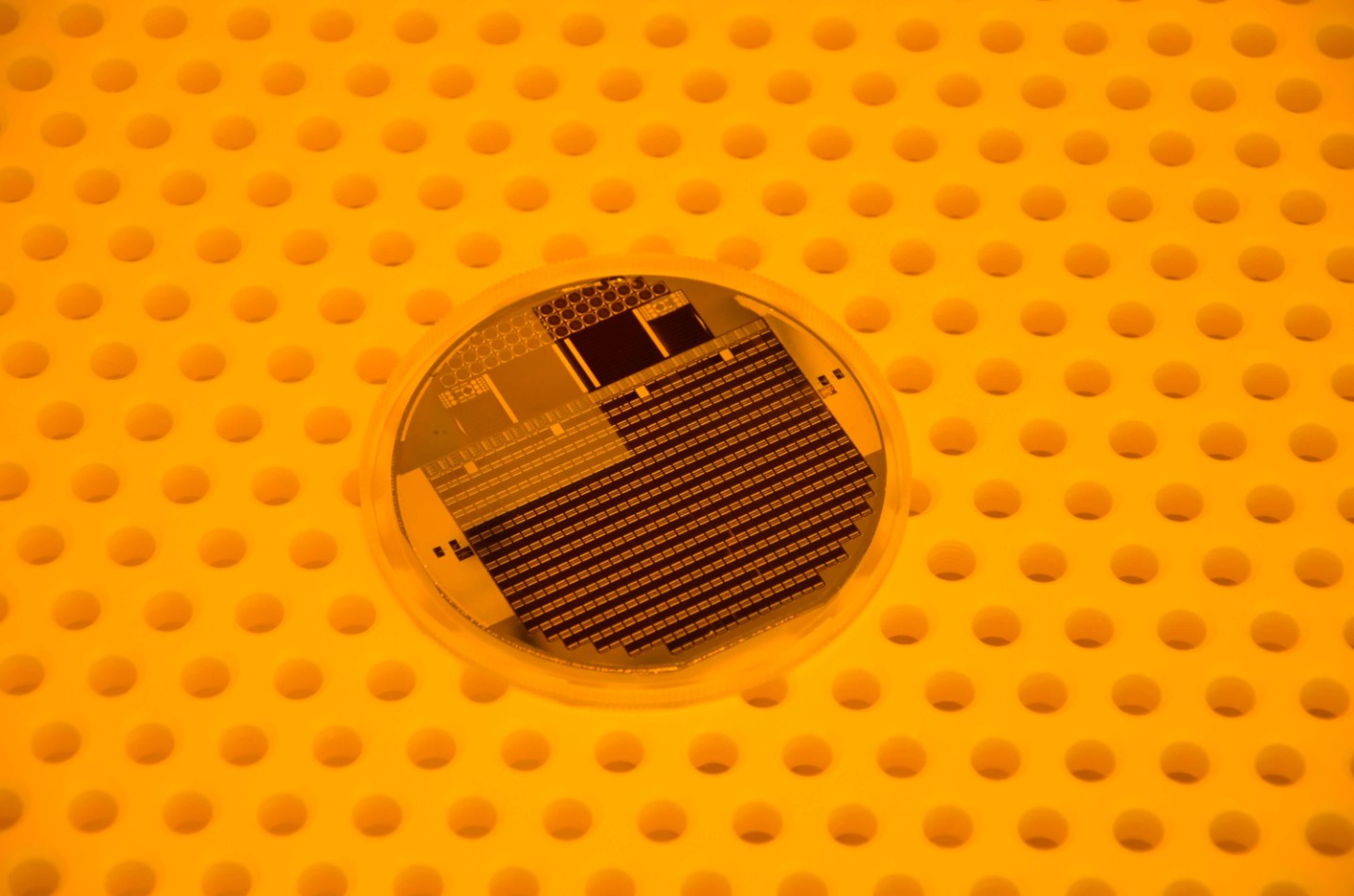
Researchers at the Fraunhofer Institute for Solar Energy Systems (Fraunhofer ISE) in Germany have achieved a power conversion efficiency of 46.7% for a III-V concentrating photovoltaic cell (CPV) with a four-junction architecture.
French CPV specialist Soitec, which originally developed the cell structure, achieved a 46% efficiency for one of its most powerful devices back in 2014.
“The upper tandem solar cell is made of gallium indium phosphide (GaInP) and aluminum gallium arsenide (AlGaAs), which was bonded by Soitec onto a lower tandem solar cell made of gallium indium arsenide phosphide (GaInAsP) and gallium indium arsenide (GaInAs),” Fraunhofer ISE said. “Now an improved contact layer and a 4-layer antireflection coating were applied to the tandem cell structure in Fraunhofer ISE’s Center for High Efficiency Solar Cells.”
The cell’s previous efficiency level was 46.1%. The scientists improved it by reducing resistance losses and the reflection on the cell front side. It also implemented improvements for the metal contacts.
“Possible applications of such highly efficient tandem solar cells include concentrator photovoltaic systems, which contribute to efficient power generation in sun-rich countries,” said Stefan Glunz, division director of Photovoltaics Research at Fraunhofer ISE. “With tandem photovoltaics, it is possible to leave the limitations of single-junction solar cells behind and ultimately achieve a reduction in solar power costs.”
Fraunhofer ISE has worked on several kinds of III-V solar cells in the past. They include a 68.9%-efficient III-V solar cell for laser energy transmission systems, a 35.9%-efficient III-V triple-junction solar cell based on silicon, and a III-V tandem solar cell with an efficiency of 25.9%, among others.
This content is protected by copyright and may not be reused. If you want to cooperate with us and would like to reuse some of our content, please contact: [email protected].

Please login to comment

[…] Источник […]
[…] from Germany’s Fraunhofer Institute for Solar Energy Systems (ISE) have developed a technique known as “FlexTrail printing” – a metallization method to […]
[…] iz Njemačke Fraunhofer institut za solarne energetske sisteme (dok) razvili su tehniku poznatu kao “FlexTrail printing” – metodu […]
[…] from Germany’s Fraunhofer Institute for Solar Energy Systems (ISE) have developed a technique known as “FlexTrail printing” – a metallization method to […]
[…] 该文件还根据国际可再生能源署、国际能源署和德国研究机构Fraunhofer ISE的数据,列出了去年欧洲光伏产业的资本支出(capex)成本。 […]
[…] from Germany’s Fraunhofer Institute for Solar Energy Systems (ISE) and German laser-enhanced contact optimization (LECO) have worked with Cell Engineering GmbH […]

Anything to reduce completive advantage through manipulationof markets and leaving it to pure science is best for the world.
[…] stress profiles.Image: Fraunhofer Institute for Solar Energy SystemsyA German consortium led by Fraunhofer ISE, inverter manufacturer Kaco New Energy, and semiconductor supplier Infineon Technologies AG plans […]