Inside PV manufacturing: Sunmaxx’s PVT module factory in Germany

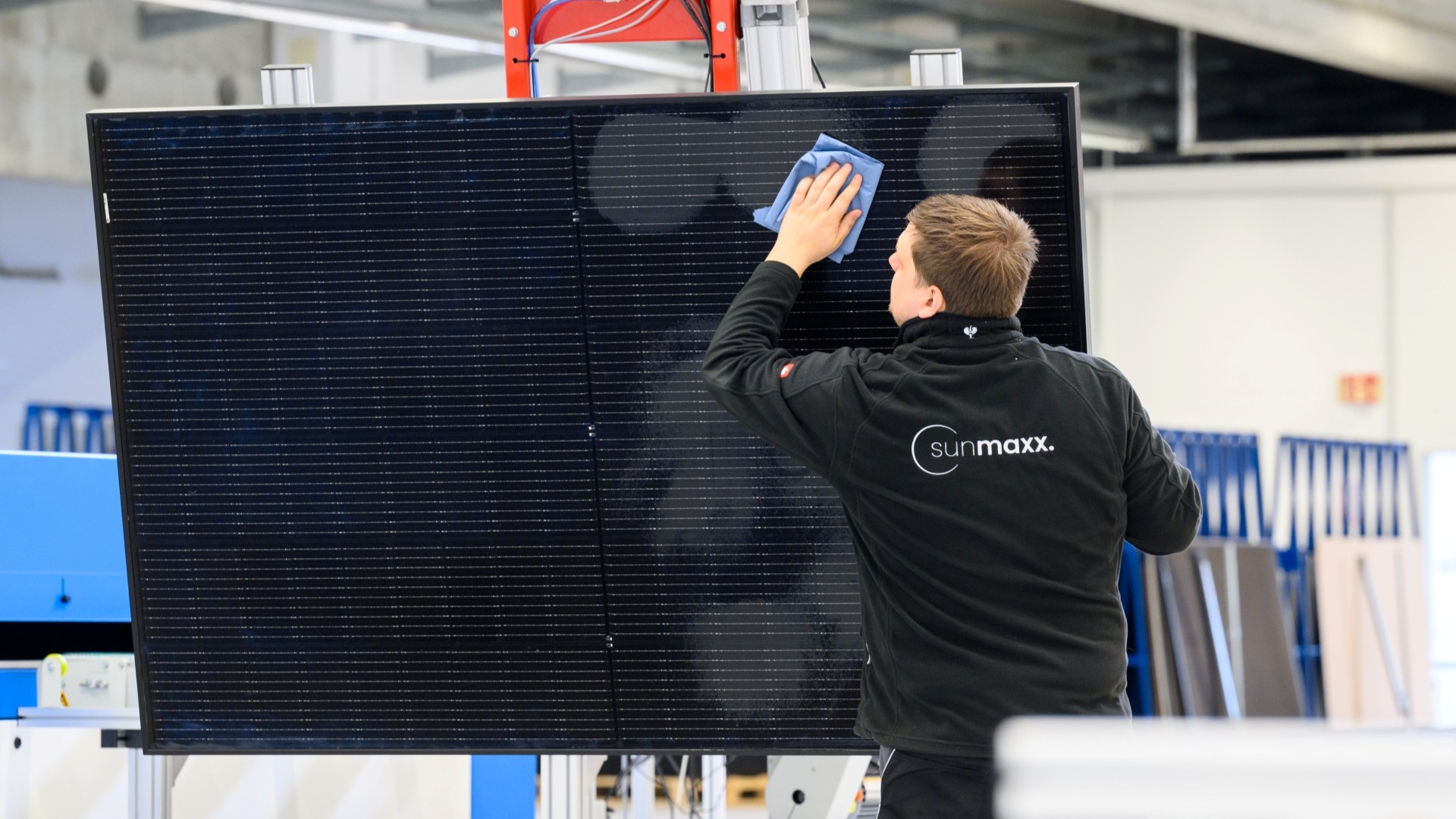
German manufacturer Sunmaxx aims to make photovoltaic-thermal (PVT) technology a scalable industrial solution with what it describes as the world’s largest and most advanced mass-production facility for PVT modules.
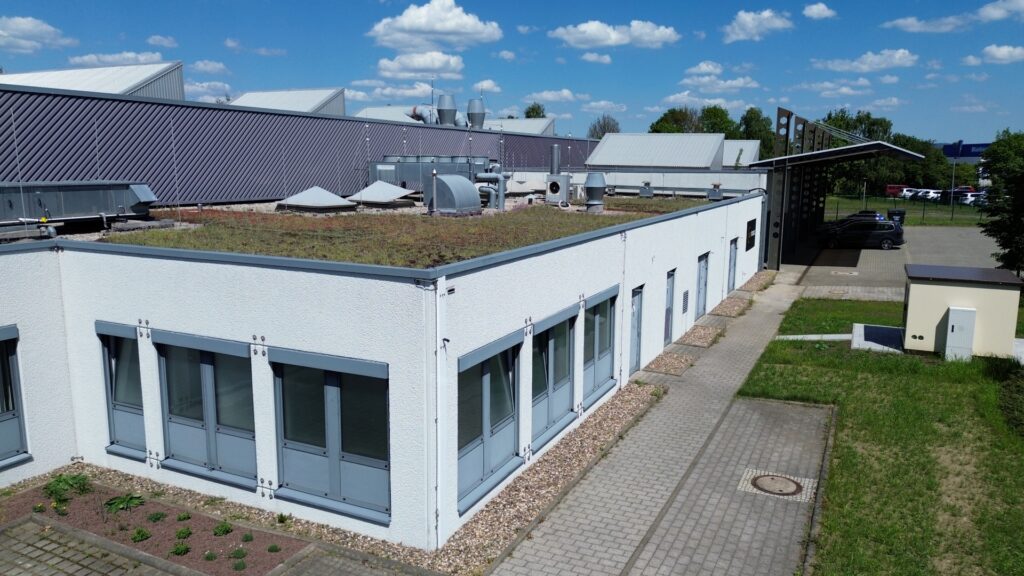
Located in Ottendorf-Okrilla, Saxony, northeast of Dresden, the factory operates entirely on certified renewable electricity and has an annual production capacity of 120,000 modules, with the potential to increase output by up to fivefold. The facility represents one of the industry’s most ambitious efforts to move PVT technology beyond a niche market and into broader applications for heating and building decarbonization.
From experimental technology to industrial production
PVT technology combines photovoltaic electricity generation with thermal energy capture in a single module. Although long regarded as a promising approach, its manufacturing complexity and relatively high costs have limited commercial deployment.
Sunmaxx, founded in 2021 by German engineer Wilhelm Stein, set out to adapt thermal management technologies from the automotive industry for the solar sector. After several years of research and development, component testing, and production process validation, the company says it produced its first industrially manufactured PVT module at scale in late 2023. The production facility was officially inaugurated in April 2024.

A module designed to generate electricity and heat
Unlike conventional photovoltaic panels, Sunmaxx’s PVT modules are designed not only to generate electricity but also to serve as a heat source for geothermal or water-glycol heat pumps, simultaneously supplying electrical energy and low-temperature heat.
Each module currently delivers a thermal output of up to 1,200 W. The system captures both solar radiation incident on the photovoltaic surface and thermal energy from the ambient air, providing a stable heat source throughout the year under varying weather conditions.
This capability is particularly important during the winter months. Whereas conventional air-to-water heat pumps rely solely on ambient air temperature, PVT modules can provide source temperatures of up to 20 C through additional solar heating, even when outdoor temperatures are close to freezing.
According to field data published by the company, this capability enables seasonal coefficient of performance (SCOP) values exceeding 4.5 in monovalent systems, in which the heat pump relies exclusively on PVT modules as its energy source.
Over 80% energy utilization
The distinguishing feature of Sunmaxx’s technology lies in its heat exchanger. Adapted from automotive applications, it is bonded to the entire rear surface of the photovoltaic laminate, enabling heat transfer with minimal losses.
In addition to producing thermal energy, this active cooling reduces the operating temperature of the solar cells, increasing annual electricity output by 5% to 10% compared to conventional photovoltaic modules. It also helps reduce ice formation during winter operation.
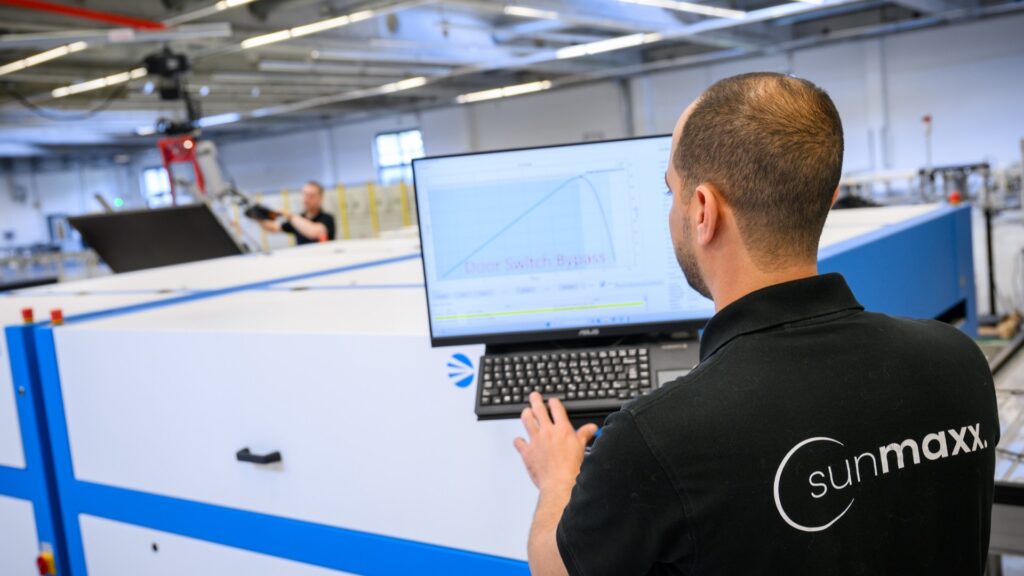
The combination of electrical and thermal generation enables the modules to achieve overall energy efficiencies exceeding 80%, significantly higher than those of conventional photovoltaic systems.
From homes to district heating networks
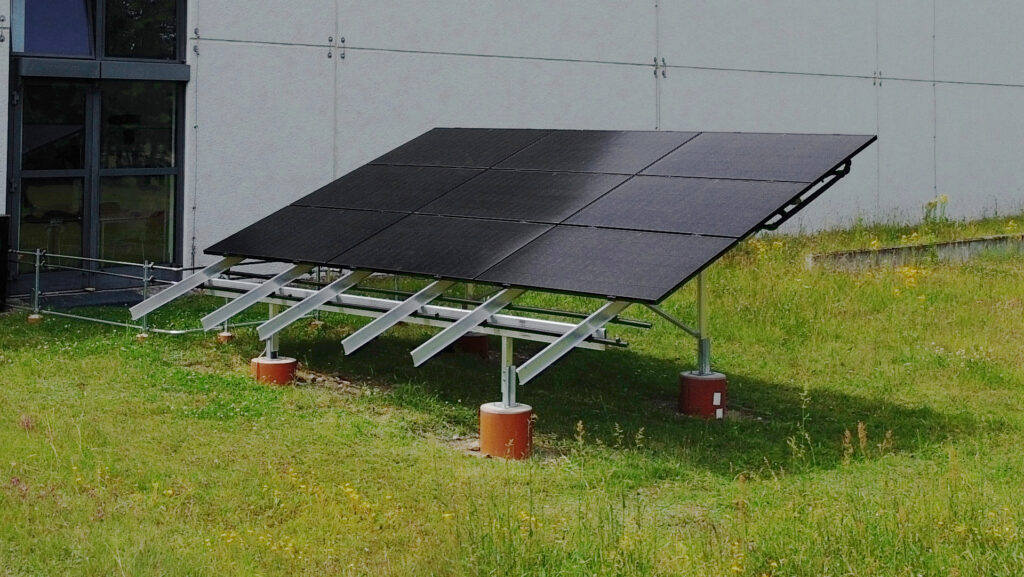
The modules can be installed on roofs, facades, or ground-mounted systems and are designed for a wide range of applications, from single-family homes and residential buildings to district heating networks and industrial facilities requiring process heat.
According to the company, integrating electricity and heat generation into a single unit reduces the need for multiple separate energy technologies and supports the electrification of building climate systems, one of the most challenging sectors to decarbonize in Europe.
Potential to reduce geothermal costs
The technology also shows potential in large-scale projects that use geothermal probes or buried collectors.
Heat captured by the modules can be used to regenerate the ground and reduce the required depth or number of boreholes, thereby lowering the cost of geothermal installations.
The company reports that projects using its system have achieved reductions of up to 75% in initial drilling costs.
Furthermore, the modules’ low hydraulic pressure drop (29 mbar) allows up to 20 units to be connected in a single circuit, simplifying system design and reducing installation costs.
International expansion
While Germany, Austria, and Switzerland remain Sunmaxx’s core markets, the company has supplied modules to projects in Romania, Spain, Brazil, and the United Kingdom and is in discussions to expand into Scandinavia, India, and Israel.
With scalable manufacturing capacity and technology designed to maximize energy output per unit of surface area, Sunmaxx aims to position itself as a European player in hybrid renewable heating solutions and building electrification—an area expected to grow as Europe accelerates the phase-out of fossil fuels in the heating sector.

Previous articles in pv magazine‘s new series on solar manufacturing facilities around the world covered SoliTek’s fully-automated line in Lithuania, United Solar’s polysilicon factory in Oman, Belga Solar’s module production facility in Belgium, Midsummer’s CIGS factory in Italy, and Tindo Solar’s PV module plant in Australia.
This content is protected by copyright and may not be reused. If you want to cooperate with us and would like to reuse some of our content, please contact: [email protected].

Please login to comment