Inside PV Manufacturing: United Solar’s polysilicon factory in Oman

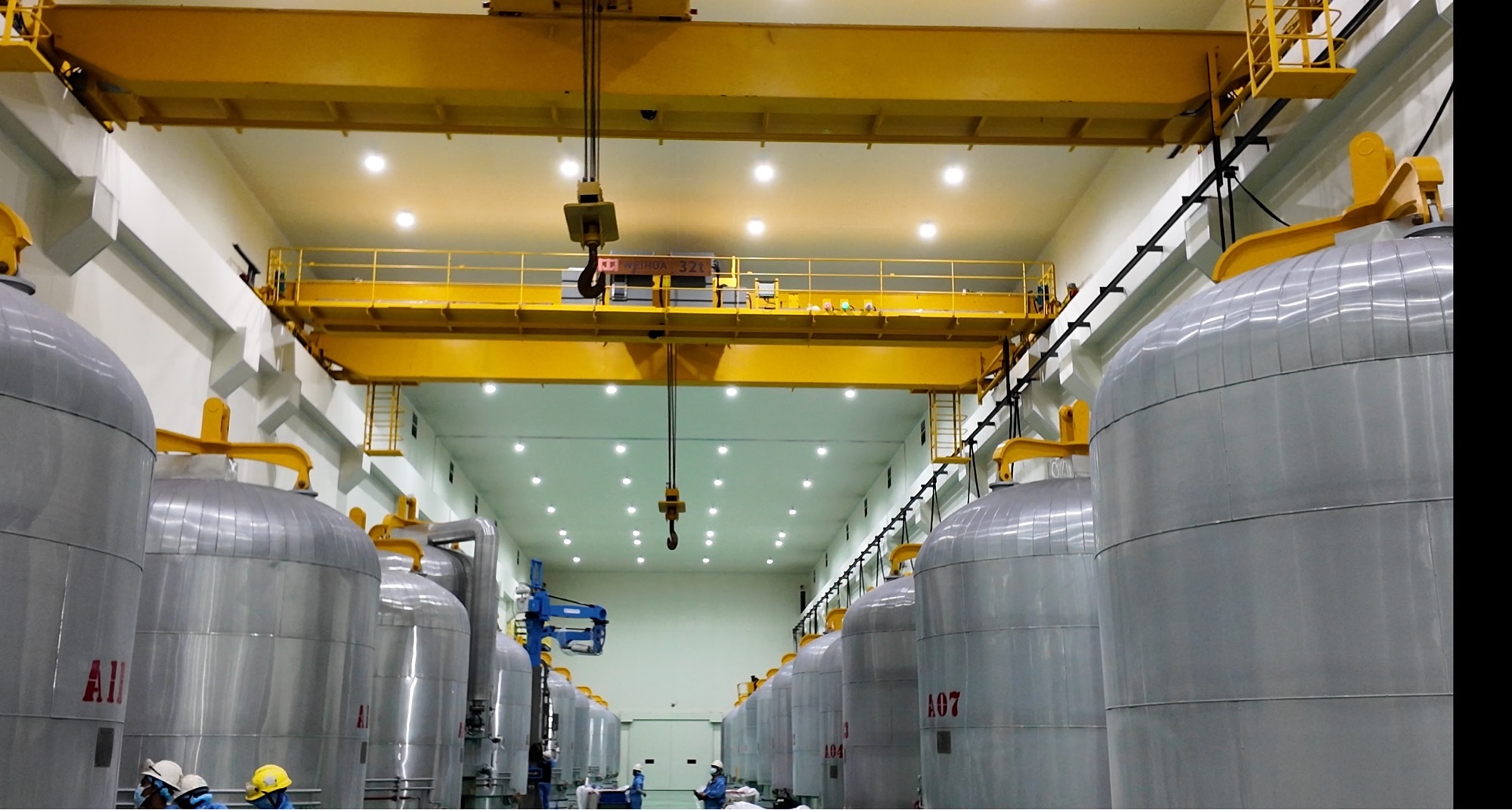
United Solar Holdings, USP’s parent company, was established in 2023 by founder and Chairman Longgen Zhang, formerly the CEO of Chinese polysilicon producer Daqo New Energy. Headquartered in the Middle East, in Oman’s Sohar Port and Free Zone, the company has pushed forward with plans for a factory with the capacity to produce 100,000 MT per year of solar-grade polysilicon – sufficient to cover around 40 GW per year of PV module production.
The factory produced its first polysilicon in early 2026, and USP aims to have it operating at full capacity by the end of the year, with an official inauguration scheduled in April. USP chief financial officer Binyam Giorgis told pv magazine “it’s the largest solar factory that we know of outside of China, and it’s designed to be best in class in terms of efficiency and cost competitiveness.”
USP raised $1.6 billion to fund the factory, including $480 million in long-term debt from International Finance Corp., more than $400 million in debt and working capital facilities from various local banks, and an investment of around $260 million from sovereign wealth fund the Oman Investment Authority (OIA)’s Future Fund – making OIA the project’s largest investor.
The facility took around 22 months to build, with equipment and materials shipped from around the world. It will produce polysilicon via a version of the Siemens process, using equipment and processes licensed from suppliers in China.
Polysilicon supply, along with the rest of the solar supply chain, has long been dominated by China, which has implemented production at huge scale and achieved major cost reductions. Some other regions though are restricting imports from China and implementing supply chain traceability measures, leaving buyers looking for alternatives. And these are the markets where USP expects to find demand. “Our strategy is to diversify our market as much as possible, particularly establishing relationships in India and the US, making sure we have demand coming from at least three or four different markets,” said Giorgis.
The factory is now in the testing phase, and Giorgis reports that it is meeting all quality and purity requirements and expects to be cost-competitive with other non-China polysilicon suppliers.
“Chinese players will have some cost advantages because the whole ecosystem is well established there. But the right framing is how do we compare to others outside of China that are traceable. And in that context, I think we’re in a good position,” he said.
Giorgis explained that the factory was designed to meet the requirements of most international markets for polysilicon, including Foreign Entity of Concern (FEOC) rules being introduced in the United States, and high environmental, social and governance (ESG) standards required by many European and other markets. The factory will discharge no liquids into the environment, and while the Omani grid that powers it primarily runs on gas, Giorgis said that plans are in place to build a solar plant at the site to meet at least part of its energy demand. “It hits all the marks in terms of ESG, scale, cost competitiveness, and FEOC compliance, which means we can cater to most regions, including the US, India, Europe,” he said.
US uncertainty
Meeting the FEOC requirements is largely a case of ensuring supply of metallurgical grade polysilicon and other inputs from outside China. For the US market, though, the outcome of a trade investigation into polysilicon imports – still undecided as pv magazine went to press – poses a more difficult question. Outcomes could range from tariffs to an outright ban on all polysilicon imports, though the fact that the United States does not have sufficient polysilicon capacity to match its domestic module production means any restrictions introduced will likely come with exceptions for specific suppliers or regions. “It’s tough to plan for when there is no goalpost to aim for, but we’re prepared for different outcomes,” said Giorgis, adding that Oman having friendly relations with the United States and the factory being located in a free trade zone should mitigate some of that risk. “We’ve seen that this administration tends to favor bilateral deals with different countries, so maybe that’s where this will go.”
Indian module manufacturer Waaree Energies, via its US subsidiary Waaree Americas, completed a $30 million investment in USP at the end of January 2026. It also has an offtake agreement for the Oman-made polysilicon in place to “support Waaree’s global solar manufacturing operations, and in particular US operations,” according to a December 2025 announcement from Waaree.
Global markets
Giorgis confirmed that USP has other supply agreements in place with manufacturers located in the United States, India, and Southeast Asia. “Those customers are predominantly tier one manufacturers. They are testing and qualifying our product, or they will be very soon,” he said.
Beyond China and the United States, India will likely be the largest source of demand for polysilicon in coming years. Solar manufacturing in the country has grown rapidly, and though domestic polysilicon factories are in development, it will likely require imports to meet demand for the foreseeable future. Giorgis said that USP has relationships in India, as illustrated by its partnership with Waaree, and is working to establish new ones as well.
Several countries in Southeast Asia host significant solar manufacturing capacity, primarily operated by Chinese companies who set up there to serve markets with restrictions on Chinese imports. And though previous trade investigations have put high tariffs on importing from these countries to the United States, a supply of non-China polysilicon may still be useful to them in serving other markets.
Future potential
Other regions have little demand for solar grade polysilicon today, but do have plans for solar manufacturing in the works. USP wants to be ready to serve these should the opportunity appear. On its doorstep, the Middle East has been installing solar at massive scale, and though multiple conflicts bring uncertainty to the region, Giorgis is hopeful it will become a bigger manufacturing market as well. “We need to see more activity on incentivizing domestic manufacturing, for us and others setting up in the region. But it’s a sizable market that could be very good for us,” he said, further noting that USP has the capability, as well as the land and infrastructure available in Oman, to expand into ingot, wafer or cell production if the economics start to make sense.
Europe tells a similar story, with solar close to the center of its energy plans and some desire for a domestic manufacturing restart, but few projects currently in development that are likely to become significant offtakers for polysilicon. But USP wants to be ready to supply any market looking to diversify its polysilicon supply. “The fact that we’re complying to the highest ESG standards, the FEOC compliance, all of that just opens up the number of markets available to us. We want to be able to comply with all the regulations in each of them,” he said. “This is the largest manufacturing site outside of China, at 100,000 MT we have the scale to create resiliency for the rest of the globe.”
This content is protected by copyright and may not be reused. If you want to cooperate with us and would like to reuse some of our content, please contact: [email protected].

Please login to comment