Japan’s proposed shading rate for agrivoltaics is unreasonable, says think thank

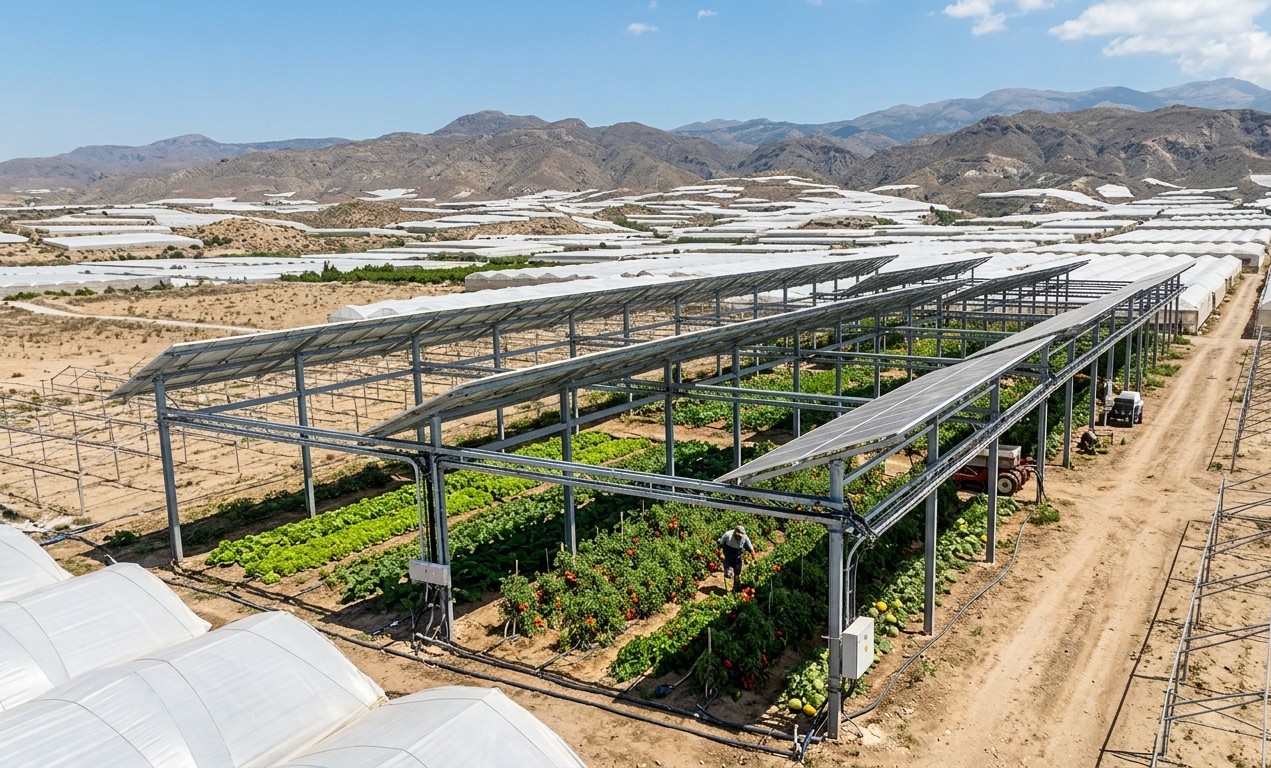
Judging crop yield and quality under agrivoltaic systems solely by the shading rates of solar panels is inappropriate, according to new research from the Japan Renewable Energy Foundation (JREF).
The Tokyo-headquartered think tank has released a report that analyzes the effects of shading from solar panels on crops including rice, soybeans, tea, coffee, and spinach, using examples from both Japan and internationally.
The research comes ahead of proposals set out by Japan’s Ministry of Agriculture, Forestry and Fisheries to implement new agrivoltaics legislation that would set a uniform shading rate of less than 30%. Public comments on the proposal are being accepted until August 22, ahead of a planned implementation date before the end of September.
JREF argues that the basis for this numerical threshold has not been provided. A statement published on the foundation’s website says that there are many agrivoltaic systems in Japan that are implemented with a shading rate above 30%.
“Even with organic farming that does not use pesticides, sufficient yields and high-quality agricultural products are cultivated and sold under solar panels,” the statement continues. “Such real-world examples contradict the regulation requiring a shading rate of less than 30%. It is not appropriate for the government to implement regulations without scientific basis.”
In the report’s conclusion, JREF calls on the ministry to review the 30% threshold after providing examples of farms that maintain over 80% of their yield with shading rates in excess of 30% thanks to tailored equipment design and cultivation management. It adds that in some cases, high panel shading rates can suppress leaf burn and soil moisture dehydration.
The foundation also highlights that crop yield and quality can be impacted on farms with shading rates less than 30% if the height of the mounting structures or crop cultivation management are not appropriate for the crop.
“Shading rate should be treated as just one condition, and a comprehensive judgment must be made in conjunction with the region, crop, equipment design, and cultivation methods,” the report concludes.
JREF is also advocating for agrivoltaic performance data, covering each region and crop, to be made public so business can utilize and learn from it. The foundation says such data is already held by the Ministry of Agriculture, Forestry and Fisheries, local governments and agricultural committees but is not publicly available or organized in a way that allows for easy reference.
“If it becomes possible to compare data with performance data from similar regions and varieties, the probability of [agrivoltaic] projects succeeding will increase,” the foundation said. “Agricultural committees in municipalities that review temporary land use permits will also be able to more easily assess the suitability of each project.”
JREF also points out that agrivoltaics offer farmers the potential to earn income from electricity generation in addition to agricultural income, in turn helping to stabilize and secure future farming. In the report, the foundation concludes that implementing its recommended measures will help reduce abandoned farmland and idle farmland, leading to the revitalization of Japanese agriculture.
Japan began to establish tightened standards for agrivoltaics earlier this year amid reports of reduced crop yields under some existing installations. Updated guidelines gave authorities power to deny approval for projects if crop yields drop by 20% or more, if agricultural activity is neglected, or if panel height and spacing prevent machinery use.
Japan’s cumulative solar capacity likely surpassed 100 GW by the end of last year with around 5.8 GW of solar added in 2025.
This content is protected by copyright and may not be reused. If you want to cooperate with us and would like to reuse some of our content, please contact: [email protected].

Please login to comment