China’s Jiangsu province crosses 100 GW solar milestone

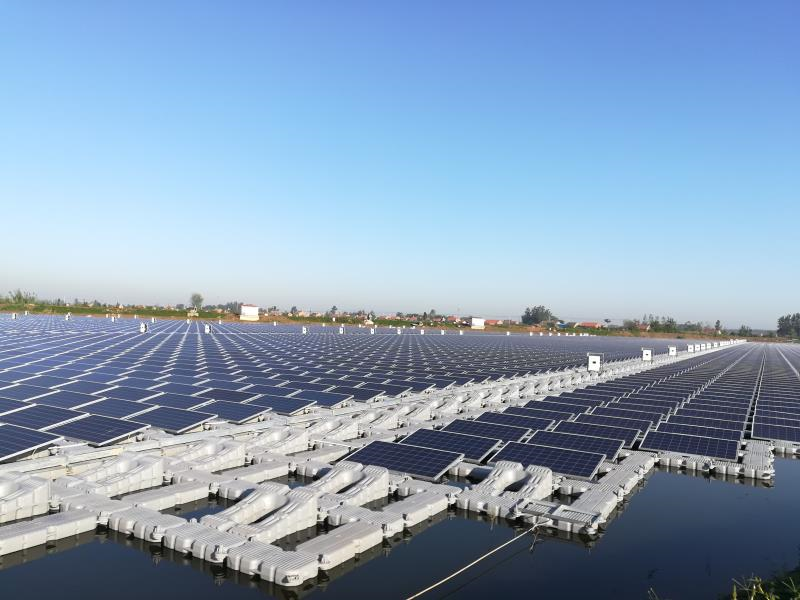
Jiangsu Province in eastern China has become the country’s first provincial-level region to surpass 100 GW of installed solar PV capacity, highlighting the rapid expansion of distributed generation in one of China’s most densely populated and economically developed areas.
According to data released by State Grid Jiangsu Electric Power and reported by Xinhua News Agency, Jiangsu’s cumulative solar PV capacity reached 100.08 GW by late July 2026. Solar now accounts for more than 38% of the province’s total power generation capacity, making it the largest single source of installed generation capacity in Jiangsu.
The milestone is notable because Jiangsu’s solar growth has been driven primarily by distributed PV rather than large-scale utility projects. Distributed solar installations reached 69.29 GW, accounting for nearly 70% of the province’s total PV capacity, while centralized solar stood at approximately 30.79 GW.
Unlike provinces with extensive areas of undeveloped land, Jiangsu has relied heavily on industrial rooftops, public buildings and rural homes to expand solar deployment. Local authorities and grid operators have promoted models including village-wide rooftop PV projects and coordinated installations across industrial parks.
This approach differs from that of northern provinces such as Shandong, which has also developed nearly 100 GW of solar capacity but relies more heavily on large-scale projects using available land resources. Jiangsu’s distributed-focused model could offer a reference for densely populated regions facing land constraints.
To support continued growth, State Grid Jiangsu has expanded distribution-network capacity and developed digital tools using artificial intelligence, satellite imagery and forecasting technologies to assess rooftop resources and grid hosting capability. The province currently has around 35.99 GW of additional distributed PV connection capacity available for future development.
Jiangsu’s distributed solar development plan for 2026-2030 sets a target of 120 GW of distributed PV capacity by 2030 and 160 GW by 2035. Future development will focus on industrial parks, rural communities, public buildings and transportation infrastructure.
The province is also expanding offshore solar as a complementary growth area. Jiangsu had developed around 2 GW of offshore PV capacity by the end of 2025 and is advancing several pilot projects combining photovoltaics with other energy resources.
Surpassing 100 GW marks a new stage for Jiangsu’s solar expansion. Higher solar penetration will increase pressure on grid flexibility, electricity demand during midday generation peaks and the deployment of energy storage and other balancing resources. The province’s next challenge will be to move beyond simply adding renewable capacity and improve renewable-energy utilization through grid upgrades, storage and market-based electricity trading.
This content is protected by copyright and may not be reused. If you want to cooperate with us and would like to reuse some of our content, please contact: [email protected].

Please login to comment