Perovskite solar cell based on seed crystals achieves 23.51% efficiency

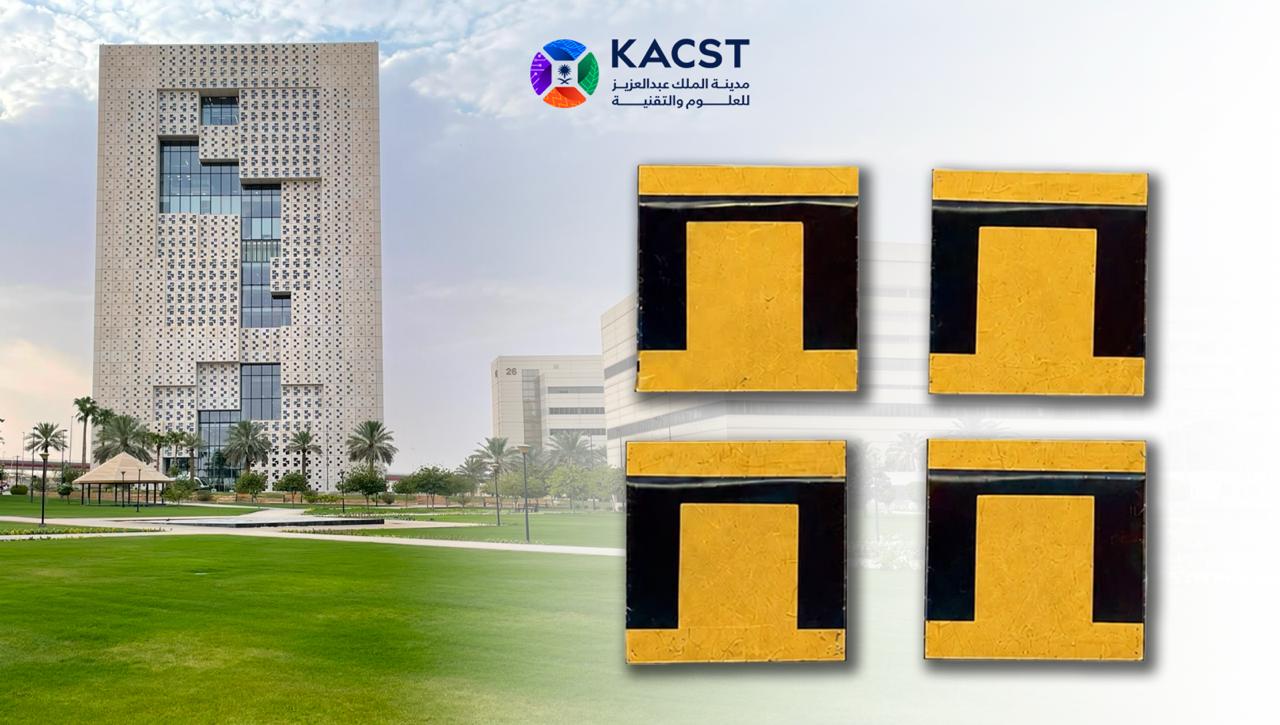
A research group led by scientists in Saudi Arabia has developed a stabilizer-free, seed-assisted growth strategy to produce the pure α-phase of formamidinium lead iodide (α-FAPbI₃) perovskite.
FAPbI₃ is one of the leading absorber candidates for single-junction perovskite solar cells. However, it is unstable under ambient conditions, typically requiring chemical stabilizers that can widen the bandgap and limit its photovoltaic potential.
“This research presents an exciting approach to one of the biggest challenges facing FAPbI₃ perovskite solar cells: stabilizing the highly efficient α-phase without relying on compositional additives that compromise the material’s ideal bandgap,” corresponding author Essa A. Alharbi told pv magazine. “Rather than using conventional α-phase stabilizers such as cesium (Cs), rubidium (Rb), or methylammonium (MA), we introduce a seeded-growth strategy in which α-FAPbI₃ seed crystals are incorporated directly into the precursor solution to guide crystallization.”
Co-authors Nikolaos Lempesis and George Kakavelakis added that “the work combines experimental characterization with multiscale simulations to reveal the underlying mechanism of seeded growth. This provides a scientific explanation for the exceptional efficiency and long-term stability achieved.”
The study consisted of two parts – experimental work and simulations. In the first, the researchers fabricated control and seed-assisted perovskite solar cells with an n-i-p architecture. For the seed-assisted devices, instead of using conventional chemical stabilizers, they incorporated preformed α-FAPbI₃ seeds directly into the PbI₂ precursor to guide crystallization toward the desired α-phase.
The target devices were then produced through a second deposition step using formamidinium iodide (FAI) and methylammonium chloride (MACl), followed by annealing at 150 C for 20 minutes. The control devices were fabricated under the same conditions but without the seeds.
“The pre-existing α-FAPbI₃ seeds lower the nucleation barrier and direct the growth of the desired photoactive α-phase while suppressing the formation of the photoinactive δ-phase. This results in highly crystalline, compact films with larger grains, fewer defects, lower surface roughness, and significantly reduced non-radiative recombination,” Alharbi said.
“As a result, the devices achieve a power conversion efficiency of 23.51%, compared with 15.5% for conventionally processed control devices, while maintaining 99% of their initial performance after 3,000 hours of continuous operation under ambient conditions and one-sun illumination without encapsulation.”
In the second part of the study, the researchers used multiscale simulations to investigate how the seeds influence crystallization and device performance. Density functional theory (DFT) calculations compared the energetics of α- and δ-phase growth on an existing α-FAPbI₃ seed, while molecular dynamics simulations tracked the dissolution of a 10 nm α-FAPbI₃ seed in the precursor solution and compared it with a seed-free solution.
The researchers also used metadynamics to examine nucleation pathways, while separate optical-electrical simulations assessed the effects of carrier mobility, lifetime, and non-radiative recombination on solar cell performance.
“The multiscale simulations showed that dissolving α-FAPbI₃ seeds retain structural motifs that preferentially promote α-phase nucleation while suppressing the competing δ-phase. This reveals that seeded growth not only improves film morphology but fundamentally alters the crystallization pathway, resulting in fewer defects, reduced non-radiative recombination, negligible hysteresis, and more balanced charge transport,” the academics explained.
The research team now plans to extend the seeded-growth strategy from laboratory-scale devices to large-area perovskite solar modules using scalable sequential deposition processes.
“We will optimize seed concentration, size, and processing conditions to ensure uniform crystallization over large substrates while maintaining high efficiency and long-term operational stability,” Alharbi said.
“The seeded-growth strategy is fully compatible with sequential deposition, making it well suited for large-area manufacturing and commercial-scale perovskite photovoltaics,” he concluded. “The approach also has potential to improve other perovskite optoelectronic devices, including light-emitting diodes, where suppressing defect-assisted recombination is essential for high performance.”
The research, “Stabilizer-free pure α-phase FAPbI3 perovskite through seed-assisted growth yields efficient photovoltaics,” was published in Materials Horizons.
Researchers from Saudi Arabia’s King Abdulaziz City for Science and Technology (KACST), Princess Nourah bint Abdulrahman University and Taibah University; Greece’s Foundation for Research and Technology – Hellas (FORTH), Hellenic Mediterranean University (HMU) and University of Ioannina; and the UK’s University College London (UCL) contributed to the study.
This content is protected by copyright and may not be reused. If you want to cooperate with us and would like to reuse some of our content, please contact: [email protected].

Please login to comment