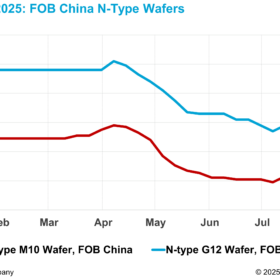
China wafer prices jump nearly 4%, ending three-week lull
In a new weekly update for pv magazine, OPIS, a Dow Jones company, provides a quick look at the main price trends in the global PV industry.

Solar production falls in US Midwest, Southeast amid wildfires and hurricanes
In a new weekly update for pv magazine, Solcast, a DNV company, reports that fire and storm activity across North America shaped solar conditions during August, with irradiance down in central and eastern regions but above average in the northeast.
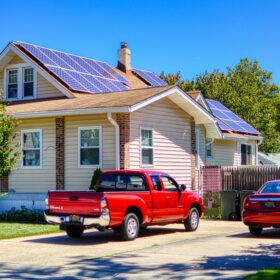
Navigating One Big Beautiful Bill and tariffs in U.S. solar PV and storage
Turning challenges into opportunities as the U.S. solar and storage sectors enter a phase of major policy and market realignment.

‘Diversity and inclusion are not nice-to-haves, but essential ingredients for progress’
This week, Women in Solar+ Europe gives voice to Laura Riedl, Digital Marketing Manager at Solis. She says that the energy transition is inherently complex and multidimensional, which makes the diversity of perspective invaluable. “It helps uncover needs that might otherwise remain invisible and ensures that solutions are robust enough to serve broad communities,” she states.

Record cold, dust storms shape complex winter for South American solar
In a new weekly update for pv magazine, Solcast, a DNV company, reports that large parts of South America recorded slight net increases in solar irradiance this winter despite sharp month-to-month contrasts in June and July.
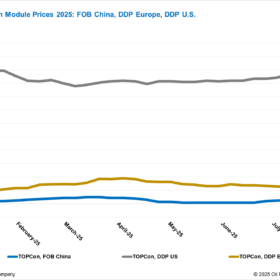
Solar panel prices increase nearly 5% as China tightens oversight
In a new weekly update for pv magazine, OPIS, a Dow Jones company, provides a quick look at the main price trends in the global PV industry.

‘Women still hold only 11% of academic leadership positions in Europe’
This week Women in Solar+ Europe gives voice to Vida Engmann, Asssociate Professor at the University of Southern Denmark. Shes says ender bias affects everything from research funding and journal reviews to hiring and promotion. “It also influences our own career choices, shaped by societal expectations about roles in domestic work, childcare, and leadership,” she states.
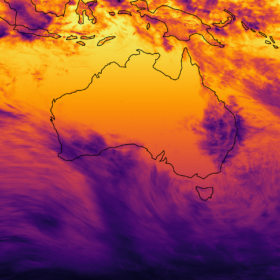
Tasman high drives split winter for Australian solar
In a new weekly update for pv magazine, Solcast, a DNV company, reports that while solar irradiance has been suppressed across eastern Australia this winter, the country’s southern regions have outperformed climatological averages thanks to stable high pressure in the Tasman Sea.
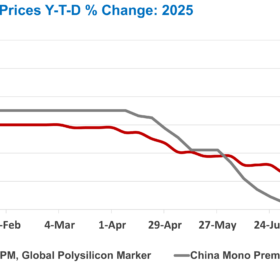
Chinese polysilicon prices stabilize after five-week 31% rally
In a new weekly update for pv magazine, OPIS, a Dow Jones company, provides a quick look at the main price trends in the global PV industry.

The International Solar Energy Society’s Solar World Congress 2025 in Brazil
The International Solar Energy Society’s (ISES) Solar World Congress (SWC) has been held biennially since the 1970s, and in November 2025 will take place in Brazil. With the sharp and continuous drop in PV costs, photovoltaics has become the lowest-cost solution in Brazil and worldwide, and this is reflected in the number of articles accepted for presentation at the SWC. The Solar World Congress program has traditionally been dominated by presentations on solar radiation and solar thermal applications, but this year, photovoltaics is the focus of most of the accepted papers. In Brazil, where large-scale hydropower plants have traditionally dominated the electricity generation mix, PV is now the second-largest generating source, and the country is adding every year the equivalent of its largest hydropower plant Itaipu, which took more than 10 years to build and reach installed capacity.
