





On October 31, TÜV Rheinland Greater China, a leading international independent third-party testing, inspection, and certification organization, hosted its inaugural “Green & Sustainable Value Chain Summit” in Shanghai. The summit brought together global leaders from the energy sector, top-tier think tanks, and representatives from green finance institutions to deliberate on strategies and pathways for energy transition. It aimed to deliver one-stop sustainable solutions for the value chain, from policy and standards to finance and practical implementation.
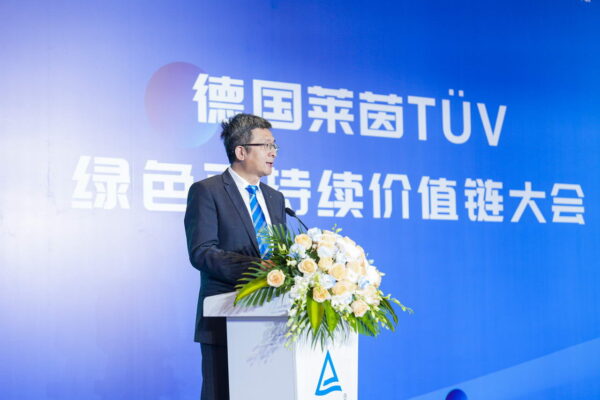
Xia Bo, Senior Vice President of Solar & Commercial Products at TÜV Rheinland Greater China, stated in his address: “As global carbon neutrality gains momentum, and new trade related green regulations are rolled out, the ‘green passport’ has become an absolute necessity for Chinese enterprises looking to expand overseas. With nearly 40 years of experience in the Chinese market, TÜV Rheinland combines global expertise with localized services to support China’s dual-carbon goals. We provide technical solutions in key areas such as energy transition, circular economy, and digitalization, empowering the entire value chain to advance more rapidly, steadily, and further toward sustainable growth.”
Industry Trends & Forward-Looking Insights
Zhang Ji, Deputy Director of the Shanghai Jing’an District Development and Reform Commission, delivered a speech titled “Accelerating Green and Low-Carbon Development to Forge New Drivers for High-Quality Growth.” He emphasized that as China’s dual-carbon strategy gains pace and green transition becomes the cornerstone of high-quality development, Jing’an District is leveraging policy, technology, markets, and international cooperation as key enablers. By collaborating with global partners, the district is working to turn green and low-carbon practices from an “option” into a “mandate,” jointly building a sustainable value chain.
Xie Wenhong, China Head of the Climate Bonds Initiative (CBI), said in his speech titled “Bridging the Last Mile of Green Transition”: “We are in the midst of a systemic transformation that spans industries, regions, and societies. The real breakthrough lies in redirecting capital flows-by unlocking private investment, modernizing multilateral development banks, and establishing a fairer, more inclusive global financial system. This is the critical pathway to accelerate green transition and build climate resilience.”
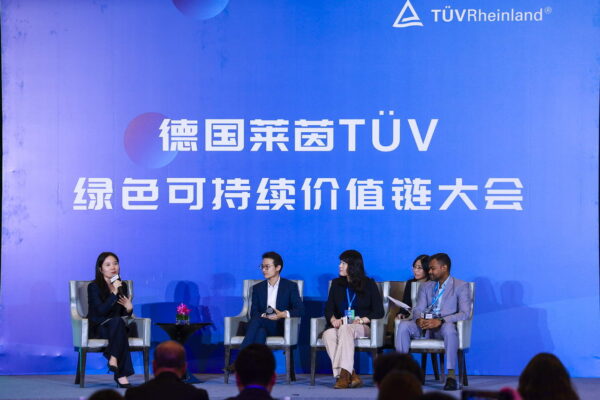
During the “Green Power Dialogue” panel discussion, Lily Lin, Head of Sustainability Services for Solar & Commercial Products at TÜV Rheinland Greater China, was joined by Wang Ziyue, China Research Lead at BloombergNEF; Shailesh Telang, Head of Asia Pacific at EnergyTag Ltd.; and Sammy Su, Founding Member and Director of the Italian Chamber of Commerce in Taipei. The panel explored international green electricity requirements and net-zero collaboration pathways, discussing ways to collectively shape international standards and industry chain. Their exchanges provided fresh ideas and insights for the industry to explore green power applications and value conversion. Panelists unanimously agreed that enhancing direct green power connectivity and traceability systems will be key to achieving credible carbon reductions. Moreover, cross-sector collaboration and standard alignment are the only way to enable green power to be not only traceable but also verifiable.
Industrial Synergy & Ecosystem Co-Building
At the summit, TÜV Rheinland and Circulor launched the “Digital Traceability Service Platform.” The two parties integrate their respective resource advantages and professional capabilities, using digital traceability technology to help companies achieve full-process information transparency and traceability from raw-material procurement and manufacturing to transport and installation. This ensures compliant global market access for products, enhancing corporate risk identification and emergency-response capabilities, and meets increasingly strict international regulatory requirements as well as corporate sustainable-development goals.
Currently, EV batteries have entered a concentrated retirement phase, posing huge challenges to environmental protection, personnel safety and social governance; at the same time, governments are paying increasing attention to clean energy and resource recycling, bringing policy support and development opportunities for reused or repurposed batteries.
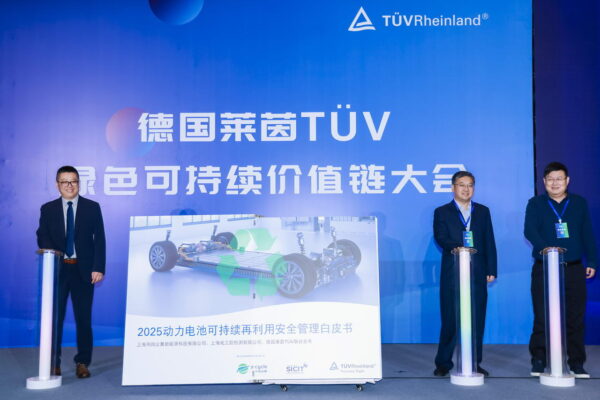
To promote the safe and sustainable development of reused or repurposed batteries, TÜV Rheinland, Shanghai Institute of Chemical Industry Testing Co., Ltd. and ZCycle Co., Ltd., jointly launched the White Paper on Safety Management for Sustainable Reuse of EV Batteries at the summit. The white paper outlines the global status of reused and repurposed batteries, trends in commercial and safety requirements, international regulatory standards, and safety testing demands. It also provides an in-depth analysis of safety design for the integrated reuse of EV batteries in energy storage systems. As a certification body, a testing institution, and a battery recycling enterprise, the three parties jointly advocate for compliant, standardized, and full-lifecycle traceable reused and repurposed batteries, fostering the safe, efficient, and green development of the industry.
Three signing ceremonies were also held at the summit. TÜV Rheinland and REPT BATTERO Energy Co., Ltd. reached a strategic cooperation in the field of digital battery passports, and will jointly provide strong support for compliant overseas deployment of battery products and promote upstream-downstream collaborative innovation and sustainable development of the industry chain; TÜV Rheinland and GS1 China signed a cooperation agreement that the two parties will give full play to their respective resources and professional advantages to provide one-stop solutions for Chinese products and companies going global; TÜV Rheinland, Tianyu Pharmaceuticals and Taizhou Branch of the Industrial Bank signed a cooperation agreement which the three parties will integrate their advantages in professional services, industrial development and green finance to cooperate in the field of sustainable finance.
Parallel Forums: Green Power Procurement & Battery Value-Chain Management
That afternoon, the summit split into two thematic forums. The “Green Power Procurement” forum focused on the full green-procurement chain for power stations. Centered around the three-tier carbon management framework of “product-organization-value,” it covered carbon requirements for products such as modules, energy storage systems, power transmission and distribution equipment, and electrical accessories. Key topics included achieving product carbon reduction through system planning and value conversion, ESG upgrading of power stations driven by management systems, corporate carbon requirements for zero-carbon industrial parks and factories, and value chain due diligence.
The “Battery Value-Chain Management” forum focused on the full lifecycle of batteries. Based on the trends and compliance practices of the new EU Battery Regulation, it explored how to build a sustainable closed-loop system for batteries and advance the sustainable development of battery materials through digital collaboration. Addressing the challenges posed by the regulation, it shared enterprises’ strategies for “overseas capacity expansion” and practices related to product digital passports, providing the battery industry with a comprehensive roadmap from regulatory interpretation to green implementation
As a world-leading technical-service provider, TÜV Rheinland empowers corporate green transformation and globalization with its deep technical accumulation, rich practical experience and innovative solutions. In the future, TÜV Rheinland will continue to join hands with ecosystem partners to explore innovative technology pathways and best practices, contributing to the achievement of dual-carbon goals for China and the world.
