Emiliano Bellini


Novel algorithm for integrating solar, wind, hydrogen
A new, nature-inspired algorithm has been applied by scientists in Egypt and Saudi Arabia to optimize the production of green hydrogen via solar and wind power generation. The proposed energy system consists of PV and wind power generation, a water electrolyzer, a tank of hydrogen gas, a fuel cell, and an inverter that brings the generated electricity to final consumers.
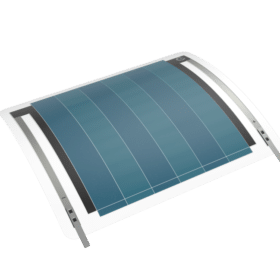
Mini organic solar module for indoor low-power applications
Under typical indoor illumination of around 500 lux, from light sources such as LED or fluorescent light, the device’s power conversion efficiency is just below 15%. The largest device has an open-circuit voltage of 3.8 V, a short-circuit current of 146 μA, and an output power of 418 μW. The product can also be used in conjunction with capacitors to replace batteries or to prolong their lifetime in low-power applications.

Solar-plus-storage vs grid enhancement in Sweden
Sweden saw extraordinary high spot prices during last summer, due to difficult power transmission from the north, where most of power generators are located, to the south of the country, where most of the demand is concentrated. According to Swedish PV association Svensk Solenergy, solar-plus-storage offers a quick and scalable solution to avoid expensive and slow grid improvements.
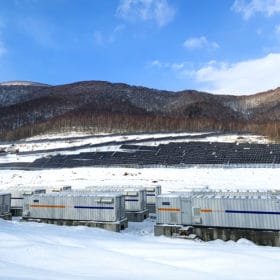
Solar-plus-storage as an antidote to grid congestion in Japan’s northern island of Hokkaido
Chinese inverter maker Sungrow has switched on a 6 MW / 21 MWh solar-plus-storage facility on the island. The FIT project’s connected AC capacity is limited to only 845 kW, but the containerized storage solution provided by the company ensures its viability.
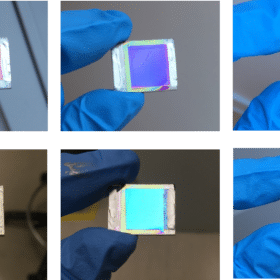
Effective approaches to build colored perovskite solar cells
Scientists in Singapore have conducted a review of all existing methods to produce colorful opaque and semitransparent perovskite solar cells for applications in BIPV and urban environments. They identified two general approaches consisting of coloring the perovskites via external or internal modifications.
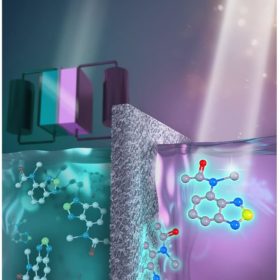
Redox flow batteries with fluorescence detection
Argonne National Laboratory researchers have found a way to use fluorescence to monitor the performance of redox flow batteries in real time. They used 2,1,3-benzothiadiazole as a redox-active molecule to store energy in the electrolytes. The molecule works as an energy carrier and signals a problem known as “crossover.”
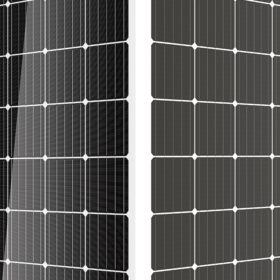
Major inverter makers unveil products compatible with 210mm solar modules
Chinese solar module manufacturer Trina Solar has listed all inverter producers that in the past weeks have unveiled new devices or upgraded products for solar panels based on 210mm silicon wafers. Huawei, Sineng, Sungrow, SMA, GoodWe, Ginlong, and Kstar have all reportedly launched or are planning to launch centralized or string inverters that may better cope with bigger and more powerful panels.
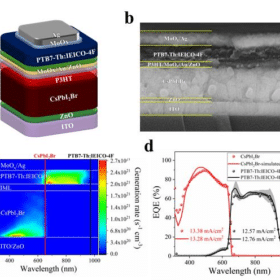
Hybrid tandem perovskite solar cell with 18.04% efficiency
South Korean researchers claim to have developed a PV cell with a higher efficiency rate than any other tandem cell based on perovskite and organic materials.
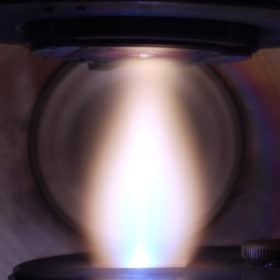
Performance improvements for anomalous photovoltaic effect
A German research team has created a new solar cell architecture with self-assembled, three-dimensional nanocomposite thin film. The special cell configuration purportedly improves electrical output by a factor of five.

Russia to tender 500 MW of solar in 2021
The country’s cumulative installed PV capacity reached 1.7 GW at the end of 2019, as a result of the grid-connected projects tendered by the Russian government between 2014 and 2019. The remaining 500 MW quota of the 2.2 GW tendering scheme should be assigned this year.
