Emiliano Bellini

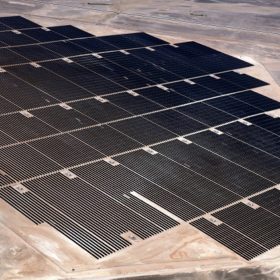
Jordan to launch 30 MW storage project
The project is scheduled to come online by mid-2019 and will help the local grid better manage the increasing power generation from wind and solar facilities, which at the end of 2017 had reached a combined capacity of 500 MW.
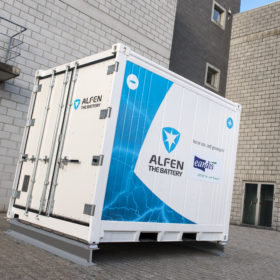
Belgian grid operator, Eandis tests storage at its solar-powered facilities
‘TheBattery’ storage system of the Dutch provider of high and low voltage equipment, Alfen, will be used by the Belgian power distributor to store solar power produced at its logistical center in Lokeren, Flanders.
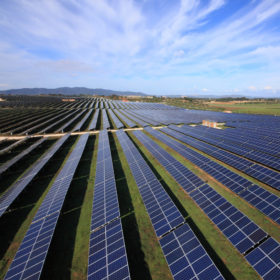
Italy installed 409 MW of new PV in 2017
Last year’s figures, however, still do not include new capacity coming from the revamping and repowering business. For 2018, local renewable energy association, ANIE Rinnovabili expects growth to be stronger.

Ukraine added 211 MW of solar in 2017
The country’s cumulative installed solar power has reached 741 MW, while rooftop PV under net metering has topped 37 MW. Over 500 MW of new PV additions are expected in 2018.

Russian companies plan vertically-integrated monocrystalline module factory
The manufacturing facility is planned to be built in Russia’s Astrakhan region thanks to an investment of 1.5 billion RUB (around US$26.5 million).
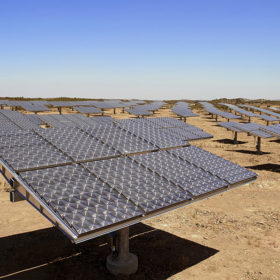
Portuguese grid operator to invest €70 million to accommodate more solar
Overall, the grid improvement is expected to enable at least 800 MW of new solar PV plants to come online in the south of the country.

Belgium plans big off-shore solar projects in the North Sea
A few days after the first grid-connected off-shore solar PV project was announced in the Netherlands, the Belgian government has unveiled plans to make the North Sea a solar energy hub.
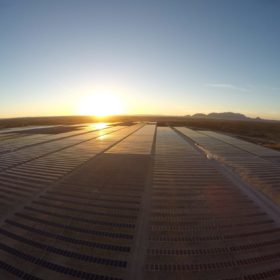
The future looks bright for solar energy development in Mexico
Mexico is set to become the largest solar PV market in Latin America, with around 2 GW of installs expected annually. Political and regulatory uncertainty do not appear to be affecting investor interest, with more opportunities than challenges present. pv magazine attended GTM Research’s Solar Summit Mexico last week to report on the latest developments in the Mexican market.
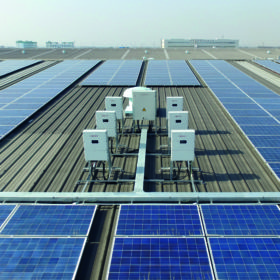
Energy Community Secretariat issues policy guidelines for eastern European prosumers
The international organization, which aims to extend the good practices of the EU’s internal energy market to southeastern Europe and the Black Sea region, has released new guidelines for the grid integration of distributed generation power generators.
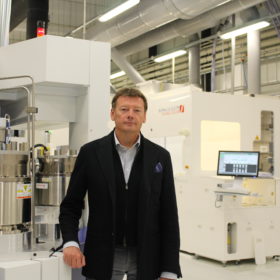
Solitek to expand cell and module capacity
The Lithuania-based manufacturer aims to increase cell capacity at its factory in Vilnius from 80 MW to 180 MW, and to open a new 60 MW module assembly factory in the Ukraine.
