Emiliano Bellini


Utility-scale PV all set for growth in Belgium
The energy regulator of Flanders has set a provisional feed-in premium of €0.02595/kWh – to be added to the spot market price – for a 1.35 MW solar project under development in the region. That is considerably more affordable for public support than the feed-in premium of €0.078/kWh the VEA set a year earlier for a 100 MW project under development by Engie.
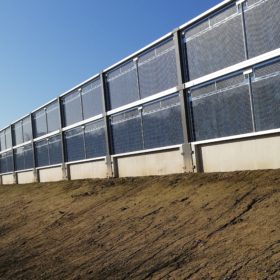
Bifacial modules ridin’ down the highway
The Dutch government will deploy bifacial PV modules on noise barriers along the country’s main roads. A first, 400m solar array has been built along the A50 near Uden, in the Netherlands’ southern province of Noord-Brabant.

Lyon’s BePositive event shows confidence in French PV market remains strong
The solar event in Lyon illustrated how expectations of French solar remain big despite lower-than-expected development and issues related to regulations and carbon footprint requirements. The large participation of international and Chinese players seeking business among installers and distributors is a signal things may improve in the short term, and larger volumes may be deployed in the coming years.
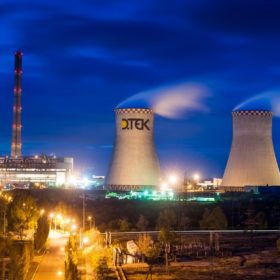
Ukraine’s largest PV project secures provisional FIT license
The 246 MW Solar-Farm 1 is being developed by the nation’s largest energy holding and coal power producer, DTEK. The plant will be on the territory of a spent quarry.
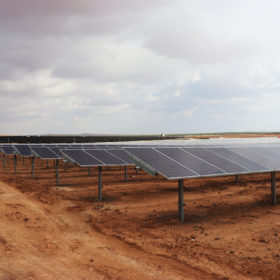
First Middle Eastern utility-scale solar-plus-storage plant comes online
The 23 MW/12.6 MWh facility is near Mafraq, in northern Jordan. The storage system will offer peak shaving to increase grid stability while enhancing solar output.

Cambodia’s utility tenders first, 60 MW, section of National Solar Park
Electricité du Cambodge has launched an international tender to procure a solar project in Kampong Chhnang province, on a build-own-operate basis. The project is the initial phase of the 100 MW National Solar Park, which is being supported by the Asian Development Bank.

Power-to-gas crucial for solar-based energy system
In the Infrastructure Outlook 2050 study, Gasunie and TenneT say ambitious EU climate targets can only be reached through deeper integration of the power and gas infrastructure, and with power-to-gas technologies supporting renewables. The most bullish scenario for solar states how storage and power-to-hydrogen capacity could be crucial to meet seasonality in supply and demand.
Pacific island nation re-tenders big solar-plus-storage project
An initial tender on Palau was won by French energy company Engie, through its unit Engie Electro Power Systems. The 100 MW microgrid project consisted of coupling 35 MW of solar and 45 MWh of storage with diesel generation.
Malaysia launches 500 MW solar tender
Selected projects will range from 1-100 MW in capacity. The procurement exercise is the third round of Malaysia’s LSS program for large-scale renewables.

Bifacial takes all in Alberta large-scale PV auction, final price cheaper than gas
The Albertan Ministry of Infrastructure allocated around 94 MW of solar capacity and the three selected projects, all using bifacial modules, were secured by Canadian Solar. The projects will generate around 55% of the provincial government’s annual electricity needs.
