Emiliano Bellini
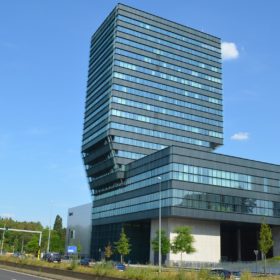
Imec, Jolywood announce 23.2% front-side conversion efficiency for n-PERT bifacial cell
The result was certified by the solar cells laboratory at the calibration and test center of Germany’s Institute for Solar Energy Research. Imec’s measurements showed cell bifaciality surpassed 80%.

Europe’s largest floating PV project under development in the Netherlands
Dutch developer Groenleven is planning a 48 MW floating installation at a depleted sand extraction site near Emmen, in Drenthe province.
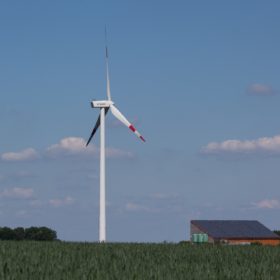
Norway’s $1tn wealth fund to invest in unlisted renewables
The world’s largest sovereign wealth fund will invest in non-listed infrastructure, with the government stressing such commitments will not be a climate policy measure but an investment strategy. The fund had already announced an intent to gradually divest holdings in oil and gas companies and related projects.
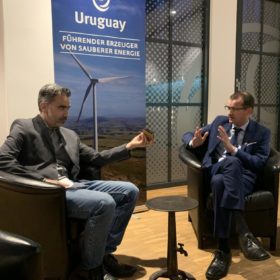
“Uruguay will not renounce solar energy”
In an exclusive interview held during the meeting “Experience of Uruguay: Business Hub of Latin America”, organized by the Uruguayan Embassy in Berlin, the country’s Minister of Energy, Guillermo Moncecchi, spoke about the future of solar in the country’s energy mix, while also recognizing its great potential by virtue of the fall in panel prices. Although its share is currently very limited and there are no prospects for large growth in the short term, solar power currently has good opportunities for development in distributed generation, as electricity prices are constantly rising. As for large-scale projects, new auctions could be held again in the coming years, but not immediately. The country, however, is still listed among the countries with the highest share of renewables in the world, with a precentage close to 98%.
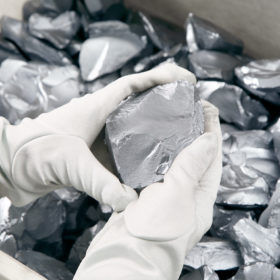
“Demand for polysilicon is not going away”
According to the general manager of French PV production equipment provider Apollon Solar, Jed Kraiem, multicrystalline cells are expected to have a share of only 40% in 2019 global demand, with mono PERC cell structures now clearly being in advantage thanks to higher efficiencies and increasingly lowering costs. He claims, however, that technological advances in the solar industry historically are implemented first in the mono segment and then transferred to the multicrystalline business.
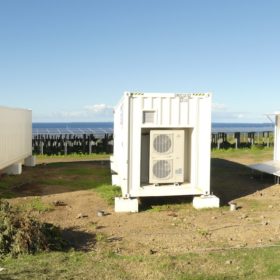
EU must move faster on storage and EV, European Court of Auditors says
In the paper “EU support for energy storage”, the audit agency said that measures taken so far for storage and electromobility development across the EU will not be sufficient for the achievement of the Union climate targets. The authors of the report also stressed that EU is far behind its competitors for battery cell manufacturing, and that more innovation is needed. They also claim development of grid energy storage is being slowed down by double grid fees in some EU countries, including Austria, Germany, Netherlands and Finland.

Argentina announces new RE auction for 2019
The fifth round (Ronda 4) of the RenovAr program for large-scale solar and renewables will be held by the end of the year, according to the Argentinean Minister of Renewable Energy, Sebastián Kind. The procurement exercise will also include grid infrastructure projects.
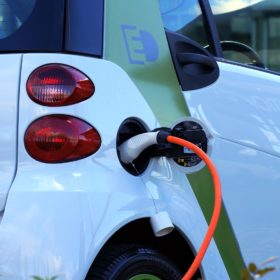
Saft, Tianneng plan 5.5 GWh lithium-ion venture in China
Saft, a subsidiary of French oil giant Total, is joining forces with Chinese storage specialist Tianneng to grow in China’s energy storage and EV markets. Tianneng will take a 60% stake in the newly created joint venture, with Saft holding the other 40%.
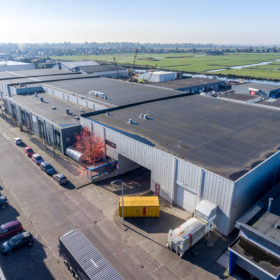
Dutch module maker Energyra files for insolvency
The company — which owns a 100 MW solar panel factory in Zaanstad, in the Dutch province of North Holland — is seeking to implement a restart under controlled administration. It cited delays in the delivery of production equipment and a working capital deficit as the main reasons for the insolvency proceedings.
Ginlong plans capacity expansion
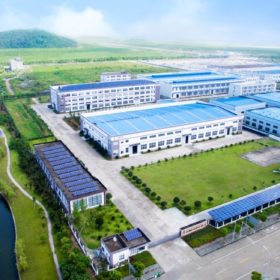
After listing shares on the Shenzhen Stock Exchange last week, Chinese inverter maker Ginlong now plans to increase its production capacity in the 2019-20 period. The company also plans to develop marketing networks and R&D centers in multiple overseas markets.
