Emiliano Bellini


Uzbekistan launches 100 MW solar tender for southwest
State-owned energy company Uzbekenergo has issued a request for pre-qualification for the projects, planned for the Navoiy region in southwestern Uzbekistan. The tender process is expected to be finalized by the end of June.
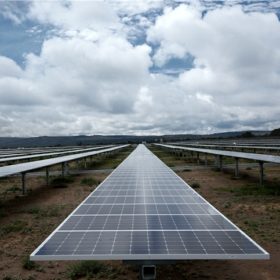
Mexico cancels fourth energy auction
After being “temporarily suspended” in early December, Mexico’s fourth long-term energy auction has been cancelled. The government said the action was taken in compliance with its legal framework and took into account technical, economic and energy planning considerations.

LG solar business affected by panel price falls as Kyocera reports poor results for PV sales
South Korean manufacturer LG said import tariffs and panel price depreciation led to lower profit for its B2B division. Japanese electronics company Kyocera saw the revenue of its Life & Environment Group fall by 26%, year-on-year, in the first nine months of the current fiscal year.
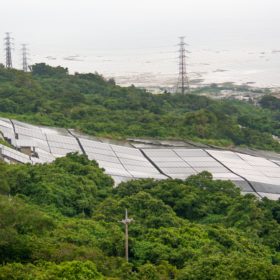
FIT cuts and lower revenue may cause more bankruptcies in Japan
A Teikoku Databank report says as many as 95 solar companies went bankrupt last year – seven more than in 2017. The company warns the negative trend that began in 2016 may escalate as FIT reductions for large-scale solar come into effect.

Ukraine to hold first auctions for wind and solar next year
According to provisions approved in their first reading by the Ukrainian parliament, solar projects selected in future auctions will be awarded 20-year PPAs to encourage investors to steadily abandon the FIT scheme until it expires in 2030.
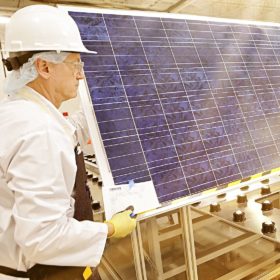
Bifacial 114 MW project in Brazil secures development bank financing
The plant, under development by Canadian Solar, has secured $80 million from Banco do Nordeste. The facility is scheduled to come online in mid-2020.
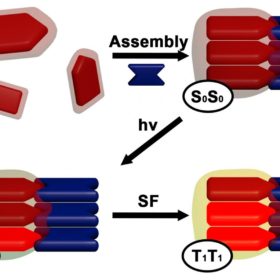
Singlet fission may raise theoretical efficiency of solar cells to 44%
According to a U.S. research team, new nanomaterials relying on dyes based on diketopyrrolopyrrole and rylene can generate a singlet fission reaction that extends the life of harvestable electronic charges.

Thai utility EGAT plans 69 MW of floating PV projects
Floating plants with capacities of 45 MW and 24 MW have been announced by Thailand’s largest power provider. They may be the first of nine projects at dams operated by the utility.
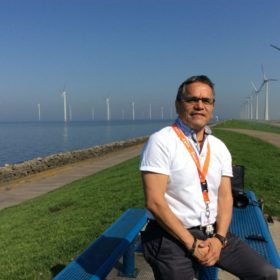
pv magazine’s Mexican editor Jorge Zarco wins journalism prize
The editor-in-chief of pv magazine Mexico won first prize in the interview category at this year’s Solar Energy Journalism Awards, organized by the Mexican Solar Energy Association.
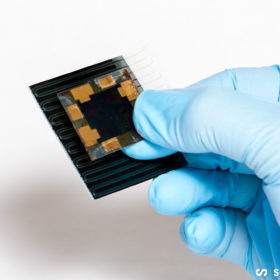
Solliance claims 21.5% efficiency for perovskite CIGS cell
The European solar research organization, Solliance announced it has achieved a 21.5% efficiency for a flexible copper indium gallium selenide (CIGS) tandem solar cell based on perovskite.
