Emiliano Bellini

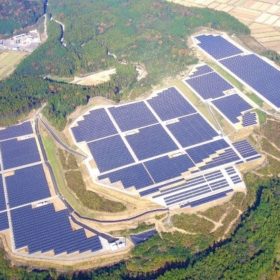
Japan postpones FIT cuts by six months for projects over 2 MW
A reduction of the feed-in tariff to ¥21/kWh (around US$0.19) for projects over 2 MW in size and approved between 2012 and 2014 will be applied starting from September 2019 and not from March, as originally planned. For approved projects with a capacity of less than 2 MW, however, no postponement has been granted.
Construction begins on 60 MW solar park in Malawi
The large-scale power plant is being built by JCM Matswani Solar Corp Limited. A 20-year PPA has been signed with the Electricity Supply Corporation of Malawi Limited (ESCOM).
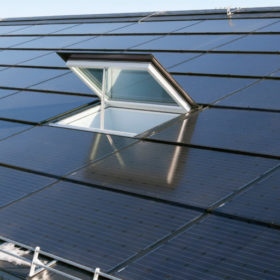
Switzerland’s third largest canton launches $3 million incentive scheme for solar-plus-storage
The scheme will provide incentives for solar-plus-storage projects for self-consumption, as well as for projects for virtual power storage.

Portugal aims for 100% renewables by 2050
Solar is expected to play a leading role in the Portuguese Government’s new energy plan, which includes the goals of covering 80% of the country’s total power demand with clean energy by 2030, and electrifying 65% of its economy by 2050.
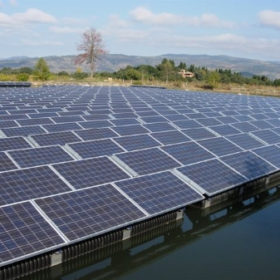
Floating PV conquers two new countries
This time, the countries revealing their first floating PV plans are Albania and the Ivory Cost. In the first, a 12.9 MW plant is being proposed by local hydropower producer KESH, while in the second, the local government has secured funds for what it claims will be Africa’s first floating PV array.
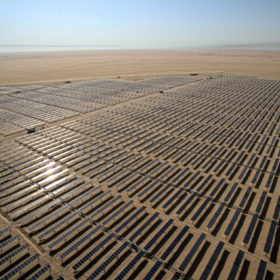
Mexico suspends upcoming auction for renewables
The Mexican National Center for Energy Control (CENACE) has announced that the fourth long-term auction has been temporarily suspended, due to changes in the management of CENACE and in the Federal Electricity Commission.
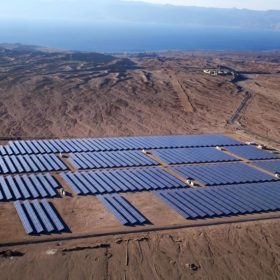
Jordan gets $265 million loan to improve grid capabilities, integrate more solar
The funds, provided by the European Bank for Reconstruction and Development, will help utility NEPCO repay short-term debt, as well as financing expansion of the grid’s capability to increase the share of solar and other renewable energy.
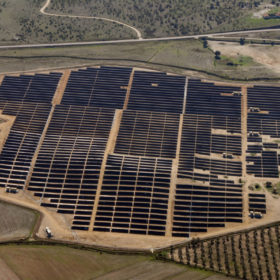
Repsol awards 7-year solar PPA to Solaria Energía
The Spanish oil provider has agreed to buy power from 50 MW of solar through a physical PPA. This is the second solar PPA secured by Solaria Energía from Repsol.
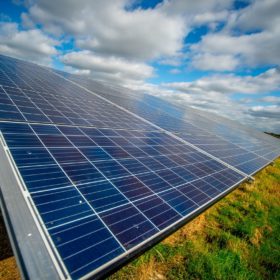
Limejump secures solar PPA from NextEnergy Solar Fund
The UK energy technology company said the new contract will provide 120 MW of solar generation through its Limejump Virtual Power Platform. The energy bought from NextEnergy Solar Fund will then be traded on the national grid.
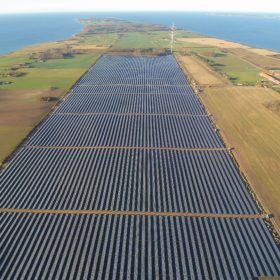
Denmark’s wind-solar auction ends with average premium tariff of €0.0031/kWh, and almost 40% of capacity assigned to solar
Although wind power had the largest share with 165 MW of capacity, solar was able to secure the same number of projects and a total capacity of 104 MW. The Danish Energy Agency had received 17 bids, including 280 MW of solar projects.
