Emiliano Bellini

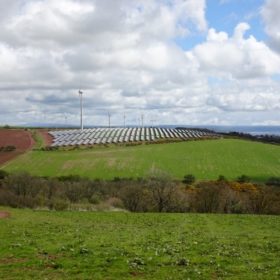
Vattenfall to invest $226 million in solar and storage over next two years
The Swedish power utility announced a plan to invest heavily in renewable energies over the next two years. The company said investments in solar and storage will reach 2 billion SEK ($226.3 million).
Sweden allocates $25.6 million for solar rebates in 2017
The Swedish Energy Agency Energimyndigheten has allocated 225 million SEK ($25.6 million) for the support of solar energy in 2017. The funds will be used for the country’s solar rebate program.
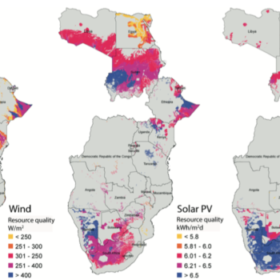
Strategic siting can boost solar development in Africa, says Berkeley Lab
A report from U.S. Department of Energy’s Lawrence Berkeley National Laboratory (Berkeley Lab) assesses the wind and solar potential of Africa. According to the study, the two technologies can play a major role in the energy economy of the continent, especially if strategic siting and international interconnections are implemented.
French energy regulator publishes tender for commercial PV projects for self-consumption
The French Energy Regulatory Authority has published the tender for the installation of renewable energy and PV projects for self-consumption ranging in size from 100 kW to 500 kW. Through the tender the French government aims to allocate 450 MW of renewable energy capacity over the next three years.
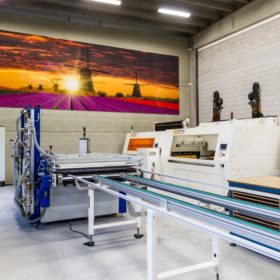
Eurotron’s sister company opens testing facility for back-contact solar in the Netherlands
Eurolab, a sister company of Netherlands-based equipment provider Eurotron, has opened a new testing facility for back-contact PV modules. The laboratory will facilitate pre-production of back-contact solar panels, R&D projects, and small-scale production for solar challenge teams
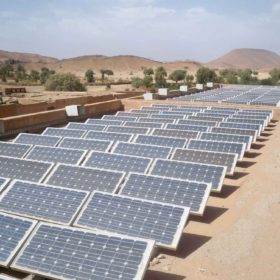
Algerian renewable energy sector raises doubts on 4 GW solar tender
Parts of Algeria’s renewable energy sector is questioning the 4 GW solar tender recently announced by the Algerian government. Provisions on domestic content requirements and the large share that state-owned entities will have on the ambitious solar plan are seen as the major obstacles for its implementation.

Moldova’s new renewable energy law comes into force, solar expected to see first growth
A new renewable energy law will come into force in the Eastern European country on April 1. Solar and wind are expected to see their first development in the country after several years of almost zero-growth.
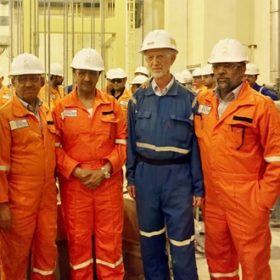
QSTec begins manufacturing activities at polysilicon factory in Qatar
The Qatar-based polysilicon manufacturer has begun producing polysilicon at its factory in Doha. The facility has a current annual production capacity of 8,000 MT, but QSTec confirmed its plans to expand it to 50,000 MT.
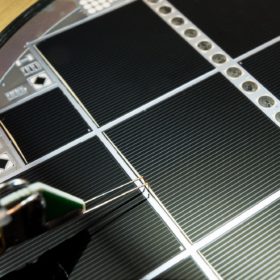
Fraunhofer ISE and EVG set 31.3% efficiency for silicon multi-junction solar cell
The German research institute and the Austrian semiconductor specialist have achieved a 31.3% efficiency for a silicon-based multi-junction solar cell. The result improves the previous record of 30.2%, which was also set by EVG and Fraunhofer ISE.

Afghanistan approves plan to deploy 65 MW of solar
The Afghan government has approved a plan for the deployment of 100 MW of renewable energy capacity. The plan includes 65 MW of solar tendered by the government in 2016.
