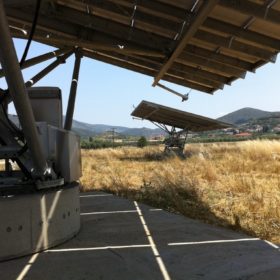
New low solar price in Greece but capacity falls short again as parliament passes €100m EV subsidy package
The price tariff agreed by German company ABO Wind for a 10 MW solar project in Igoumenitsa came in a tender which allocated only 142 MW of generation capacity, well short of the hoped-for 482 MW. It is hoped a slimline licensing process, to be applied in the next procurement round, will address the problem.
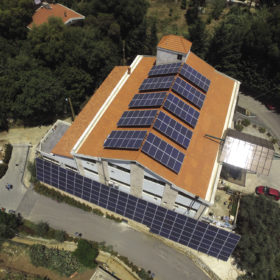
The weekend read: What Lebanon’s default means for PV
Lebanon failed to make a bond payment of $1.2 billion due on March 9 – the first sovereign default in the country’s history. pv magazine looks at how Lebanon’s debt troubles are now starting to affect the development of renewable energy.
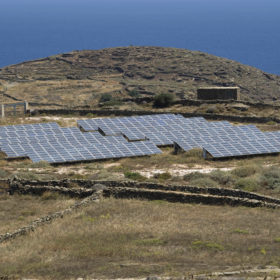
Greek EV policy follows on the heels of environmental package
The government will table plans for EV purchase incentives and charging points after cutting through permitting red tape in recent legislation. A recent law has proved controversial in some quarters, though, as it brings the private sector into environmental licensing and resists calls to halt commercial development of protected areas.
The weekend read: A green road to recovery
In 2019, the European Commission presented the European Green Deal, under which it aims to become climate-neutral by 2050. In May of this year, the commission also unveiled a new instrument to fund the bloc’s recovery from the Covid-19 crisis, in line with the Green Deal principles. This reinforced the drive for renewables investment. pv magazine examines what the latest developments mean for solar.

Dubai utility clamps down on net-metered commercial solar
Dubai Electricity and Water Authority has published new regulations blocking ground-mounted commercial and industrial solar projects and capping rooftop installations at 2 MW.
Greece to tender up to 482 MW of PV in July, set up storage framework
The Greek energy regulator said on Wednesday that it wants to tender up to 482 MW of new solar capacity on July 27 for plants up to 20 MW in size.
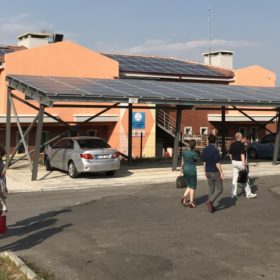
Covid-19 puts brake on Turkey’s solar sector
The energy regulator has suspended part of the licensing process for net metering applications, bringing the country’s PV sector to a halt.
Greek utility eyes nation’s first subsidy-free PV project
The state-owned electric company, which has finally pivoted towards green energy, is developing a subsidy-free approach.
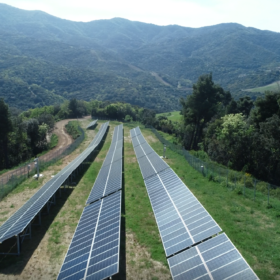
Greece wraps up PV tender with record-breaking €0.04911/kWh tariff
Greece held its last round of renewable energy tenders in Athens on Thursday, resulting in the lowest tariff ever awarded to a renewable energy project in the country.
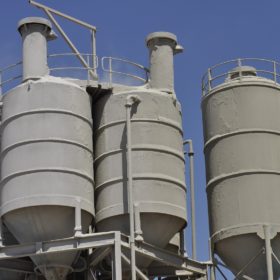
Cyprus’ largest PV park is operating subsidy-free
The 8 MW facility has been developed by a cement producer to supply around 10% of the annual electricity needs of its nearby factory. Under subsidy-free rules, the power will be bought by the Electricity Authority of Cyprus for the average price it would have paid if the electricity had come from fossil fuels.
