Marian Willuhn


Enel and Raptor Maps to develop AI drone software for operations and maintenance applications
Enel Green Power North America and Raptor Maps will develop AI-based drones to reduce O&M costs. Kicking off this month, the project will see its first batch of 30 field workers trained by the end of the year. Both companies already have the relevant technology in their portfolios.

The weekend read: More strings to the bow
New developments in inverter architecture suggest that string inverters have charged forwards again to take on the challenge and kick central inverters off the throne in the utility-scale market. Hardware design innovations allowing to cut down BoS capex and improve efficiency of the plants might push string inverters further to take more space in the utility-scale market place.

Second-life EV battery market to grow to $4.2 billion by 2025
Circular Energy Storage, a London-based research and consulting group, reports a strong business case for reconstituted electric vehicle batteries for energy storage applications. As the EV and static storage system markets grow rapidly, synergies could be a useful tool for continued cost optimization.

SolarEdge reports record revenues in second-quarter results
The company has experienced continued growth and after the acquisition of a UPS supplier – as well the potential for Chinese power electronics manufacturers to suffer under proposed new inverter tariffs – SolarEdge feels confident of continued growth.
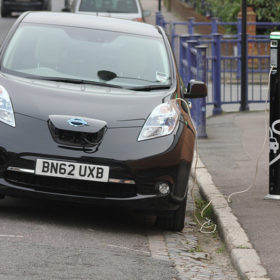
EV charging infrastructure market to reach $18 billion by 2030
EV charging infrastructure is set to become a major market, and actors from different sectors like municipal utilities, inverter companies and storage system providers are getting creative, and collaborative, in order to secure a slice of the cake.

Milestone: Over one trillion watts of wind and solar installed
A BloombergNEF analysis states that global wind and solar PV installations have reached a trillion watts, for the first time. While this milestone took the industry 40 years, the second trillion watts are expected to be installed in five years, in 2023, with the help of storage. The investment costs required to install one trillion watts are also expected to half.

India solar water pump scheme could add 150 GW, report says
Greenpeace India, Germi, and the IWMI-Tata Water Policy Program have released a report stating that the Indian government’s latest ambitions to deploy solar water pumps could meet the country’s solar PV target of 100 GW, if done comprehensively. So far the plan goes as far as 28 GW, and still needs legislative approval.

World Overshoot Day comes early this year
World Overshoot Day marks the day the world has used up its annual budget of the resources it could have sustainably consumed. Despite efforts in relevant sectors, the date is creeping forward every year. Twenty years ago, it was in late September.
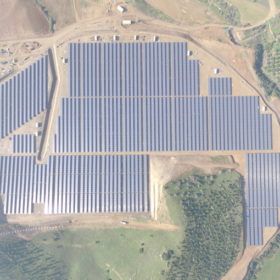
Panasonic completes 11.7 MW HIT module PV plant in Turkey
High-efficiency module manufacturer, Panasonic announced it had completed what it says is the world’s largest project using its HIT solar modules, in Turkey.
SolarEdge extends patent infringement lawsuit against Huawei
Following the claim filed in June, SolarEdge now alleges Huawei has infringed two more of its patents. With its HD-wave inverter topology the subject of the first lawsuit, the Israeli manufacturer now says its Chinese rival also copied its power optimizer technology.
