Marija Maisch

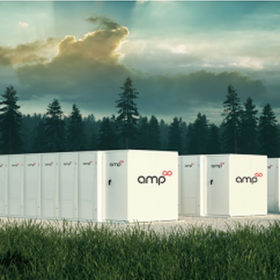
Europe’s largest battery storage project leverages grid-forming inverter tech
Toronto-based developer Amp Energy has had the green light to install two 400MW batteries in central Scotland which have been touted as the largest grid-connected battery storage facilities in Europe. The projects will deploy grid-forming inverters and be coupled with two synchronous condensers.
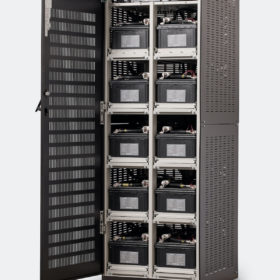
Nickel-zinc batteries for large scale backup power
Nickel-zinc batteries will be coupled with wind power to support 30MW of critical IT load at a data center in Wyoming, in the US. The batteries’ lifespan can be up to 15 years, while its roundtrip efficiency stands at 85%.

Huge aluminum demand expected in solar industry, concerns arise on emissions
Researchers from the University of New South Wales (UNSW) predict that growth to 60TW of photovoltaics needed to rapidly reduce emissions to ‘net zero’ and limit global warming to <2 °C could require up to 486 Mt of aluminium by 2050. A key concern for this large aluminium demand is its large global warming potential.
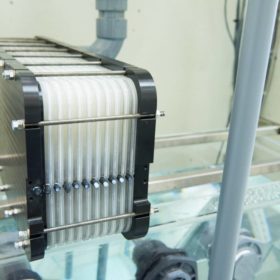
Zinc-air battery, CHP and PV to power apartment complex in New York
A 100kW/1.5MWh zinc-air battery will be installed in Queens, New York, in combination with a combined heat and power system and a PV array. The pilot project is intended to demonstrate the long-duration energy storage capability of the zinc-air battery.
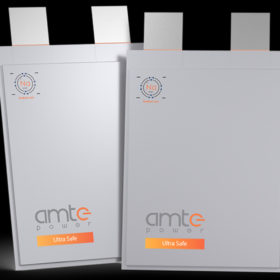
Sodium-ion battery tech gets commercial testing in UK
Harwell Campus will provide a testbed for energy storage technologies coming from three U.K.-based innovative businesses, bringing their solutions one step closer to the market.
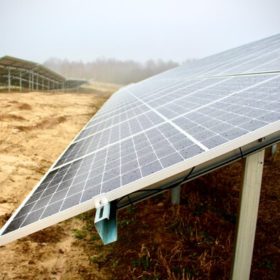
Unsubsidized solar projects proliferate in Poland
Four new PV developments have been announced this week, adding to a growing list of renewable energy projects in the coal-dependent Eastern European country.
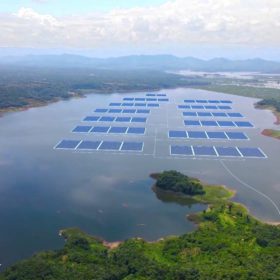
Masdar, partners eye solar exports from Indonesia to Singapore
Masdar will explore the development of 1.2GW of solar and potential storage projects in Indonesia for export to Singapore.
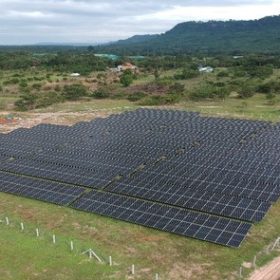
Solar-plus-storage for mineral water producer in Cambodia
The system delivered by French energy giant TotalEnergies will power Kulara Water’s bottling facility in Siem Reap Province.
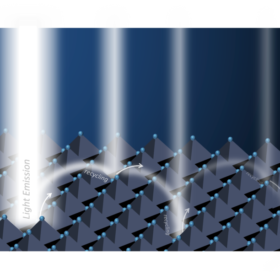
Photon recycling for more efficient perovskite solar cells
Scientists at the Technische Universität Dresden, in Germany, have found that photon recycling and light scattering effects greatly improve light emission in perovskite solar cells, thereby boosting the upper limit for their efficiency to 31.3%.

Oman partners with bp on multi-gigawatt renewables, green hydrogen development
The British energy giant will support the potential development of multiple gigawatts of wind, solar and green hydrogen projects in the Middle Eastern country by 2030.
