Marija Maisch

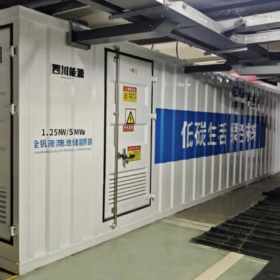
China commissions first urban underground vanadium flow battery system
China has deployed its first 1.25 MW urban vanadium flow battery (VFB), supporting peak AC loads and offering a safer alternative amid tighter lithium-ion storage regulations in dense urban environments.
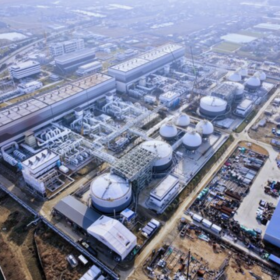
China’s 600 MW/2.4 GWh storage plant becomes world’s largest CAES site
With 600 MW of installed capacity and 2,400 MWh of storage, the Huai’an Salt Cavern project is now the world’s largest compressed air energy storage (CAES) facility, surpassing the 300 MW/1,500 MWh project commissioned earlier this year that previously held the title.
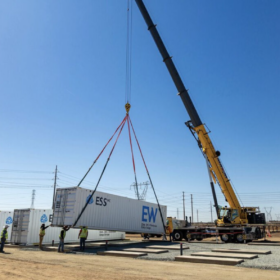
ESS Tech acquires VoltStorage GmbH to expand long-duration energy storage
US-based ESS Tech has acquired the assets and intellectual property of Germany’s VoltStorage GmbH to strengthen its long-duration energy storage (LDES) portfolio and combine two iron-based flow battery technologies.
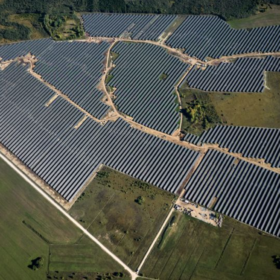
Estonia advances 1.1 GWh heat storage, 250 MWh BESS and 800 MWh battery park
Estonia has delivered its largest heat storage facility, begun construction on its largest solar-plus-storage hybrid project, and is preparing to break ground on an 800 MWh battery park in Valga County, set to become the largest in the Baltics.
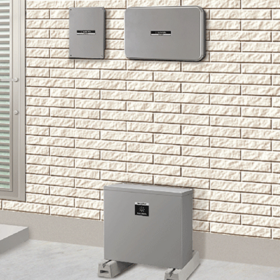
Japanese utility launches residential battery demand response pilot
Kyushu Electric Power Co. will begin a demonstration project on March 1 using remotely controlled home batteries supplied by Sharp Energy Solutions to ease solar curtailment in southern Japan.
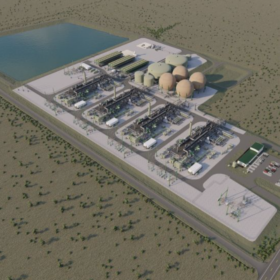
Hydrostor signs California offtake deal for 4 GWh compressed air storage
Hydrostor has secured a 50 MW/400 MWh offtake agreement with California Community Power (CC Power) for its Willow Rock Energy Storage Center, providing firm capacity to six of CC Power’s community choice aggregator members.

Private 660 MWh solar-storage project closes financing in South Africa
Naos‑1 is described as South Africa’s biggest private utility‑scale solar and battery storage project, designed to wheel power to industrial customers.

World’s first 628 Ah grid-scale battery enters operation
EVE Energy says a 200 MW/400 MWh battery energy storage project in China has entered operation, which it describes as the world’s first utility-scale deployment of 628 Ah lithium iron phosphate (LFP) cells.
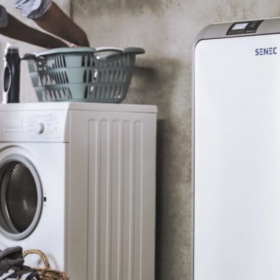
Hungary launches grants for residential battery storage
Hungary has opened applications for a program offering up to HUF 2.5 million ($7,820) per household to support residential battery storage, prioritizing grid-exporting solar users and small rural settlements.
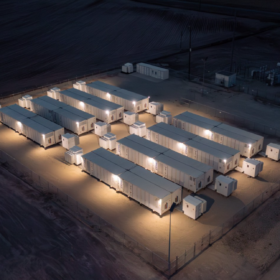
Energy Vault secures 1.5 GWh sodium-ion supply for AI
Switzerland-based Energy Vault has secured an initial 1.5 GWh of sodium-ion battery supply from Peak Energy to develop integrated storage systems for artificial intelligence-focused data centers.
