Marija Maisch


Australia’s Townsville battery gigafactory reaches new milestone
Plans to develop an 18 GWh lithium-ion battery factory in northern Queensland have reached an important milestone with the project feasibility study submitted to the Queensland government.
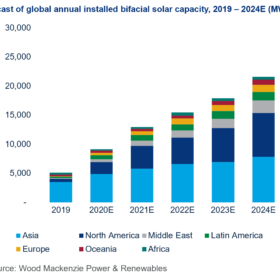
WoodMac: Bifacial module capacity will exceed 21 GW by 2024
Increasingly affordable and free from the Trump administration’s solar tariffs, bifacial modules are only set to get more popular in the years ahead. In its first report on bifacial PV, WoodMac predicted the technology will make up 17% of global installations five years hence, quadrupling the share it will have this year.
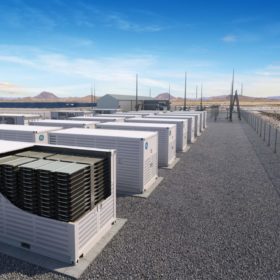
GE to supply 100 MW/300 MWh battery for South Australia solar farm
GE Renewable Energy has been chosen to supply a massive battery for the 200 MW Solar River Project in South Australia.

Solar microgrid to power Australian industrial park
A consortium led by gas network owner Enwave Australia is developing Australia’s first industrial renewable energy microgrid at a new 120-hectare business park in Nambeelup, Western Australia.
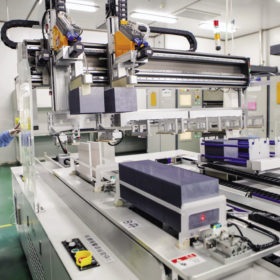
Comtec ready to swim against the tide by outsourcing manufacturing
While the rest of China’s solar manufacturers take on ever more debt to expand their production lines as fast as possible, Comtec said it is ready to sell off fabs for the right money and will instead focus on project sales and lithium battery and EV business opportunities.
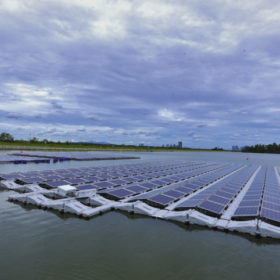
New Zealand’s largest solar farm to be built on water
Auckland’s electricity and water utilities will build New Zealand’s largest solar array on a wastewater treatment pond.
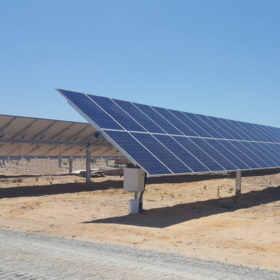
Coles signs PPA for three solar farms in Australia
The Australian supermarket giant will purchase more than 70% of the electricity generated by three solar power plants to be built and operated by Metka EGN outside the regional centers of Wagga Wagga, Corowa and Junee, in the state of New South Wales – the equivalent of 10% of the company’s national electricity usage.
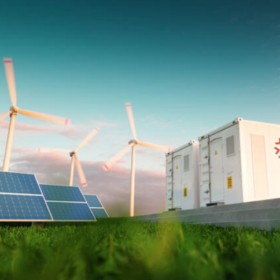
MoU for vanadium redox flow battery collaboration in Australia
Australian Vanadium and Metrowest Power Systems have signed a non-binding memorandum of understanding to look at energy storage opportunities in Australia using vanadium redox flow battery technology.
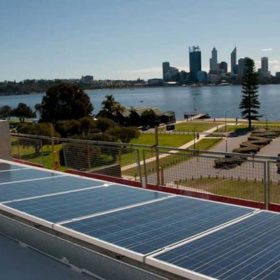
ANZ, CEFC deepen ties to help businesses invest in PV, EVs, storage
Australian banking and financial services giant ANZ has extended its collaboration with Sydney-based Clean Energy Finance Corp. via an additional $67.7 million financing commitment to help the nation’s businesses cut energy costs and reduce carbon emissions. The bank is also offering financial discounts for upgrades and new investments in solar PV, energy storage, electric vehicles and other technologies.
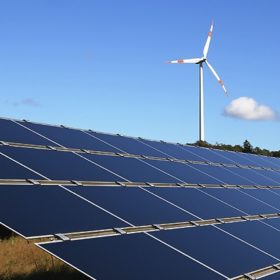
Molycop signs major solar-wind PPA in Australia
The Australian arm of global mining manufacturer Molycop has signed a long-term solar-wind offtake deal with electricity retailer Flow Power. Under the new partnership, Molycop will gain access to the ARENA Demand Response program.
