Marija Maisch

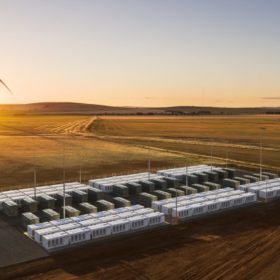
South Australia’s Tesla big battery saves $40 million in grid stabilization costs
A new report analyzing the world’s largest lithium-ion battery’s performance in the first year of operation shows the Hornsdale Power Reserve has delivered on high expectations of its performance and market impact. It has helped stabilize the grid, avoid outages and reduce system costs, as well as triggered a surge in uptake of similar fast response systems across Australia.
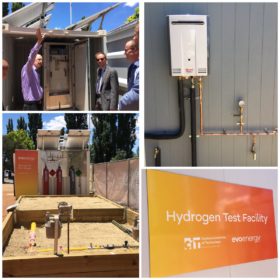
Australia’s first hydrogen test station opens in Canberra
ACT gas network operator Evoenergy and the Canberra Institute of Technology have partnered to build a first of its kind hydrogen test facility at CIT Fyshwick. The station will test up to 100% hydrogen in deployments in which natural gas is currently used.
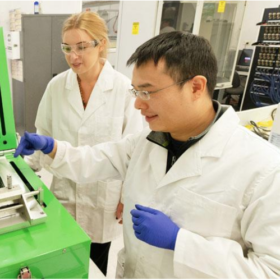
Lithium Australia produces li-ion batteries from mine waste
The ASX-listed company which aspires to ‘close the loop’ on the energy-metal cycle has successfully produced lithium-ion batteries from tri-lithium phosphate sourced directly from a mine dump. It has also reported outstanding results in lithium recovery in excess of 90%, using its SiLeach process at the ANSTO Minerals pilot plant in New South Wales.
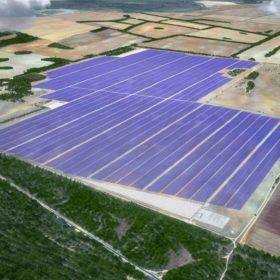
Nextracker to supply Australia’s 255 MW Sunraysia Solar Farm
EPC contractor Decmil Group has selected Nextracker’s NX Horizon solar trackers for the 255 MW Sunraysia Solar Farm, one of Australia’s largest solar farms located in New South Wales.
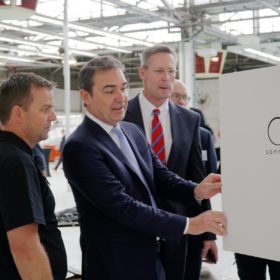
Sonnen begins battery production in Australia
The German energy storage provider has begun assembling batteries at the former Holden site at Elizabeth in Adelaide’s north. The company has already hired 50 full-time employees.
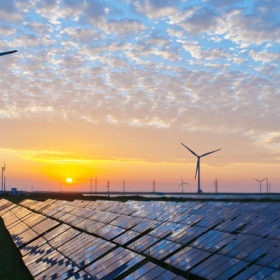
NSW, Australia in line for 4 GW solar, wind and battery hybrid project
Australian developers Energy Estate and MirusWind have proposed a massive renewable energy hub in New South Wales. The project will combine wind and solar energy generation with pumped hydro storage and other storage options to provide up to 4 GW of new clean generation.
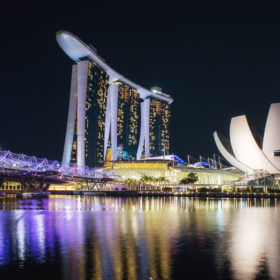
Singapore launches blockchain-based renewable energy marketplace
Companies keen to offset their carbon emissions will be able to purchase renewable energy certificates at Singapore’s first blockchain-powered marketplace, launched by electricity provider SP Group.
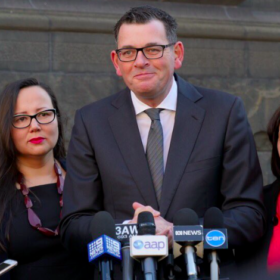
Australia: Victorian Labor pledges 50% renewables by 2030
Half of Victoria’s energy could come from renewable energy sources, as the Labor government has vowed to expand the state’ renewable energy target from 40% in 2025 to 50% in 2030, if re-elected.
Solar sector to add 552 GW by 2027 led by China
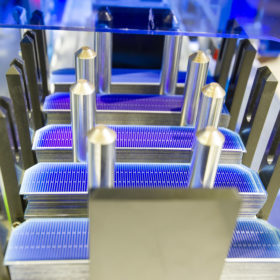
The leading trio – China, the United States and India – will comprise 70% of the projected 552 GW of solar capacity, which will be added between end-2017 and 2027, finds Fitch Solutions, which has revised down its original forecast for solar capacity growth in China. The curbed growth in China, due to subsidy cuts and restricted access to the United States and India, is expected to squeeze domestic solar equipment manufacturers, but also lead to access to cheaper solar panels in other smaller markets.
Bungala Solar Farm goes fully online as Australia’s biggest solar project to date
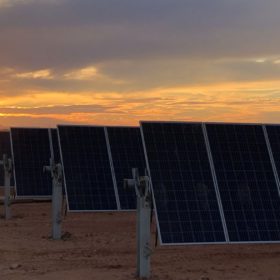
After being commissioned in stages, the Bungala Solar Farm near Port Augusta in South Australia is now fully operational. At 220 MW/275 MWdc, Bungala is Australia’s largest solar farm completed to date.
