Marija Maisch


Researchers double life of lithium-ion batteries by adding graphene girders
By reinforcing the anode’s structure with graphene girders, researchers at the U.K.’s University of Warwick have found an effective approach to replacing graphite in the anodes using silicon, thus boosting the capacity of lithium-ion batteries, and more than doubling lifespans.

Trump’s trade disputes raise concerns about overseas expansion, Chinese government says
As reported by Reuters, the Chinese Ministry of Industry and Information Technology voiced concerns that frequent trade disputes may hurt China’s overseas expansion and would increase costs throughout the global solar market.
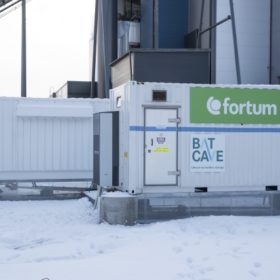
Battery, smart grid and efficiency companies raise $1.5 bn in VC funding in 2017 – Mercom
In 2017, battery storage, smart grid and energy efficiency companies saw a YoY increase in venture capital funding, garnering a combined US$1.5 billion, up from the $1.3 billion raised in 2016, finds the latest Mercom Capital report.
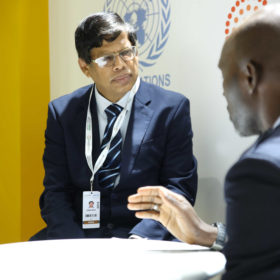
WFES: ISA signs letters of intent for $5bn financing, nine solar projects across five member states
This week’s World Future Energy Summit (WFES) saw a letter of intent inked at the International Solar Alliance’s (ISA’s) pavilion to secure financing of up to US$5 billion with India’s YES Bank by 2030. The organization also signed deals for nine solar projects across five ISA member countries, including in the UAE, Saudi Arabia, Nigeria, India and Spain.
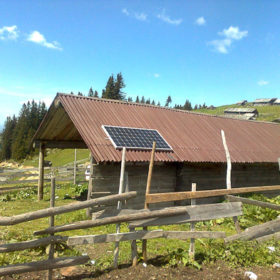
Montenegro to halt renewable energy licenses; continues deployment of off-grid PV
Noting that it is close to reaching its 33% renewable energy target, Montenegro’s Ministry of Economy has said it will not issue any more licenses for renewable energy projects. It has, however, launched the third phase of deployment of solar PV systems for un-electrified households in secluded mountainous areas.

$102.6 million guaranteed for 250 MW Egyptian PV project
World Bank Group member, the Multilateral Investment Guarantee Agency (MIGA), has pledged to provide financial support for six solar power plants in Egypt, the accumulative capacity of which stands at 250 MW.
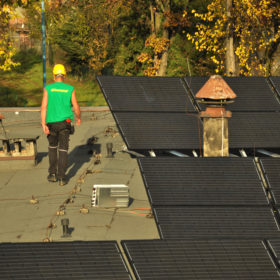
Poland: RE support scheme approved, financing for 55 MW PV projects secured
A PLN 40 billion (around €9.4 billion) Polish support scheme for renewable energy has been approved by the European Commission. Meanwhile, Guernsey-based Sequoia Economic Infrastructure Income Fund has agreed to provide financing for ReneSola’s 55 plants in Poland, each with a capacity of 1 MW.
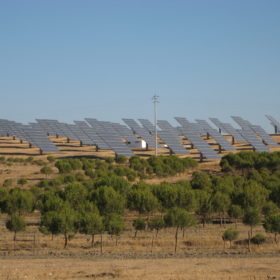
Portugal: Aquila Capital acquires 170MW solar projects, HSH Nordbank enters market
Acting on the behalf of its investors, the German asset manager has come into possession of four solar PV projects in Portugal, the names of which have not been disclosed. Meanwhile, Germany’s HSH Nordbank has successfully penetrated the Portuguese market with the refinancing of two solar plants.
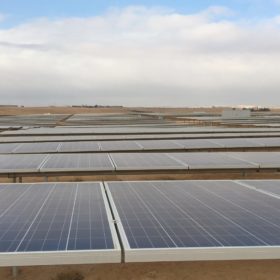
EBRD earmarks $22 million for 50 MW Jordan PV plant, $100 million for green bonds
The European Bank for Reconstruction and Development is providing a US$22 million shot in the arm for a 50 MW solar power plant in the Risha region developed by Saudi ACWA Power. The bank has also announced plans to invest up to $100 million to back development of the green bond markets, and pledged its support to city climate projects allocating over $500 million with an eye to scaling up green urban financing.
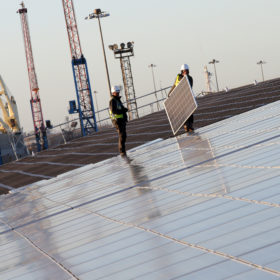
Associated British Ports to scale up its solar portfolio to 28 MW
The UK’s port operator has announced plans to build a 20 MW solar array on multiple warehouses at the Port of Immingham. Custom Solar has been contracted to install solar panels.
