Max Hall

Debt-laden Panda Green sells 82.5 MW UK portfolio
The heavily-indebted solar developer has sold off six solar projects to a U.K.-Irish renewables investment fund for £34 million, ensuring it will be able to settle the most immediate of its reported $3.1 billion commitments.
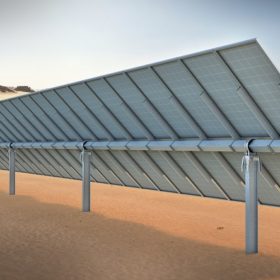
Rise of bifacial lifts profits for the world’s tracker companies
Things are hotting up in the tracker world as the desire to squeeze down the price per Watt of solar power intensifies. And the rise of the trackers is attracting some well-known businesses to buy their way into the field.
ACWA triumphs again in Middle Eastern tendering exercise
With no details reported on the final electricity price agreed for a 500 MW solar project to be built in Oman, speculation will center on whether the victorious Saudi power company and its Kuwaiti partners have again trumped lower offers from overseas rivals.
Shareholders vote through Panda Green debt repayment plan
Stockholders agree to hefty dilution of their shareholding in order to raise funds to pay looming HK$1 billion debt, with state-owned entities including a designated buyout fund due to control up to a third of the new business.
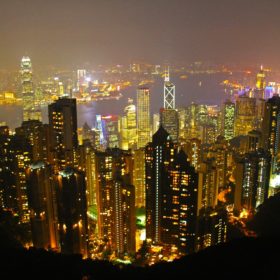
Hogging the limelight – the incredible story of China Solar
Real estate and logistics company owner Cheung Shun Lee is making a third attempt to relist a company whose shares have been suspended for five-and-a-half years, and whose corporate history during that time reads like a soap opera.
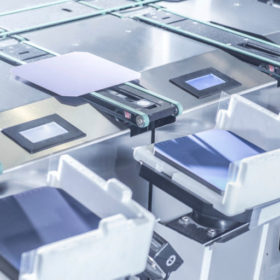
Meyer Burger joins the fray over Hanwha patent infringement claims
The Swiss solar equipment maker has endorsed a claim by Chinese solar manufacturer Longi that the technology it uses differs from that at the center of Hanwha Q Cells’ patent infringement complaints.
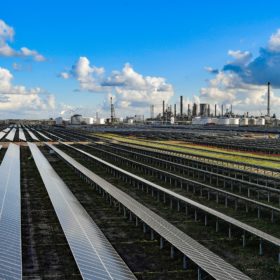
Shell powers chemical operations with Dutch solar park
A 27 MW solar project will generate energy for the company’s extensive site in Moerdijk, in the south of the country.
Xinyi Solar completes shares issue to finance new glass capacity
The Wuhu-based solar glass maker and PV project developer expects to raise around $167 million to expand operations after diluting stock by issuing shares equivalent to just under 5% of the business.
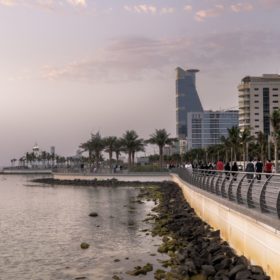
Saudi Arabia’s 1.5 GW tender attracted more than 250 companies
More than 100 domestic companies are reportedly in the running for a seven-project portfolio that is expected to generate around $1.5 billion of investment – and they will fancy their chances against overseas developers.
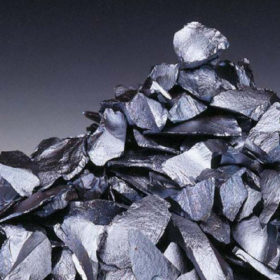
Poly maker Daqo presents a blockbusting set of figures
Profits and revenues were down in a year which saw average selling prices slump – especially after the turbulence in the Chinese market – but the company’s hell-for-leather dash for production capacity expansion and aggressive cost cutting mitigated the ill effects. And there is more to come in the year ahead.
