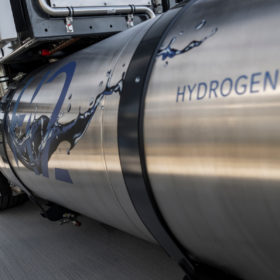
‘Europe is still in the hydrogen race,’ says Bureau Veritas
Hydrogen is nothing new, but it could become a decarbonized energy vector to transform renewable electrons into renewable fuels, displacing fossil fuels in multiple applications. Laurence Boisramé, global director of hydrogen at Bureau Veritas, recently spoke with pv magazine about improving hydrogen market transparency, but she noted that “global consensus will take time – at least a few years.”
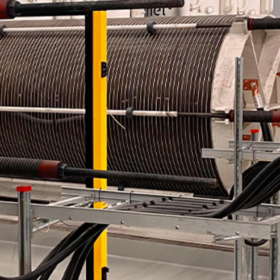
The Hydrogen Stream: World’s first green hydrogen plant to heat steel
Hitachi Energy has delivered a modular solution to electrify a 20 MW electrolyzer to produce hydrogen to heat steel before rolling, while Enapter has unveiled its AEM electrolyzers for industrial and refuelling pilot projects.
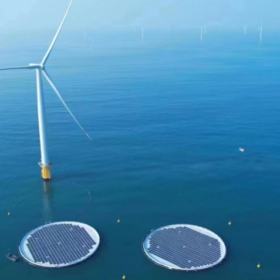
The Hydrogen Stream: Researchers test marine green hydrogen feasibility
Mexican researchers have revealed test results for offshore wind-based hydrogen production, while Turkey has started negotiating hydrogen facility partnerships with the United Arab Emirates.
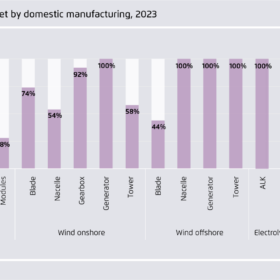
Europe needs €30 billion by 2027 to rebuild PV, says Agora Energiewende
Agora Energiewende says Europe needs €30 billion ($32.2 billion) by 2027 to rebuild its PV industry. It calls for up to €30 billion until 2027 and up to €94.5 billion from 2028 to 2034 to revive the European solar sector.

The Hydrogen Stream: Liquid hydrogen test flight could enable long-distance flights
H2FLY claims that a recent three-hour test flight, entirely powered by liquid hydrogen, could lead to sustainable long-range flights fueled by liquefied, cryogenic hydrogen. Solaris, meanwhile, has started selling hydrogen buses in Italy.

Impact of overcapacity on solar stocks
BloombergNEF Senior Analyst Jenny Chase and Aurora Energy Research Renewables Lead Rebecca McManus speak with pv magazine about financial market trends for solar companies and the role of overcapacity as a driver of turbulence in the industry.
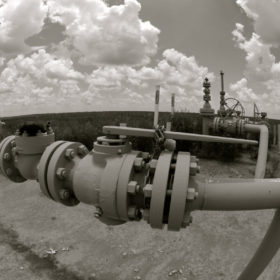
The Hydrogen Stream: combination of power grid expansion and hydrogen network cheapest option in a net-zero system
Researchers found out that the cheapest way to reach a net-zero system in Europe includes a power grid expansion and a hydrogen network. Meanwhile, Lhyfe signs a PPA for its hydrogen facility in Bretagne, and Nortegas reaches 15% of hydrogen in replica of its distribution network in Spain.

The Hydrogen Stream: Gulf nations moving forward with tech cooperation
Acwa Power and Eni have signed a hydrogen development deal, while AFC Energy has signed an agreement with Tamgo to sell hydrogen generators.
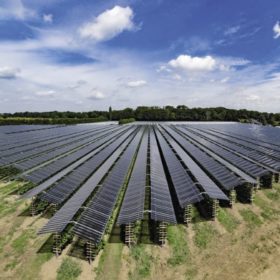
Italian Council of State clarifies rules for agrivoltaics
The Italian Council of State has issued new rules to address a number of regulatory gaps, according to lawyer Andrea Sticchi Damiani, who recently won two cases related to agrivoltaic projects. In both instances, the council confirmed that agrivoltaic facilities are distinct from conventional ground-mounted PV plants.

The Hydrogen Stream: North African hydrogen development stokes concerns
French researchers have identified a number of potential social issues that may arise as North Africa develops its significant hydrogen potential, while the European Commission has released the details of its pilot auction for European renewable hydrogen production.
